


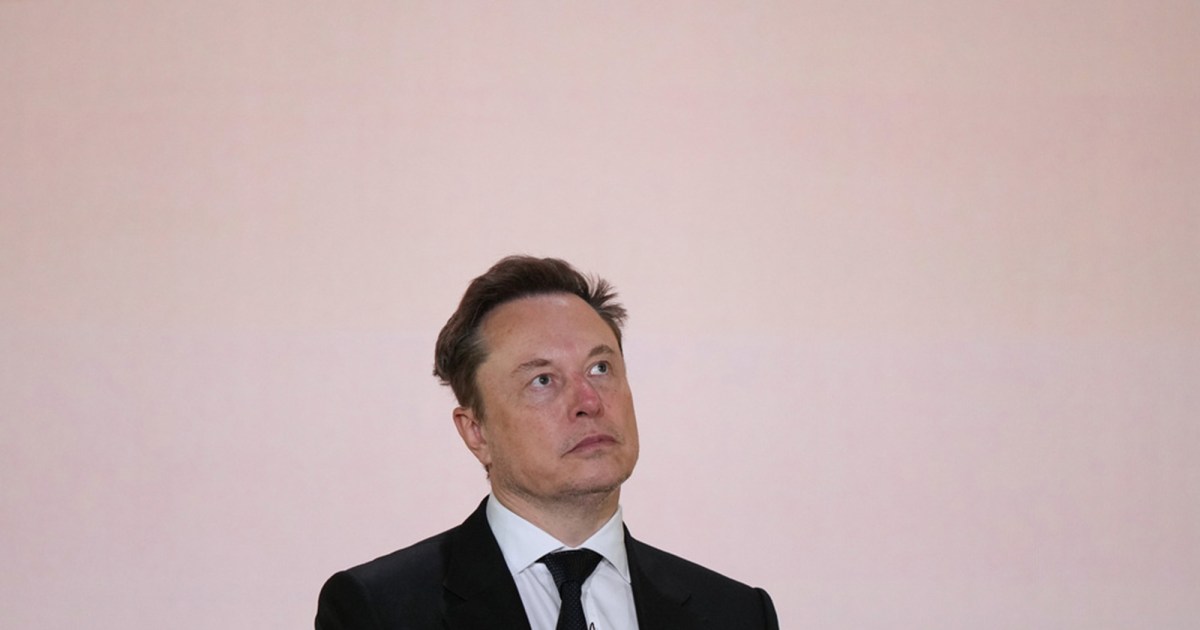
Elon Musk Emerges as Unprecedented Force in Midterm Elections, Blending Record-Breaking Donations with Disinformation Amplification
With control of Congress hanging in the balance, Elon Musk has staked his claim as the most influential—and potentially most dangerous—figure in the 2026 midterm elections. The tech billionaire has injected a staggering $366 million into the election cycle to support Donald Trump and Republican candidates, with projections suggesting his total spending could exceed half a billion dollars. But as political analysts scramble to assess the impact of Musk’s unprecedented financial muscle, a more insidious threat has emerged: Musk’s dual role as the largest known personal donor in American electoral history and the owner of X, the social media platform through which he wields enormous power over the flow of political information and disinformation. This combination, critics argue, positions Musk as the single greatest risk to electoral integrity in the current cycle, a man capable of both funding campaigns and shaping the narrative around them with equal ease. The South Africa-born mogul holds no public office, yet his reach extends into every corner of the political landscape, making him a shadow player whose influence rivals—and perhaps exceeds—that of any elected official.
The urgency of this threat was demonstrated vividly last week when Musk played a decisive role in propagating a completely fabricated story about James Talarico, the Democratic Senate candidate in Texas. The false narrative, cooked up by MAGA influencers, claimed that Talarico had disappeared from the campaign trail because he had checked himself into a mental health hospital in Ohio. In reality, Talarico had contracted a severe case of the flu and had been recovering out of the public eye for about nine days. By the time the rumor began circulating, he was already back in public view, and the Ohio facility in question explicitly denied that Talarico had ever been treated there. Yet the story exploded across the internet, and Musk was the primary accelerant. He tweeted to his 241.5 million followers—an audience roughly 100 times the size of Fox News’s viewership—that the “Talarico campaign is hiding something big that voters ought to know about.” In a subsequent post, he doubled down, insisting that “the Talarico campaign is not being honest about what’s happening.” When the story collapsed under the weight of factual evidence, Musk offered no correction, no apology, and no acknowledgment that he had spread a malicious falsehood.
This incident, while ultimately unlikely to derail Talarico’s historic bid to become the first Democrat to win a statewide race in Texas in 32 years, serves as a chilling template for what could unfold in the final days of the election. The play is simple: start an unfounded and scurrilous rumor about a candidate, and use Musk’s platform—ideally with Musk himself as the amplifier—to spread it with lightning speed. If executed close enough to Election Day, the false accusation may outpace the truth, leaving the targeted candidate without sufficient time to mount an effective rebuttal. This is the nightmare scenario that keeps election watchers up at night: an October surprise manufactured not through investigative journalism or legitimate political opposition, but through the cynical deployment of algorithmic amplification and bottomless campaign war chests. Super-PACs flush with cash from Musk and other tech plutocrats—including those in the artificial intelligence and cryptocurrency sectors who are pouring vast sums into the election—can drop negative ads in the final week that push false allegations into the homes of millions of voters. Even more troubling, the current legal landscape allows billionaires to funnel attack ads through corporate cutouts, effectively hiding their involvement from public scrutiny.
The stakes for Musk personally are immense. He holds billions of dollars in government contracts that he seeks to protect or expand, giving him a direct financial interest in the outcome of the election. Beyond the Talarico episode, his history of promoting disinformation is extensive and deeply troubling. During the 2024 campaign, he repeatedly pushed the baseless claim that large numbers of noncitizens were voting, at one point declaring that Democrats were flying asylum seekers into swing states and fast-tracking them for citizenship so they could cast ballots. His false and misleading allegations about that election accumulated a staggering 1.2 billion views on X. He received another 134 million views when he reposted an AI-manipulated deepfake video of Kamala Harris making offensive remarks. His conspiracism extends far beyond elections: he claimed that diversity, equity, and inclusion initiatives caused errors in the Los Angeles Fire Department’s response to wildfires, and that “white genocide” was underway in South Africa. He amplified the fabricated story that Haitian immigrants in Springfield, Ohio, were eating household pets. He has resorted to antisemitic tropes in attacking George Soros and falsely asserted that millions of deceased individuals were collecting Social Security, having apparently misread the data.
The list goes on. Musk boosted Russian disinformation alleging that USAID was paying Hollywood celebrities millions to visit Ukraine, and promoted claims that the agency funded bioweapons research linked to Covid-19. He endorsed a meme proclaiming that the Pizzagate conspiracy theory was “real.” Earlier this year, he amplified a long-debunked claim about Pennsylvania mail-in ballots in the 2020 election. He has endorsed social media posts suggesting that only men with high testosterone and people with autism should be permitted to engage in governmental decision-making, a view that manages to be simultaneously exclusionary, scientifically illiterate, and offensive. His recent amplification of assorted racist sentiments and his pattern of sharing misogynistic and antisemitic content have done nothing to diminish his influence. In the rarefied air of trillionaire status, such character flaws are apparently immaterial. This creates a glaring double standard: Republicans have attempted to manufacture scandal around left-wing influencers like Hasan Piker for merely campaigning with Democratic candidates, yet Musk’s direct financial support for a broad array of GOP candidates has generated far less controversy within conservative circles. Only certain associations seem to warrant outrage.
As the campaign enters its final, most volatile phase, the potential for chaos is immense. Trump himself is reportedly contemplating actions that could provoke a crisis, and MAGA activists have been urging him to declare martial law, though such a declaration would not technically permit him to seize ballots or cancel elections. Setting aside such extreme scenarios, a more likely October surprise involves precisely the combination of forces Musk represents: giant sums of dark money deployed alongside viral disinformation. The Russian government has also begun interfering in the election to support Republican candidates, adding another layer of complexity to an already fraught situation. The question is no longer whether Musk will wield his influence in the waning days of the campaign—he has already demonstrated his willingness to do so—but rather whether the American political system can withstand the stress of a figure who combines unprecedented wealth, absolute control over a major communication platform, a demonstrated appetite for conspiracy theories, and a personal stake in the outcome. The answer to that question will determine not only which party controls Congress, but whether the United States can continue to conduct elections that voters trust. For now, observers would be wise to keep a close eye on Musk and his platform, for he stands at the intersection of money and misinformation, a living stress test for American democracy itself. The long-term challenge is just as clear: how does a nation built on democratic principles prevent a single private citizen—no matter how wealthy—from exercising such unchecked and corrosive influence over its political destiny?