


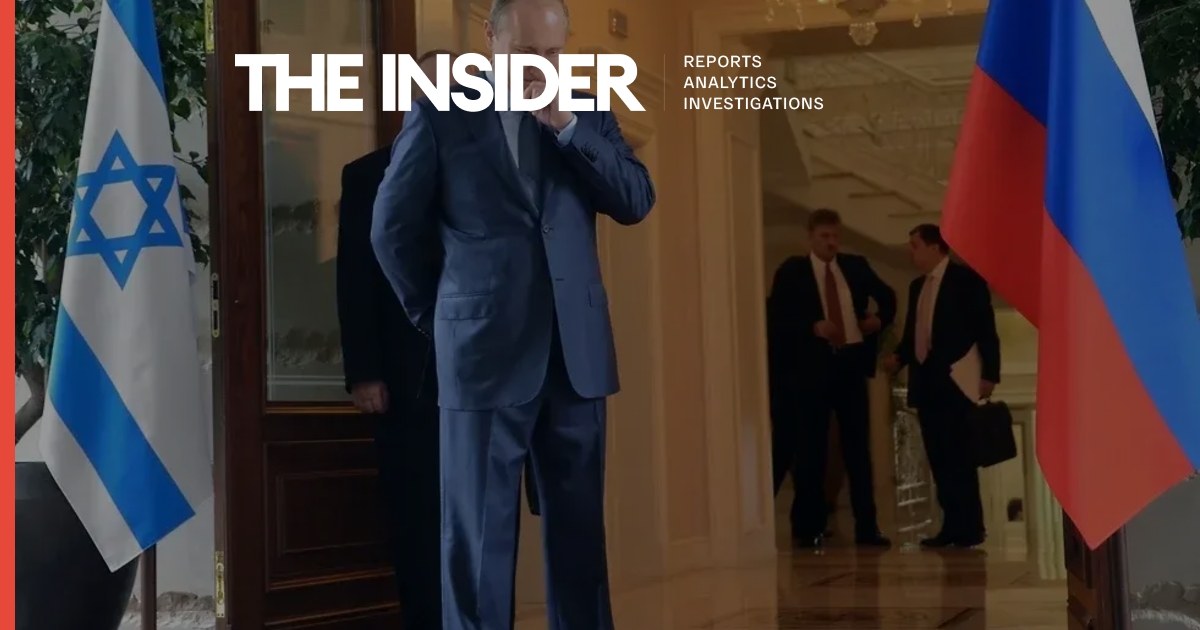
Inside the Kremlin’s Fake Think Tank: How the Doppelgänger Operation Built the International Burke Institute
An investigation by The Insider has revealed how operatives associated with the Russian influence campaign known as Doppelgänger sought to create a series of ostensibly independent nonprofit research institutes in foreign countries, with the aim of recruiting international experts and laundering pro-Kremlin narratives into mainstream discourse. The plan was remarkably ambitious, and the financial requests reflected that. One operation identified as SDA asked for $80,000 to launch a nonprofit organization in Israel, alongside roughly 3 million rubles a month—about $36,500—for “content creation, work with opinion leaders, and promotion.” Another proposal, for a would-be “Institute of Anti-Globalism,” was even more expensive, with a projected monthly budget of 5 million rubles, or more than $61,000. These figures were not simply overhead estimates; they represented a strategic investment in creating the appearance of independent scholarship, meant to give Moscow’s preferred talking points the aura of objective research.
The documents show that the effort was conceived as a form of Russian soft power, and one of the project’s key figures, Nikolai Tupikin, went so far as to draft what he called “a justification for strengthening and expanding the project with Israeli colonels from various intelligence services.” Tupikin framed the recruitment of former or serving intelligence officers as a way to bolster the credibility and reach of the initiative. In an apparent attempt to convince the Kremlin to support the project, the justification stressed the cost-effectiveness of information warfare as a tool of great-power politics. The document reportedly stated: “Russian information warfare, through interference campaigns, helps Russia preserve its image as a superpower in a cost-effective way. The more Russia participates in active interference campaigns around the world, the stronger its image as a global power.” That logic was central to the entire undertaking: rather than investing in traditional diplomacy or large-scale military deployments, Moscow could project strength through a constant churn of disinformation, covert influence, and fake civil-society fronts.
An expanded presentation for the proposed Israeli institute acknowledged a critical weakness in the Kremlin’s messaging efforts. “Our narratives lack a legitimate source of information and a news hook,” the document admitted. But it also pointed to an opportunity: “In Europe and other Western countries, the narratives we need already exist and enjoy sustained popularity.” In other words, the plan was not to invent entirely new arguments from scratch, but to find existing fringe or mainstream-skeptical currents and amplify them through fabricated research institutions that appeared authoritative. The project appears to have been approved at a high level of the Russian government. In February 2025, the domain ibi.institute—previously associated with the Instituto Iberoamericano—was acquired, and it was used to create the website of a new entity called the International Burke Institute, or IBI. The name was chosen to evoke conservative intellectual traditions, but the website’s claims of legitimacy were not backed by reality. IBI listed the United Nations office, UNICEF, UNESCO, the Stockholm International Peace Research Institute, and the World Bank as partners. When contacted by The Insider, all of these organizations denied any relationship with IBI, saying they were not and had never been partners. The website itself contained no reference to any connection with Russian experts, no official address, no information about founders, and no details about financing.
The content produced by the International Burke Institute was as fabricated as its partnerships. The site published what were described as “economic and political reviews of the country of the month,” but in practice it produced reviews for all countries at once in the form of a “sovereignty index.” The articles were clearly generated using large language models and then translated into English, almost certainly from Russian. The translation process left behind telltale errors that a native English speaker would never make. An article about Russia, for example, referred to “Lugovoy’s Law (2020)” and then used the pronoun “he” when describing what the law did—in English, a law is an “it,” not a “he,” whereas in Russian the grammatical gender of the noun can lead to such confusion. Another article about the United States used the phrase “guerrilla struggle” where the intended meaning was clearly “partisan struggle,” in the political sense of conflict between parties. This is a classic machine-translation error, since the Russian word partizansky can mean both “partisan” and “guerrilla.” The reports also contained signs of AI-generated hallucinations, including references to nonexistent UNESCO heritage sites such as “Gerngut” in Germany and “Imbargo” in the United States. Neither site exists. The IBI even claimed that Russia ranked 27th in a 2023 PISA study, despite the fact that no PISA assessment was conducted in 2023; the most recent study at the time was carried out in 2022, and Russia did not participate.
The artificial nature of the entire operation was eventually confirmed by OpenAI itself. In August 2026, OpenAI published the results of an internal investigation showing that IBI content had been produced using the company’s systems and that the operation was run by users in Russia. OpenAI said it had blocked the group of ChatGPT accounts involved in generating the material. That disclosure provided an unusually direct link between a fake think tank and a known Russian influence operation, validating the suspicions raised by the content itself. The IBI website was filled with machine-generated articles and false claims of institutional partnerships, but the organization behind it was surprisingly real in a narrow legal sense. The International Burke Institute was registered in Israel in July 2025. Its founders were Igor Kaminnik and Gabriel Mart, and its board members with signing authority were Alexei Vilents and Roy Yaakov Yankelovich. The Insider has obtained copies of the organization’s founding documents, confirming that the shell entity was formally established even as its public front was built on fabricated partnerships, AI-generated texts, and hidden Kremlin connections.
The International Burke Institute is a telling example of how the Doppelgänger campaign has evolved beyond simple social media trolling and impersonation. By creating an actual registered organization with a professional-looking website, operatives hoped to give their narrative a legitimate source and a credible news hook—the very things their own internal presentations said were missing. The use of Israeli incorporation, the recruitment pitch aimed at intelligence-connected colonels, and the reliance on generative AI for content all point to a strategy that treats disinformation as a scalable industrial process. The denial of partnerships by the UN, UNESCO, SIPRI, the World Bank, and UNICEF underscores how hollow the operation truly was. And the OpenAI investigation exposed the technological engine behind it. Yet the fact that the group was still formally registered in Israel, with named founders and board members, suggests that the infrastructure may remain available for future use, even after this particular website was exposed. The story of the International Burke Institute reveals, in remarkable detail, how the Kremlin seeks to manufacture legitimacy wholesale—buying domains, drafting budgets, creating fake research bodies, and using AI to generate a steady stream of seemingly authoritative analysis. It is a portrait of information warfare as a cost-cutting measure, exactly as Tupikin described it: a way to preserve Russia’s image as a superpower without paying the traditional costs of one.