


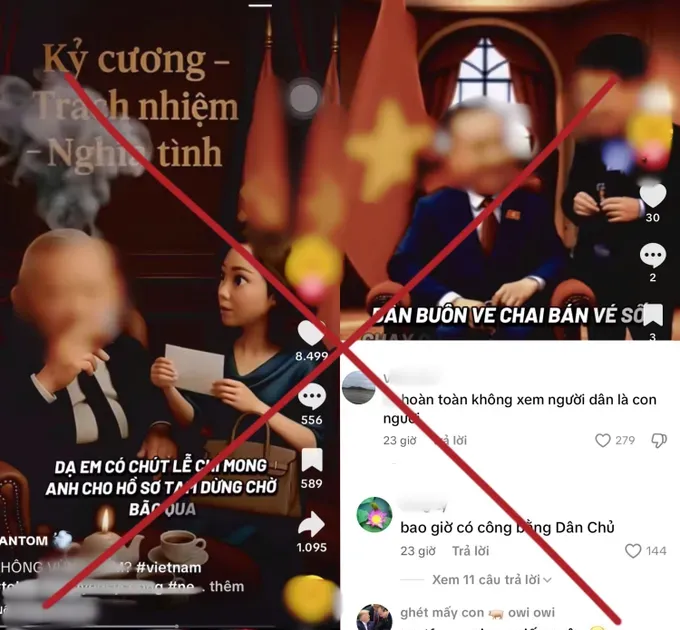
Vietnam Grapples with AI-Powered Disinformation Campaign Targeting State Leaders and Public Trust
Vietnam is facing a growing wave of disinformation campaigns fueled by sophisticated AI technologies, including deepfakes, which are being weaponized to undermine public trust in the government and sow discord within society. These campaigns exploit the pervasive reach of social media platforms like TikTok and leverage AI-generated video and audio clips that convincingly mimic the voices and appearances of high-ranking state leaders. The fabricated content often involves sensitive incidents, distorted policy announcements, or even personal attacks, designed to manipulate public opinion and incite negative reactions.
The perpetrators of these disinformation campaigns employ a multi-pronged strategy to maximize their impact. They operate a network of seemingly innocuous social media accounts, often disguised as legitimate sources of legal and policy information, to build credibility and attract a wider audience. After establishing a following, these accounts abruptly shift their content, disseminating false and misleading information that capitalizes on the established trust. Additionally, sophisticated networks of AI-controlled bots are deployed to amplify the reach of these deepfakes, automating comments, shares, and reactions, creating an illusion of widespread public engagement and endorsement.
The scale of the disinformation problem is alarming. Statistics indicate that over 20,000 pieces of false information circulate daily in Vietnam’s cyberspace, with a significant portion generated using AI. In 2023, it was reported that over 60% of channels spreading disinformation originated from outside the country, highlighting the coordinated nature of these attacks. The rise of AI-powered disinformation poses a multifaceted threat, eroding public trust in state institutions, misrepresenting government policies, fostering ideological divisions, and damaging Vietnam’s international reputation. Experts warn of the potential for these campaigns to incite internal conflict and destabilize the country, echoing the tactics employed in “color revolutions.”
The Vietnamese government is taking the threat seriously and is exploring legal and policy reforms to counter the growing menace of AI-powered disinformation. Experts are advocating for a strengthened cybersecurity framework, with specific provisions addressing the unique challenges posed by AI. The Ministry of Public Security is currently working on drafting a new cybersecurity law for 2025, with a focus on establishing a robust legal foundation to combat AI-driven manipulation and disinformation. Existing laws, such as the 2018 Law on Cybersecurity, already prohibit the dissemination of false information that causes public confusion or damages socio-economic activities. This allows for prosecution of individuals and organizations responsible for creating and spreading deepfakes and other forms of AI-generated disinformation, with penalties ranging from administrative fines to criminal charges.
Beyond legal reforms, a multi-pronged approach is needed to effectively combat the disinformation threat. Media agencies play a crucial role in debunking false narratives and providing accurate information to the public. Simultaneously, increased public awareness is essential to inoculate citizens against manipulation. The government’s propaganda and mass mobilization sector, particularly at the grassroots level, is tasked with enhancing direct communication and integrating awareness campaigns into community and school activities to educate the public about the tactics employed by hostile forces. This includes educating the public on how to identify deepfakes and other forms of manipulated media.
Another emerging concern is the rise of individuals and organizations offering misleading legal advice online, often under the guise of providing free services. This practice not only infringes on citizens’ rights but also disrupts social order. The government is working to address this issue, emphasizing the importance of accurate and reliable legal information and cracking down on those who exploit the online environment to spread misinformation and mislead the public. The challenge facing Vietnam is significant, requiring a coordinated response that combines legal frameworks, technological solutions, media literacy, and public awareness campaigns to effectively counter the evolving threat of AI-powered disinformation. The stakes are high, encompassing not only the integrity of information but also the stability and security of the nation.