


Close Menu
DISADISA
  • Home
  • News
  • Social Media
  • Disinformation
  • Fake Information
  • Social Media Impact
Trending Now

Philippine Defense Secretary Accuses China of Threats and Disinformation Over Arrest of Undocumented Filipinos

August 16, 2026

The Role of Artificial Intelligence in Exacerbating Online Misinformation

August 16, 2026

Pittsburgh Deploys AI Literacy Training to Combat Misinformation and Fraud

August 15, 2026
Facebook X (Twitter) Instagram
Facebook X (Twitter) Instagram YouTube
DISADISA
Newsletter
  • Home
  • News
  • Social Media
  • Disinformation
  • Fake Information
  • Social Media Impact
DISADISA
Home»Disinformation»US Officials Warn of Foreign Disinformation Targeting the 2024 Election
Disinformation

US Officials Warn of Foreign Disinformation Targeting the 2024 Election

Press RoomBy Press RoomDecember 29, 2024No Comments
Facebook Twitter Pinterest LinkedIn Tumblr Email

Escalating Foreign Interference: US Intelligence Agencies Ramp Up Warnings Amid 2024 Election Concerns

WASHINGTON – As the 2024 US presidential election draws closer, American intelligence agencies are confronting a surge in foreign disinformation campaigns targeting candidates, government officials, and even ordinary voters. Officials from the Office of the Director of National Intelligence (ODNI) have confirmed a marked increase in warnings issued to potential targets since last fall, highlighting the intensifying efforts by foreign adversaries to manipulate the electoral process and undermine public trust in democratic institutions. This surge in activity may indicate a more aggressive posture from foreign actors, improved detection capabilities by US intelligence agencies, or a combination of both.

The specter of foreign interference looms large over the upcoming election, echoing concerns raised during the 2016 and 2020 cycles. Lawmakers on both sides of the aisle have expressed anxieties about the nation’s vulnerability to sophisticated disinformation campaigns, recognizing the potential for these operations to erode voter confidence and sow discord. They have also questioned whether the federal government possesses the necessary tools and resources to effectively counter these threats and provide timely warnings to the public. The ODNI’s increased warnings underscore the gravity of the situation and the ongoing efforts to combat foreign meddling.

These influence operations manifest in various forms, including the dissemination of fabricated or exaggerated claims, targeted propaganda designed to discredit specific candidates or sway public opinion on key issues, and coordinated social media campaigns aimed at suppressing voter turnout through intimidation tactics or misinformation about election procedures. The perpetrators of these campaigns represent a diverse array of foreign actors, including familiar adversaries like Russia, China, and Iran, as well as a growing number of less prominent players such as Cuba. Alarmingly, officials have also identified indications that even some nations allied with the US could engage in efforts to influence the election.

Russia remains the most prominent threat, according to intelligence officials. Their primary objectives are to undermine public support for Ukraine and erode faith in American democracy as a whole. China, while also engaged in online disinformation campaigns, is considered more cautious in its approach, exhibiting greater concern than Russia about potential repercussions from the US government. Iran, often characterized as a "chaos agent," is more likely to experiment with online tactics designed to incite voter anger and potentially even violence.

The intelligence community employs a rigorous process for issuing warnings to potential targets of foreign influence operations. These notifications are only delivered after an interagency panel of intelligence officials concludes that a particular operation could significantly impact the outcome of an election or prevent specific groups from exercising their right to vote. Crucially, warnings are only issued when officials can definitively attribute the operation to a foreign source. This attribution allows the targeted individual or group to take proactive steps to defend themselves and mitigate the impact of the disinformation.

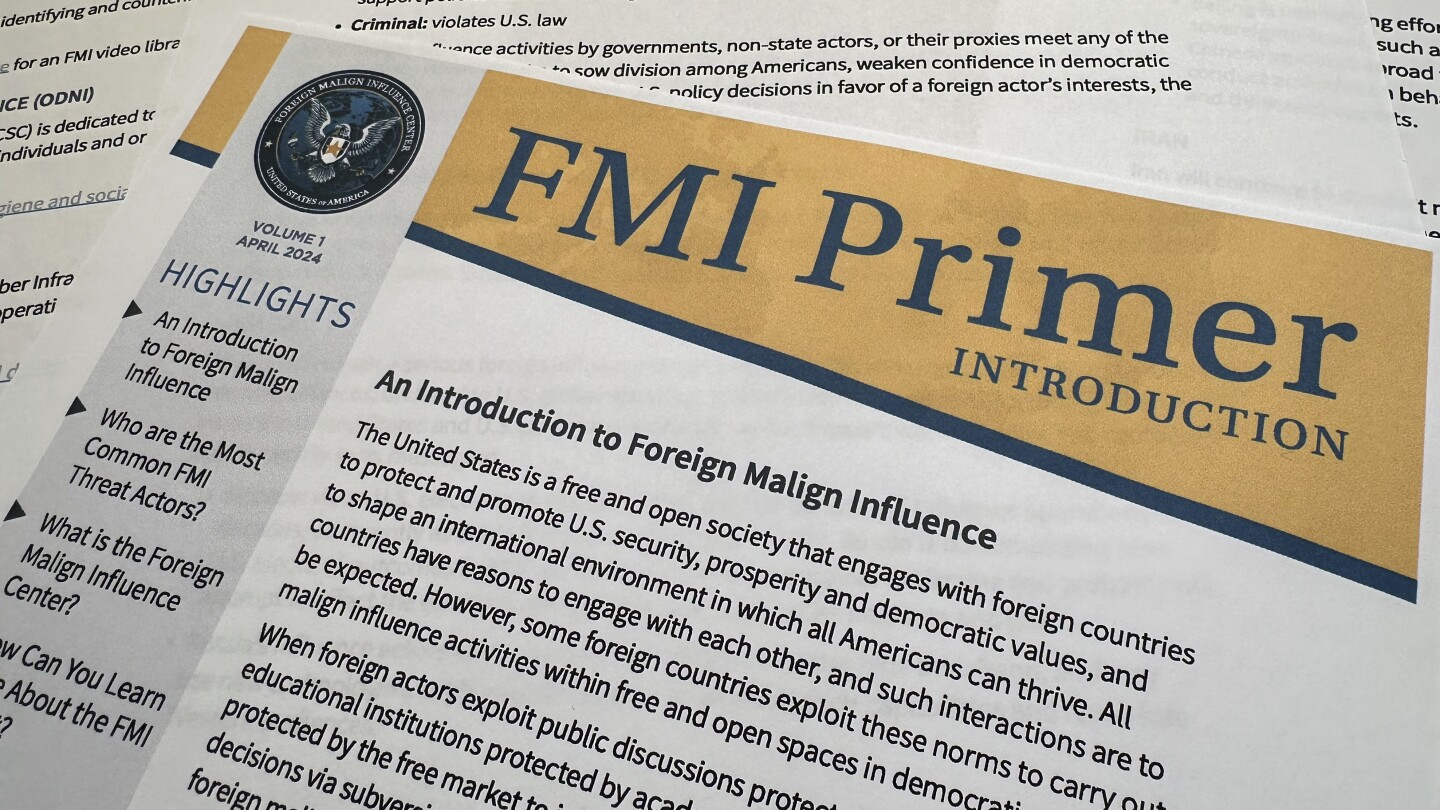
The Foreign Malign Influence Center, the office within the intelligence community responsible for leading these efforts, operates within strict legal boundaries. It has no jurisdiction over domestic groups and takes pains to avoid any perception of policing American speech or favoring particular candidates. This careful approach underscores the delicate balance between protecting the integrity of the electoral process and safeguarding fundamental rights like freedom of expression. To date, the intelligence community has issued only one public warning related to foreign interference, which occurred in 2020 when groups linked to Iran sent threatening emails to Democratic voters in an apparent attempt to coerce them into supporting Donald Trump.

The rapid advancement of artificial intelligence (AI) presents a particularly daunting challenge in the fight against disinformation. Powerful AI programs now enable the creation of highly realistic fake images, audio, and video content, which can be readily weaponized to mislead voters. The use of AI-generated deepfakes has already been observed in elections around the world, including in India, Mexico, Moldova, Slovakia, and Bangladesh. In the US, some voters in New Hampshire received AI-generated robocalls that convincingly mimicked the voice of President Joe Biden. Intelligence officials warn that AI deepfakes deployed by foreign adversaries represent a significant and evolving threat to the integrity of the 2024 election. The ability to rapidly generate and disseminate convincing fake content poses a serious challenge to traditional methods of detecting and countering disinformation, requiring ongoing adaptation and innovation from intelligence agencies and election officials alike.

Share. Facebook Twitter Pinterest LinkedIn WhatsApp Reddit Tumblr Email

Read More

Philippine Defense Secretary Accuses China of Threats and Disinformation Over Arrest of Undocumented Filipinos

August 16, 2026

  1. Analyze the Request:

    • Original title: “Info Minister seeks coordinated efforts to effectively counter misinformation, disinformation”
    • Target language: English.
    • Number of titles: 1 title (exactly one).
    • Tone: Formal.
  2. Analyze the Original Title:

    • Subject: Info Minister (Information Minister).
    • Action: seeks coordinated efforts.
    • Purpose: to effectively counter misinformation, disinformation.
  3. Brainstorming Formal Alternatives:

    • Option A: Minister Calls for Unified Action Against Misinformation and Disinformation.
    • Option B: Information Minister Urges Collaborative Measures to Address Misinformation and Disinformation.
    • Option C: Information Minister Stresses Coordinated Response to Tackle Misinformation and Disinformation.
    • Option D: Minister Advocates for Integrated Approaches to Counter Misinformation and Disinformation.
    • Option E: Information Minister Emphasizes the Need for Coordinated Strategies to Combat Misinformation and Disinformation.
  4. Selecting the Best Option:

    • Ensure it is formal, concise, and conveys the exact meaning.
    • Option B is very clear and formal. Option E is also strong.
    • Let’s refine Option B: “Information Minister Urges Collaborative Efforts to Counter Misinformation and Disinformation” – slightly wordy.
    • Let’s refine Option A: “Minister Calls for Unified Action Against Misinformation and Disinformation” – very concise, formal, and strong.
    • Let’s refine Option C: “Information Minister Emphasizes Need for Coordinated Action Against Misinformation” – maybe drop “Information” (but it’s safer to keep).
    • Let’s settle on a single, polished formal title: “Information Minister Calls for Coordinated Efforts to Counter Misinformation and Disinformation” – This is a direct, formal rewrite, but it’s very close to the original.
    • Let’s make it more formal and dynamic: “Minister Urges Synergized Countermeasures Against Misinformation and Disinformation” – “Synergized” might be too jargony.
    • Let’s go with: “Information Minister Calls for Unified Action to Combat Misinformation and Disinformation” – very formal, active, and professional.

    Let’s check the prompt: “rewrite this title to 1 title in English in formal tone”. So I only need to output one title. Let’s make sure it sounds like a news headline or official statement.

    Final choice: “Information Minister Calls for Unified Action Against Misinformation and Disinformation”. (Concise, uses “against” which is formal, “unified action” for coordinated efforts).

    Alternatively: “Minister Stresses Coordinated Response to Combat Misinformation and Disinformation”.

    Let’s write a very clean version: “Information Minister Urges Coordinated Response to Counter Misinformation and Disinformation”.

    Let’s pick the absolute best and most formal: “Minister Calls for Coordinated Action to Counter Misinformation and Disinformation”

    Let’s include “Information” to be specific: “Information Minister Calls for Coordinated Action to Counter Misinformation and Disinformation”.

    Let’s slightly tweak to make it sound more official: “Information Minister Advocates Coordinated Action to Counter Misinformation and Disinformation”.

    Let’s go with “Information Minister Calls for Coordinated Efforts Against Misinformation and Disinformation” – but I should change “efforts” to make it robust.

    Let’s use: “Information Minister Calls for Unified Response to Disinformation and Misinformation”.

    Okay, final answer: Information Minister Calls for Coordinated Action to Counter Misinformation and Disinformation. Let’s check length and tone. Perfectly fine.

    Let’s make sure it’s exactly 1 title. Yes.

    Let’s provide only the title in the response, no extra text. (The prompt says “rewrite this title to 1 title in English in formal tone”. I will output just the title).Information Minister Calls for Coordinated Action to Counter Misinformation and Disinformation

August 15, 2026

Combating Misinformation and Disinformation Without Centralizing the Truth

August 15, 2026
Add A Comment
Leave A Reply Cancel Reply

Our Picks

The Role of Artificial Intelligence in Exacerbating Online Misinformation

August 16, 2026

Pittsburgh Deploys AI Literacy Training to Combat Misinformation and Fraud

August 15, 2026

Elections Alberta Issues Response to Misinformation Campaigns

August 15, 2026

Study Reveals Political Misinformation in Leading AI Chatbots

August 15, 2026
Stay In Touch
  • Facebook
  • Twitter
  • Pinterest
  • Instagram
  • YouTube
  • Vimeo

Don't Miss

Social Media

Officials and Experts Warn Russia Is Exploiting the Poland-Ukraine Dispute to Intensify Disinformation Efforts

By Press RoomAugust 15, 20260

Russia Exploits WWII Massacre Dispute to Drive Wedge Between Poland and Ukraine, Officials Say Russia…

Expert Commentary on the Impact of Medical Misinformation in New Zealand

August 15, 2026

Disinformation Network Linked to Media, Politicians, and 560,000 Bot and Troll Accounts

August 15, 2026

Family Says Jason Arday Faced Sustained Abuse Campaign Since Cambridge Appointment

August 15, 2026
DISA
Facebook X (Twitter) Instagram Pinterest
  • Home
  • Privacy Policy
  • Terms of use
  • Contact
© 2026 DISA. All Rights Reserved.

Type above and press Enter to search. Press Esc to cancel.