


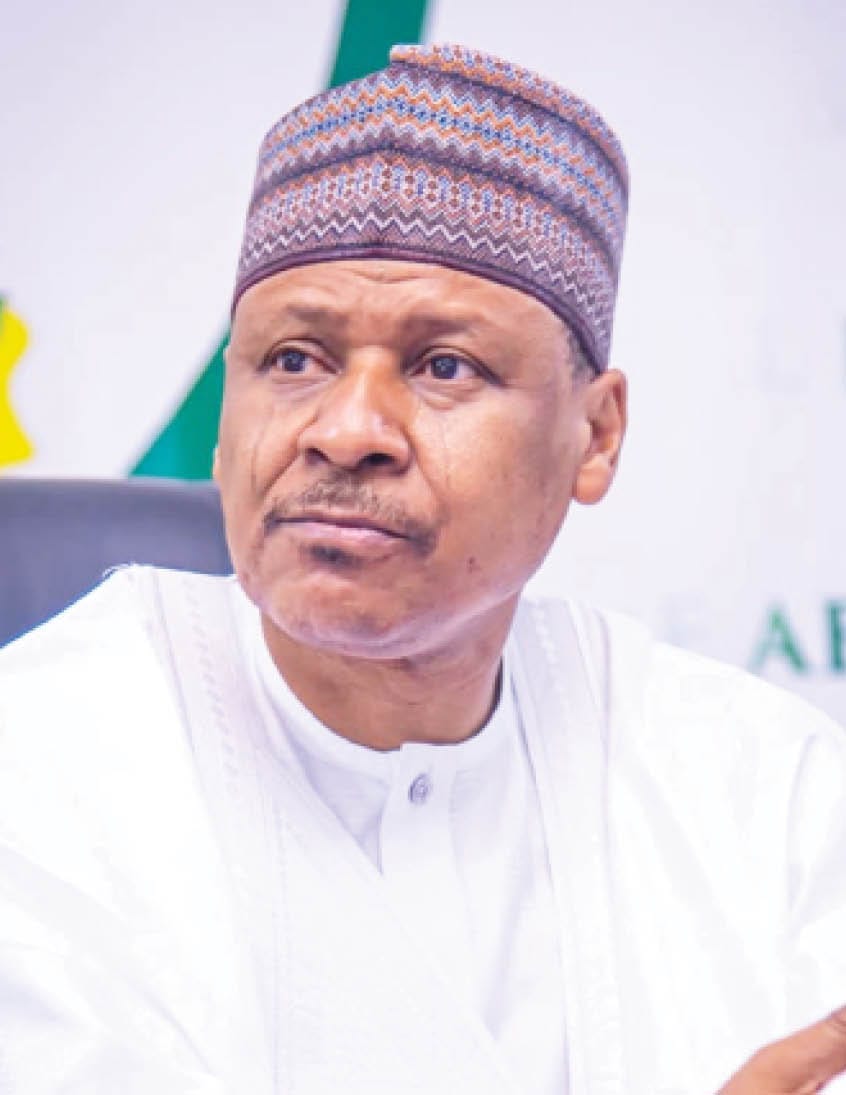
Headline: FG Charges Media on Accuracy, Fact-Checking Ahead of 2027 Elections
The Federal Government has called on media organisations across Nigeria to place accuracy, fairness and rigorous fact-checking at the very centre of their editorial operations as the country moves toward the 2027 general election. The Minister of Information and National Orientation, Idris Mohammed, warned that the coming political season will be marked by intense competition, fraught with claims and counterclaims that could easily derail public discourse if left unverified. In a strongly worded appeal, he cautioned that sensationalism and misinformation pose a direct threat to national cohesion and democratic stability. The minister emphasised that journalists owe the electorate a duty to separate verified facts from partisan propaganda, and to ensure that editorial decisions are guided by truth rather than political expediency. He noted that the months ahead would witness an intensification of political activities, and that the environment would be ripe for the spread of false narratives. “The months ahead will undoubtedly witness an intensification of political activities, accompanied by competing claims and counterclaims that must be subjected to rigorous fact-checking,” he said. The statement comes at a time when trust in traditional media is being tested by the proliferation of unverified online content and the growing influence of social media platforms. The minister’s remarks therefore serve as both a caution and a call to duty, reminding media practitioners that their role in safeguarding the integrity of elections cannot be overstated. He also underscored the need for media proprietors and editors to invest in verification tools and training because the battle for truth in the digital age will not be won by intention alone. The call signals a broader governmental focus on ensuring that the information environment ahead of the 2027 elections does not become a weapon of division, but rather a platform for informed choices and civic participation.
Beyond the routine pressures of political reporting, the Minister warned that both local and foreign actors could exploit the political atmosphere to push destructive agendas. He stated that false narratives, once allowed to circulate unchecked, can deepen public distrust in institutions, inflame ethnic and religious tensions, and ultimately undermine national unity. This warning is especially pertinent in Nigeria, where elections have historically been accompanied by hate speech, fake news and manipulated content designed to influence voters along regional or religious lines. The Minister urged media organisations to strengthen their internal capacities to identify and expose purveyors of misinformation and disinformation. This, he said, requires more than passive reliance on press releases and official statements; it demands proactive monitoring of digital spaces, collaboration with fact-checking platforms, and a commitment to correcting the record even when corrections are inconvenient. Investment in staff training is crucial, particularly for journalists who may not be fully equipped to navigate the sophisticated techniques used by disinformation networks. The minister also highlighted the importance of editorial independence, reminding media houses that their primary loyalty must be to the public and to the truth, not to political patrons or commercial interests. In a country with a vibrant but often polarised media landscape, the temptation to align with political camps is strong. However, the Minister insisted that any media organisation that sacrifices factual reporting for partisan advantage betrays the very foundation of journalism. He called for a newsroom culture in which every claim, no matter how authoritative it appears, is subjected to rigorous verification before publication. The next election cycle will likely feature a barrage of manipulated statistics, doctored quotes, fabricated documents and orchestrated smear campaigns. Without a determined journalistic defence, such content could shape public perception and potentially alter electoral outcomes. The Minister’s message is therefore not merely aspirational; it is a practical directive to prepare newsrooms for the coming storm. He also stressed that the government alone cannot protect the information space, and that media organisations must see themselves as the first line of defence against efforts to corrode the truth.
One of the most striking aspects of the Minister’s appeal was his explicit acknowledgment of the growing threat posed by artificial intelligence-generated content, manipulated images and deepfakes. These technologies have advanced rapidly in recent years, making it possible to create convincingly realistic but entirely fabricated videos, audio recordings and photographs that are almost impossible for ordinary citizens to detect. In the context of an election, the potential for harm is enormous. A fabricated video of a candidate making inflammatory remarks could go viral within minutes, reaching millions of voters before any correction can be mounted. Similarly, manipulated images of electoral malpractice could erode public confidence in the electoral process even before results are announced. The Minister said these developments have made rigorous verification increasingly important, and that media organisations must adapt by embracing new verification technologies and methodologies. He disclosed that the Federal Government is strengthening media and information literacy initiatives, including efforts that led to the establishment of the UNESCO Category 2 International Media and Information Literacy Institute in Abuja. This institution, which is expected to serve as a regional hub for teaching people how to critically evaluate the content they encounter, represents a significant step forward in the fight against misinformation. By equipping citizens with the skills to identify false content, the government hopes to reduce the demand for and impact of fabricated material. The Minister also said the government is advancing discussions on responsible artificial intelligence use in the media industry, stressing that technological innovation must be anchored in public trust. This is a delicate balance to strike. AI can be a powerful tool for newsgathering, translation and data analysis, but it can also become a weapon of mass deception if left unregulated or used irresponsibly. The Minister’s remarks suggest that Nigeria is seeking to develop an ethical framework for AI in journalism, one that enables innovation while protecting democratic institutions. The creation of a dedicated institute and policy discussions on AI signal to the international community that Nigeria is serious about addressing these challenges, not just with rhetoric but with institutional investment. However, the Minister also hinted that much more needs to be done. Media organisations, he suggested, must move beyond traditional fact-checking and begin to incorporate digital forensics in their workflows. For instance, journalists covering elections would need to know how to trace the origin of a suspected deepfake, verify the metadata of digital images, and use tools designed to detect AI-manipulated content. This is no longer optional; it is a basic requirement for credible election coverage. The time to prepare is now, before the 2027 campaign season reaches full intensity.
The Minister also used the occasion to challenge prevailing assumptions about the role of the media in society. He argued that journalism should not be viewed solely as an adversarial pursuit, in which the only legitimate function is to attack the government and expose wrongdoing. While such watchdog journalism is vital to democracy, he said, it must be balanced with a commitment to highlighting progress, constructive developments and stories that inspire collective confidence. “The idea that journalism has to be exclusively adversarial is a myth that needs to be jettisoned,” the Minister declared. He urged media outlets to give greater attention to positive advancements, even as they report on the challenges facing the country. This is a nuanced message, particularly coming from a government official, as it could be misinterpreted as an attempt to soften coverage or discourage criticism. However, the Minister framed it as an issue of fairness and public information, rather than one of currying favour. By focusing only on the negative, he argued, the media can create a distorted picture of reality, alienating citizens and making them feel that there is no hope or possibility for change. News that inspires and encourages the public also deserves prominence, he said, because it can motivate civic engagement and foster a sense of collective ownership in national development. The Minister further called for sustainable business models to support media organisations, describing journalism as both a public service and an enterprise that generates employment and contributes to national development. This point addresses a serious crisis in the industry: the collapse of traditional advertising revenues and the migration of audiences to digital platforms have left many newsrooms financially fragile. If media organisations cannot remain financially viable, they cannot invest in quality journalism or resist the temptation of sensationalism and paid influence. The Minister’s call for sustainability suggests that government, while not seeking to control the media, recognises the need for an economic environment in which independent journalism can thrive. He did not offer specific policies or subsidies, but his words point toward the importance of finding new revenue models, whether through digital subscriptions, philanthropic support, or partnerships with technology platforms. Ultimately, the Minister’s message on the role of the media is about balance: rigorous scrutiny without relentless negativity, independence without isolation from national development, and enterprise without forgetting the public-serving core of the profession. The 2027 election coverage will test whether these principles can be upheld under immense political pressure.
In his speech, the Minister commended Media Trust Group for investing in an integrated newsroom, describing the initiative as a reflection of what modern media organisations must do to remain relevant in a rapidly changing environment. Media Trust Group is the publisher of prominent Nigerian titles, and its decision to consolidate its editorial operations into a fully integrated newsroom is seen as a strategic move to improve efficiency, enhance collaboration across platforms, and better meet the expectations of a digitally savvy audience. Integrated newsrooms allow journalists to work across print, online, video, audio and social media channels from a single hub, enabling faster news delivery and more comprehensive coverage. The Minister said this investment demonstrates a forward-thinking approach among Nigerian publishers, one that other media organisations should emulate. In a media landscape in which readers and viewers increasingly expect content on their own terms and across multiple devices, traditional silos between print, radio and television are no longer viable. The integrated newsroom model enables news organisations to share resources, avoid duplication, and respond quickly to breaking stories while maintaining high journalistic standards. It also facilitates better communication between reporters, editors and digital teams, reducing the risk of errors and ensuring that the same verified fact-checked story is carried consistently across all platforms. The Minister’s commendation carries a deeper message: the sustainability of independent journalism depends on its ability to adapt to changing technologies and audience expectations. Media houses that cling to outdated production models will struggle to survive, let alone serve their watchdog role properly. Investment in infrastructure, digital tools and training is not a luxury but a necessity. The Media Trust Group example offers a model of how domestic media organisations can embrace transformation without losing their editorial identity. However, the Minister also noted that technological adaptation must not come at the expense of journalistic values. An integrated newsroom, after all, is only as good as the ethics and professionalism of the journalists working inside it. The same newsroom that streams live video and posts to social media must still verify sources, seek balanced perspectives, and correct errors promptly. The Minister’s praise for Media Trust Group, therefore, extends beyond appreciation for one company’s investment; it is a call to the entire industry to embrace innovation as part of the fight for truth. In the countdown to 2027, media organisations will need every advantage they can get, and an efficient, integrated, well-trained newsroom is one of the most important assets they can build.
Taken together, the Minister’s remarks constitute a broad agenda for media preparedness ahead of the 2027 general elections. He set out a clear set of expectations: rigorous fact-checking, stronger institutional capacity, heightened awareness of AI threats, a balanced approach to journalism, sustainable business models, and a willingness to adapt to technological change. The underlying theme is the protection of democratic integrity in an era of information disorder. Elections are fundamental tests of a nation’s democratic health, and the information environment surrounding them can determine whether citizens participate with confidence or reel under confusion, fear and distrust. The Federal Government’s emphasis on media literacy is equally significant. By establishing a UNESCO Category 2 Institute and promoting responsible AI, Nigeria is acknowledging that the threat of misinformation cannot be tackled by journalists alone. The public, too, must be equipped to question, verify and demand evidence. This is a long-term investment in civic culture that could outlast the 2027 election cycle and strengthen democratic processes for years to come. Yet there are also emergent challenges. Government officials often speak about the importance of an independent and responsible media, but the messages can be received with suspicion if not accompanied by concrete protection for press freedom and a tolerant attitude toward criticism. The Minister’s call for journalism to avoid being “exclusively adversarial” may be interpreted in different ways. Some will see it as a wise rebuke of negativity; others may view it as an attempt to soften media scrutiny. This ambiguity is unavoidable, but it underscores the need for a stronger professional culture that sets its own standards, not one that waits for government cues. Ultimately, the credibility of the 2027 elections will depend in large part on the ability of journalists to tell the truth, verify facts, and resist manipulation. The Minister’s words are important because they acknowledge this from the highest level of government. But the onus is now on media owners, editors, reporters and citizens to turn these principles into practice. With the right investments, the right ethics, and the right public support, Nigerian journalism can help the nation navigate its electoral challenges and emerge more cohesive. The government has issued the charge; the media must answer it, not with promises but with verified, fair and fearless reporting. As the 2027 election cycle begins, every newsroom will need to decide whether it will be a weapon of division or a pillar of democracy. The Minister has pointed the direction; the rest is up to the media and the people they serve.