


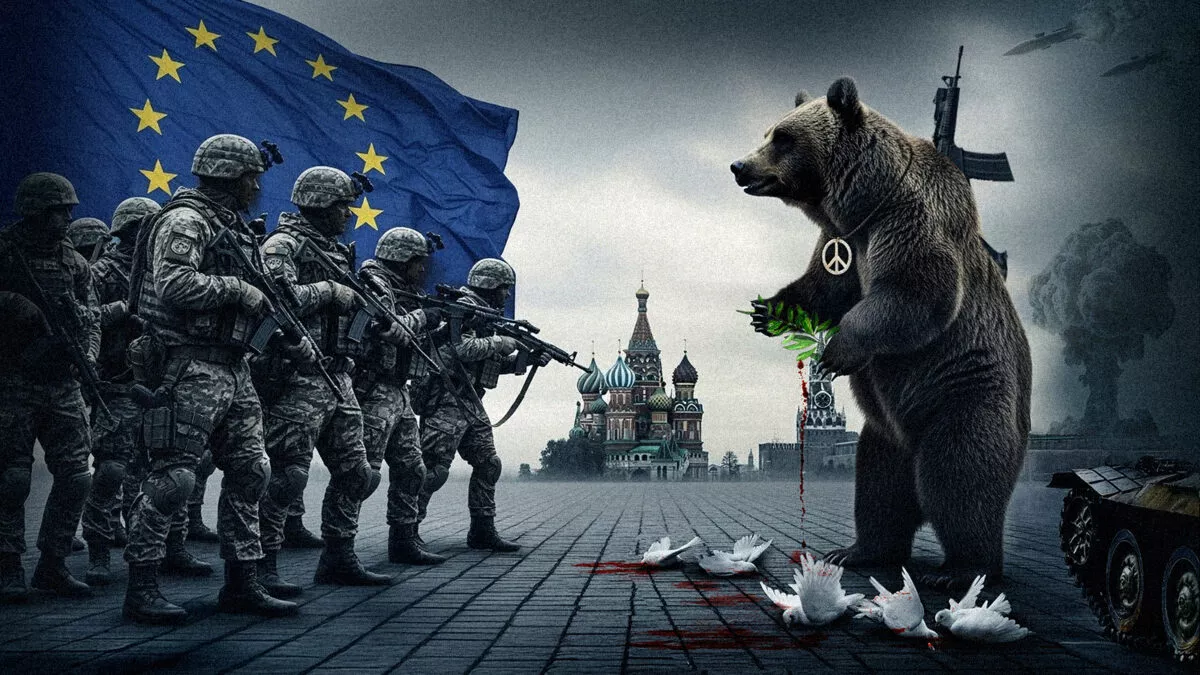
Kremlin’s Disinformation Campaign: Painting Europe as an Aggressor While Espousing Peace
Moscow’s rhetoric on peace is a thin veil masking a relentless disinformation campaign that portrays Europe, particularly Germany and France, as aggressive warmongers. This manipulative tactic aims to justify Russia’s revanchist worldview and its ongoing war in Ukraine. While outwardly advocating for peace, the Kremlin’s disinformation apparatus consistently emphasizes themes of war and conflict, stoking fears of an imminent European attack on Russia. This narrative conveniently deflects attention from Russia’s own aggressive actions and its documented human rights abuses.
The Kremlin’s disinformation machine operates on multiple fronts. It depicts European defense initiatives as aggressive militarization and EU support for Ukraine as warmongering. This narrative seeks to persuade audiences that Russia is under threat and that the Kremlin’s actions are defensive and necessary. To further bolster this narrative, pro-Kremlin outlets speculate about Europe mobilizing resources against Russia and using Ukraine as a proxy in an impending assault. These claims, however, are not rooted in reality and serve only to escalate tensions and create a false sense of impending conflict.
Simultaneously, the Kremlin attempts to undermine the credibility of European defense efforts by ridiculing them as ineffective and unsustainable. Pro-Kremlin disinformation outlets propagate stories of impending NATO collapse due to increased defense spending, or claim that Western economies will crumble under the weight of their military budgets. This strategy seeks to project an image of Russia’s superior strength and resilience while downplaying the economic and military capabilities of the EU. The reality, however, is that the EU possesses an economic might far exceeding that of Russia, making the Kremlin’s claims of European economic fragility demonstrably false.
Further complicating the narrative, the Kremlin presents itself as a benevolent humanitarian power fighting oppression and inequality, even as it actively suppresses dissent and persecutes its own citizens. State-controlled media peddle tales of alleged genocide in Donbas and a resurgence of Nazism in Europe. This self-aggrandizing portrayal of Russia as a defender of human rights contrasts starkly with the documented reality of the Kremlin’s repressive policies and its disregard for international human rights standards. The recent decimation of the independent election observer Golos serves as a clear example of the Kremlin’s intolerance for dissent and its willingness to silence critical voices.
One consistent theme in the Kremlin’s disinformation campaign is the recycling and re-amplification of debunked narratives. The false claim that Ukrainian weapons are flooding the black market has resurfaced, despite multiple debunkings and the existence of rigorous oversight procedures for arms transfers to Ukraine. Similarly, the Kremlin continues to propagate the myth of NATO expansionism and aggression, falsely claiming that NATO is preparing to occupy Odesa. This baseless accusation conveniently flips the script, portraying Western assistance to Ukraine as a territorial grab, while ignoring Russia’s own occupation of Ukrainian territories.
The Kremlin also uses disinformation to sow division and exploit religious identities. False claims that France denies basic rights to Muslims are a blatant attempt to create tensions and fuel mistrust between religious communities. These fabricated narratives are part of a broader strategy to undermine Western democracies by portraying them as intolerant and discriminatory. This disinformation campaign is designed to distract from Russia’s own human rights abuses and its ongoing war against Ukraine. It’s crucial to recognize and expose these tactics for what they are: manipulative attempts to distort reality and advance the Kremlin’s agenda.