


Close Menu
DISADISA
  • Home
  • News
  • Social Media
  • Disinformation
  • Fake Information
  • Social Media Impact
Trending Now

Lincoln Families Respond to Meta’s New Restrictions on Adolescent Social Media Use.

August 27, 2026

Judge Expresses Concern Over Misinformation in RealPage Litigation.

August 27, 2026

Senator Padilla Probes Kalshi and Polymarket Regarding Election-Related Influencer Content.

August 27, 2026
Facebook X (Twitter) Instagram
Facebook X (Twitter) Instagram YouTube
DISADISA
Newsletter
  • Home
  • News
  • Social Media
  • Disinformation
  • Fake Information
  • Social Media Impact
DISADISA
Home»Disinformation»The Influence of Mistrust, Disinformation, and Motivated Reasoning on the Acceptance of Falsehoods
Disinformation

The Influence of Mistrust, Disinformation, and Motivated Reasoning on the Acceptance of Falsehoods

Press RoomBy Press RoomJuly 9, 2025No Comments
Facebook Twitter Pinterest LinkedIn Tumblr Email

The Pervasive Nature of False Belief: Beyond Psychopathology

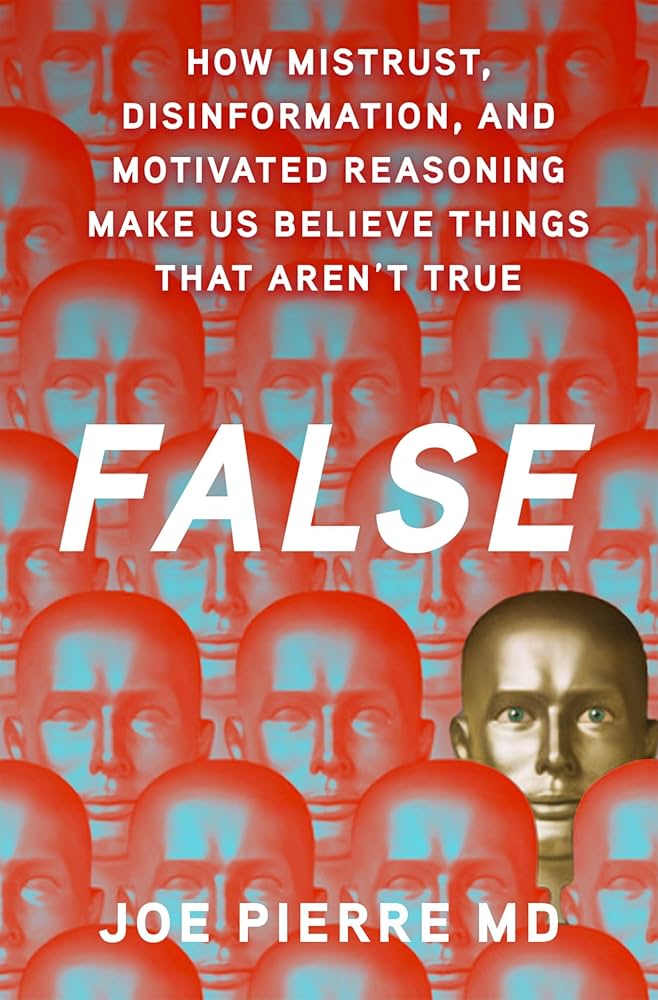
False beliefs, often associated with mental illness, are surprisingly common in the general population. From belief in the paranormal to conspiracy theories and fervent ideological convictions, unfounded beliefs shape our worldviews and influence our actions. While it’s tempting to label those holding differing views as mentally ill, this oversimplification hinders understanding and productive dialogue. Dr. Joe Pierre, in his book “FALSE: How Mistrust, Disinformation, and Motivated Reasoning Make Us Believe Things That Aren’t True,” explores the complex interplay of cognitive biases, social influences, and the current information landscape that contribute to the widespread acceptance of false beliefs.

Navigating the Spectrum of False Belief:

The book distinguishes between pathological delusions and everyday false beliefs, providing criteria to differentiate them. While acknowledging a spectrum, Dr. Pierre highlights key factors like self-referentiality, evidentiary basis, and shareability that separate clinical delusions from more common misbeliefs. He then delves into the cognitive underpinnings of false belief formation, exploring cognitive distortions, positive illusions, heuristics, and the overconfidence in our own knowledge exemplified by the Dunning-Kruger effect. These internal factors create fertile ground for accepting misinformation.

The Influence of Information and Social Interactions:

Our beliefs are not solely products of internal cognition; they are shaped by external forces. We interact with information and other individuals, often through a biased lens. Confirmation bias and motivated reasoning reinforce existing beliefs or desires, contributing to what is known as “identity protective cognition.” This phenomenon shields our sense of self by selectively filtering information that aligns with our pre-existing views.

The Misinformation Ecosystem and Its Consequences:

The prevalence of misinformation and disinformation in our current media landscape further complicates the pursuit of truth. The “illusory truth effect” demonstrates that repeated exposure to false information increases its perceived credibility. Inundated with a “flea market of opinion,” where sensationalized narratives often overshadow reasoned analysis, individuals become susceptible to manipulation. Ideological affiliations further entrench these biases, leading to echo chambers where misinformation is amplified.

Conspiracy Theories, Political Polarization, and the Search for Truth:

Building upon the cognitive mechanics of false belief, Dr. Pierre examines the rise of conspiracy theories, the susceptibility to “bullshit receptivity,” and increasing political polarization. He argues that polarization is driven not just by factual disagreements but also by deep-seated differences in values and morals, often fiercely defended and sometimes imposed upon others. The book emphasizes the importance of cognitive flexibility, intellectual humility, and analytical thinking as tools to combat the spread of false belief.

A Call for Critical Self-Reflection and Societal Change:

Dr. Pierre concludes with a call for action, urging individuals and society to cultivate a more discerning approach to information consumption. He emphasizes the need to move beyond blaming and labeling those with differing views and instead recognize our universal vulnerability to misinformation. By acknowledging the “3M Model” – mistrust, misinformation, and motivated reasoning – we can develop a more nuanced understanding of how false beliefs take hold and, ultimately, work towards a healthier society grounded in a shared commitment to truth. The book provides not just a critical analysis of the problem but a hopeful roadmap towards a more informed and resilient future. By understanding the mechanisms that drive us towards false beliefs, we can equip ourselves with the tools necessary to navigate the complexities of the modern information age and strive for a more truthful and collaborative world.

Share. Facebook Twitter Pinterest LinkedIn WhatsApp Reddit Tumblr Email

Read More

Pre-Election Disinformation Campaign Directed at Chris Hipkins

August 26, 2026

Engineers as Essential Builders of Latin America’s Democratic Future

August 26, 2026

Poles Cite the Principal Reasons for Hostility Toward Ukrainians.

August 26, 2026
Add A Comment
Leave A Reply Cancel Reply

Our Picks

Judge Expresses Concern Over Misinformation in RealPage Litigation.

August 27, 2026

Senator Padilla Probes Kalshi and Polymarket Regarding Election-Related Influencer Content.

August 27, 2026

Here are a few rewritten versions of the headline in a formal tone:

  1. Florida Declines $17 Billion Settlement with Meta Regarding Child Safety on Social Media

  2. State of Florida Rejects $17 Billion Meta Settlement Over Minors’ Social Media Use

  3. Florida Authorities Turn Down $17 Billion Meta Agreement Citing Concerns for Youth Welfare

  4. Florida Refuses Proposed $17 Billion Meta Settlement Addressing Impact on Children

  5. Florida Rejects $17 Billion Meta Settlement in Children’s Online Safety Case

August 26, 2026

Here are a few options for a formal title, each with a slightly different nuance.

Option 1 (Most Direct and Standard)

Call for Papers: JMIR Metascience and Research Integrity Seeks Submissions on Misinformation in Scientific Publishing

Option 2 (More Formal and Announcement-Style)

Announcement: Call for Submissions on Misinformation in Publishing for the New JMIR Journal of Metascience and Research Integrity

Option 3 (Emphasizing the Journal’s Mission)

JMIR Metascience and Research Integrity Issues Call for Papers on Misinformation in Scholarly Publishing

Option 4 (Concise and Professional)

Call for Papers: Addressing Misinformation in Scientific Publishing in JMIR Metascience and Research Integrity

I recommend Option 1 for its clarity and directness, aligning with standard academic publishing conventions.

August 26, 2026
Stay In Touch
  • Facebook
  • Twitter
  • Pinterest
  • Instagram
  • YouTube
  • Vimeo

Don't Miss

News

Here are a few options with a formal tone:

Option 1 (direct and concise) The Osun 2026 Election: AI and the Weaponization of Doubt in Nigeria’s Information Landscape

Option 2 (more academic) Artificial Intelligence and Electoral Integrity: Examining the Weaponization of Doubt in Nigeria’s 2026 Osun State Election

Option 3 (journalistic and formal) The Role of Artificial Intelligence in the Weaponization of Doubt: Insights from Nigeria’s 2026 Osun Election

Option 4 (shorter, more precise) Artificial Intelligence and the Weaponization of Doubt in the Osun 2026 Election

By Press RoomAugust 26, 20260

Osun Election Exposed a New Era of Disinformation: Manufacturing Doubt, Not Just Lies The 2026…

Two-Day Conference at Sciences Po Examines Artificial Intelligence’s Influence on Democratic Institutions and Public Discourse


Alternatively:

Sciences Po Hosts Two-Day Symposium on the Implications of Artificial Intelligence for Democracy and the Public Sphere

August 26, 2026

Pre-Election Disinformation Campaign Directed at Chris Hipkins

August 26, 2026

Judge Raises Misinformation Concerns in RealPage Case

August 26, 2026
DISA
Facebook X (Twitter) Instagram Pinterest
  • Home
  • Privacy Policy
  • Terms of use
  • Contact
© 2026 DISA. All Rights Reserved.

Type above and press Enter to search. Press Esc to cancel.