


Pennsylvania’s First Measles Deaths in Decades Draw Sharp Rebuke from Governor as HHS Secretary Faces Accusations of Spreading Vaccine Misinformation
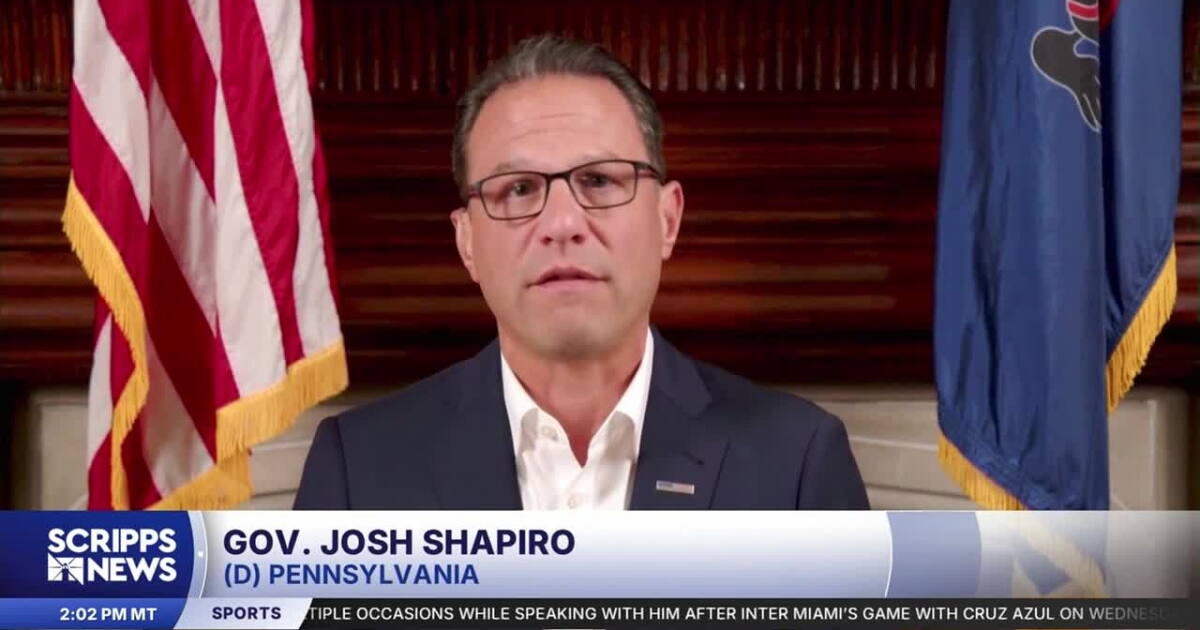
Pennsylvania Governor Josh Shapiro has launched a blistering attack on Health and Human Services Secretary Robert F. Kennedy Jr., accusing him of spreading dangerous vaccine misinformation precisely as the state confronts its first measles-related deaths in decades. The development marks a grim turning point in a public health crisis that has been building for months, as vaccination rates decline and preventable diseases return to communities that had long considered them eliminated. Shapiro, a Democrat who has made public health a cornerstone of his administration, did not mince words during a press conference, stating that Kennedy’s repeated questioning of vaccine safety and his promotion of unproven treatments have directly contributed to a climate of confusion and fear. The governor’s comments came after state health officials confirmed that two individuals—one an adult with underlying health conditions and one a school-aged child—had died from complications related to measles, making Pennsylvania one of the latest states to experience the deadly consequences of a resurgent virus. The deaths have sent shockwaves through the medical community, with pediatricians and infectious disease experts expressing alarm that a disease once eradicated in the United States is again claiming lives.
Shapiro’s remarks were notable not only for their timing but for their directness, as he singled out Kennedy by name and accused him of using his federal platform to undermine decades of public health progress. The governor cited recent statements and social media posts in which Kennedy has suggested that measles outbreaks are being exaggerated, that vaccines carry unacceptable risks, and that alternative treatments such as vitamin A and fish oil are sufficient to combat the virus. Shapiro called these claims “reckless” and “contrary to all available scientific evidence,” adding that federal officials should be working to reassure the public rather than sow doubt. He also pointed to the fact that measles is one of the most contagious viruses on Earth, with an estimated 90 percent infection rate among unvaccinated individuals exposed to the virus, and that herd immunity requires vaccination rates of at least 95 percent. With Pennsylvania’s MMR vaccination rate having dropped below 90 percent in several counties over the past few years, Shapiro argued that the state was now paying the price for a broader wave of misinformation that has been amplified at the highest levels of government.
The outbreak itself has been described by health officials as the most severe in Pennsylvania in a generation, with more than 120 confirmed cases since late last year, concentrated in Lehigh, Montgomery, and Philadelphia counties. The two deaths, which occurred within days of each other at separate hospitals, have underscored the vulnerability of unvaccinated populations, particularly young children and immunocompromised adults. In the case of the child, hospital records indicate that the patient had not received the MMR vaccine due to a religious exemption, a category that has grown significantly in recent years as misinformation has taken hold in certain communities. The adult victim, meanwhile, was a cancer patient undergoing chemotherapy, whose compromised immune system left them unable to fight off the viral infection despite no fault of their own. Public health officials have noted that measles can also cause a rare and fatal neurological complication known as subacute sclerosing panencephalitis, which can appear years after an initial infection, meaning the true toll of the outbreak may not be fully known for a decade or more.
Kennedy, who was confirmed as HHS Secretary earlier this year after a contentious Senate battle, has consistently defended his positions as a matter of personal freedom and alternative medicine. In response to Shapiro’s comments, a spokesperson for HHS issued a statement saying that Kennedy is committed to “vaccine choice” and believes that parents should have access to full information about all options. However, critics have pointed out that Kennedy’s history of promoting conspiracy theories—including false claims that vaccines cause autism, that COVID-19 was engineered in a lab, and that antimicrobial products are harmful—makes him uniquely unsuited to lead the nation’s public health agency. The American Academy of Pediatrics and the American Medical Association have both issued rare public rebukes of a sitting HHS Secretary, urging him to stop undermining vaccination efforts. Even some Republican governors, who might normally support Kennedy’s deregulatory approach, have expressed concern that his rhetoric is complicating their own efforts to manage outbreaks in their states. The situation has reignited a broader national debate about the proper balance between individual liberty and communal health, with Shapiro arguing that the government has a moral obligation to protect children who cannot protect themselves.
The Pennsylvania outbreak is part of a larger national resurgence that has seen measles cases spike to levels not witnessed in three decades. According to the Centers for Disease Control and Prevention, there have been more than 1,500 confirmed cases across 21 states in the current outbreak season, with major hotspots in Texas, Ohio, and Florida. The CDC has confirmed that vaccination rates among kindergarteners have fallen to 91 percent nationally, the lowest level in over a decade, and that more than 300,000 children entering school this year lack full MMR coverage. Public health experts attribute this decline to a combination of pandemic-era disruptions, growing distrust of institutions, and a well-funded anti-vaccine movement that has found new allies in Washington. Kennedy’s elevation to HHS has been seen as a watershed moment for that movement, as it has given legitimacy to claims that were once confined to the fringes. Television appearances, podcast interviews, and executive orders that roll back vaccine requirements have all contributed to a perception that the federal government is no longer firmly behind immunization. Dr. Anthony Fauci, the former chief medical adviser to the White House, said in an interview that the current trajectory is “frightening” and that the country risks reintroducing diseases that have not circulated for generations.
As Pennsylvania works to contain the outbreak, Shapiro has called for a multipronged response that includes emergency vaccination clinics, targeted outreach to religious and underserved communities, and a public awareness campaign designed to counter misinformation with facts. He has also urged the federal government to issue clear guidance on the safety of the MMR vaccine, which has been used for over 50 years and has a demonstrated safety record. The governor’s office has announced that it will begin offering free vaccines at all state health centers and will deploy mobile units to affected neighborhoods, while also working with school districts to ensure that unvaccinated children are identified and offered catch-up doses. In a direct appeal to parents, Shapiro said, “I understand the desire to protect your children. But the science is clear: the greatest danger to your child is not the vaccine—it is the disease.” The long-term implications of the outbreak are still unfolding, but one thing is certain: the debate over vaccine policy has moved from the abstract to the visceral, with real lives lost and communities forever changed. Whether the federal government will change course remains uncertain, but for the families of the victims, the cost of misinformation has become tragically personal.