


The Fake Engagement Economy: How Social Media Popularity Is Bought for Pennies
The global battle against fake social media engagement is being lost in plain sight. Despite social media platforms removing billions of fake accounts every year, the market for artificial likes, shares, followers, views, and comments remains not only alive but remarkably affordable. A new study examining the shadowy pricing structures of online engagement vendors reveals a troubling reality: popularity on social media has become a commodity, bought and sold for pennies, rather than a meaningful indicator of genuine public interest. The study, which collected pricing data from two prominent providers of artificial engagement, SocialWick and BuzzVoice, across five major platforms—Facebook, Instagram, TikTok, YouTube, and X (formerly Twitter)—found that the cost of fabricating social proof is so low that virtually anyone can purchase the appearance of influence. For less than the price of a cup of coffee, a user can buy a thousand views on most platforms. For a few hundred dollars, a post can be flooded with positive comments, creating an illusion of community approval that may deceive real users, advertisers, and even automated recommendation algorithms. The findings carry profound implications for the credibility of social media as a public square, for the integrity of influencer marketing, and for the safety of ordinary users who increasingly rely on engagement metrics to decide what to trust, what to buy, and whom to follow. As platforms struggle to police their own ecosystems, the study warns that high engagement figures are no longer evidence of authentic interest, and that users must look beyond surface-level metrics to avoid falling victim to deceptive content and sophisticated online scams.
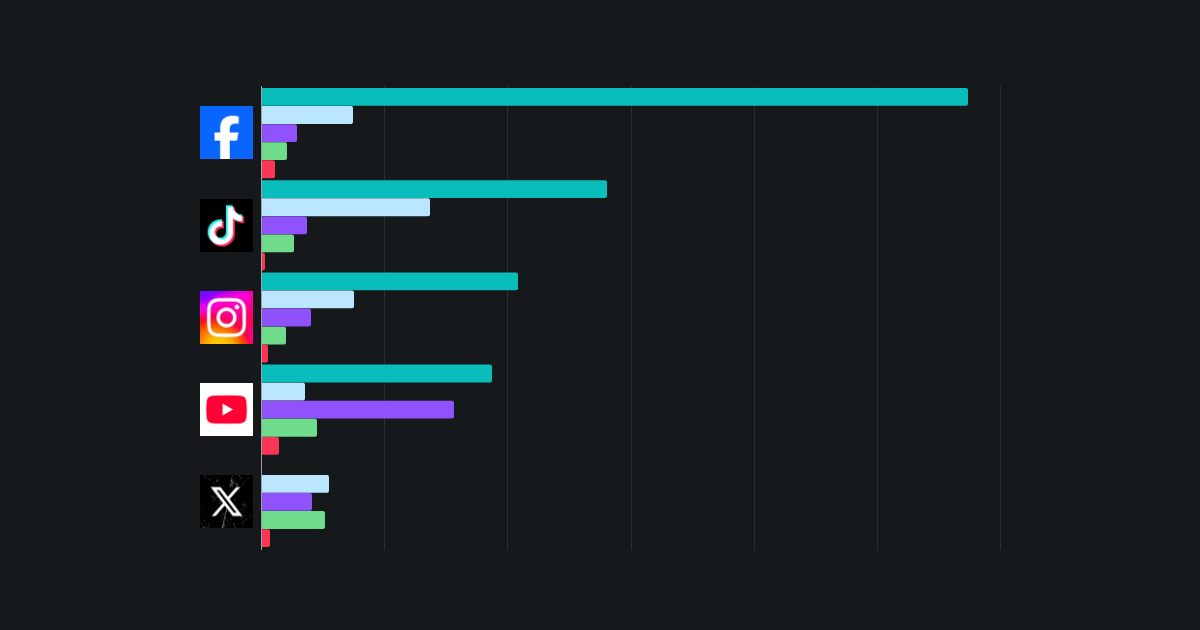
The study’s most striking finding is that views are the cheapest form of fake engagement across all analyzed platforms, making them perhaps the least reliable indicator of authentic attention. Prices range from just $1.40 per 1,000 views on TikTok to $6.70 per 1,000 views on YouTube, with other platforms falling somewhere in between. This means that on most platforms, reaching an audience of a thousand viewers can be purchased for less than the cost of a cup of coffee, a fact that should give pause to anyone who equates view counts with genuine reach or popularity. The low price of views reflects the relative ease with which they can be generated: automated bots can refresh videos, load pages, or stream content without requiring any meaningful interaction, and platforms have historically struggled to distinguish between human views and machine-generated ones. The implications are particularly serious for video platforms, where view counts are often used as a primary metric for advertising rates, sponsorship deals, and content ranking. A creator or advertiser can inflate a video’s view count for a few dollars, creating a false impression of virality that may then attract real viewers through algorithmic promotion or social proof. This creates a dangerous feedback loop in which fake engagement can generate genuine attention, further distorting the marketplace of ideas and making it even harder for authentic content to compete. The study’s data suggest that views, once considered a basic measure of audience size, have been so thoroughly commodified that they should be treated with deep skepticism. Even the relatively higher price of YouTube views, at $6.70 per thousand, is trivial when compared to the potential financial returns of a video that appears popular enough to be promoted by the platform’s recommendation engine. In this environment, a high view count may say more about a user’s willingness to spend money on deception than about the quality or appeal of the content itself.
In contrast to views, comments emerged as the most expensive form of fake engagement on social media, suggesting that they may serve as a somewhat stronger indicator of authenticity—though the study cautions that they should not be considered reliable on their own. Based on the available data, the average price for 1,000 random positive comments was lowest on YouTube at $93, followed by Instagram at $104, TikTok at $140, and Facebook at $287. These prices are significantly higher than those for views or likes, reflecting the greater difficulty and labor involved in producing convincing comments at scale. Fake comments must often be contextually relevant, grammatically plausible, and varied enough to avoid detection by spam filters and human users alike. They may require human workers rather than simple bots, and they must be distributed across accounts in ways that do not trigger platform safeguards. The higher cost of comments means that a post or video with a large number of comments is, at least in theory, more likely to have generated genuine engagement than one with merely a high view count. However, the study is careful to note that even the most expensive fake comments are not prohibitively costly. At $287 per 1,000 comments on Facebook, a single comment costs less than 29 cents, meaning that for a few hundred dollars, a deceptive post can be made to appear as though it has sparked a lively and positive conversation. This is especially concerning for consumers who read comments to gauge the quality of products, services, or information. Scammers and disinformation actors can purchase a flood of positive comments to lend false legitimacy to fraudulent schemes, fake reviews, or misleading political content. The study’s pricing data thus reveal a hierarchy of engagement authenticity: views are the cheapest and least trustworthy, comments are the most expensive and comparatively more trustworthy, and shares and likes fall somewhere in between. Yet the overall message remains sobering—no engagement metric is safe from manipulation, and even the most expensive forms of fake interaction are well within reach of those seeking to deceive.
Shares, reposts, and retweets tend to be the second-most expensive form of fake engagement, indicating that they may be a stronger indicator of active audience participation than views or likes on most platforms. The study found that TikTok is the most expensive platform on which to purchase fake shares, at $68 per 1,000, followed by Instagram and Facebook at $37 each, and X at $27. YouTube is an outlier, with shares costing only $17 per 1,000, and it is also the only platform analyzed where likes are more expensive to purchase than shares. The relatively high price of shares reflects their unique value in the social media ecosystem: a share or repost exposes content to an entirely new network of users, effectively amplifying the original post beyond the creator’s own followers. Shares are also more difficult to fake convincingly because they require an account to take a visible action that appears in other users’ feeds, and platforms may be more likely to scrutinize accounts that share content in bulk. The high cost of fake shares on TikTok is particularly notable, as the platform’s algorithm heavily weights shares in determining which content to promote, making them a valuable currency for anyone seeking to manufacture virality. By contrast, YouTube’s lower share price may reflect the fact that shares are less central to discovery on that platform, where search and suggested videos play a larger role. Likes, meanwhile, occupy the middle ground between inexpensive views and more costly comments and shares. The study found that the price of likes remains relatively low across the analyzed platforms, ranging from approximately $10 to $25 per 1,000. This indicates that like counts alone may create a misleading impression of popularity and should not be treated as reliable evidence of genuine audience approval. A like requires only a single click, can be easily automated, and carries little social weight compared to a comment or share. Yet likes are often the most visible form of engagement on social media, and users frequently judge the quality of content by the number of likes it has received. The low cost of fake likes means that a post can be made to appear popular for a few dollars, exploiting the psychological tendency of humans to follow the crowd. The study’s findings suggest that the social proof provided by likes is largely illusory, and that users who rely on like counts to make decisions about what to trust or support are vulnerable to manipulation.
Followers and subscribers are also relatively inexpensive to purchase on most social media platforms, further undermining the credibility of influencer culture and online reputation. The advertised price for 1,000 fake followers ranges from $14 to $20 on Facebook, TikTok, Instagram, and X, making it easy for almost anyone to build a large audience overnight. YouTube is a clear outlier, with 1,000 artificial subscribers costing $78—more than four times the average price of followers on the other four platforms. This higher price may reflect YouTube’s stricter policies, the greater importance of subscribers to channel monetization, or the platform’s more sophisticated detection systems. Yet even at $78 per thousand, a would-be influencer can purchase 10,000 subscribers for less than $800, a sum that may be recouped through brand deals or advertising revenue if the inflated numbers succeed in attracting real attention. The low cost of fake followers has created a thriving market in which social media influence is manufactured rather than earned. Brands and marketers that use follower counts as a proxy for reach and influence are particularly at risk, as they may pay substantial sums to sponsor posts from influencers whose audiences are largely composed of bots. This not only wastes money but also distorts the market for genuine creators, who must compete with fraudulent accounts that have artificially inflated their metrics. The study’s data suggest that follower counts, like views and likes, are a poor measure of true influence. A user with 100,000 followers may have only a fraction of that number in real, engaged human beings, and may be unable to generate meaningful sales, awareness, or action. The prevalence of fake followers also poses a broader threat to the integrity of public discourse, as political actors, advocacy groups, and corporations can use purchased followers to create the appearance of grassroots support for their causes. The study’s findings underscore the need for greater transparency and verification in social media metrics, and for users to look beyond follower counts when assessing the credibility of an account.
The methodology behind the study provides important context for interpreting its findings. Pricing data were collected from SocialWick and BuzzVoice, two websites that publicly list prices for multiple types of artificial engagement across several major platforms. These two providers were selected because they offer transparent, comparable pricing for views, likes, shares, followers, and comments on Facebook, Instagram, TikTok, YouTube, and X. To make the offers comparable, all prices were standardized to the cost per 1,000 interactions. When both websites offered the same interaction type, the prices were averaged and then compared across platforms. Where pricing was unavailable from one or both providers, conclusions were based only on the available data. The study acknowledges that its findings are based on advertised prices rather than actual transaction prices, and that bulk discounts, quality variations, and platform enforcement actions may affect the real cost of fake engagement. Nevertheless, the overall pattern is clear and consistent: artificial engagement is cheap, widely available, and difficult to detect. The study also cites data from Surfshark, which found that popular social media platforms delete 6.3 billion fake accounts and 11.1 billion spam content pieces annually. The sheer scale of platform enforcement efforts, combined with the continued affordability of fake engagement, suggests that the problem is not being solved. As long as there is demand for the appearance of popularity, there will be suppliers willing to meet it. The study’s conclusion is a stark warning for the digital age: popularity on social media is increasingly a commodity, not an indicator of genuine public interest. In an era where a thousand views can be bought for less than the price of a cup of coffee, the currency of online influence has been devalued. To avoid falling victim to deceptive content and sophisticated online scams, users must cultivate a healthy skepticism toward surface-level metrics, seek out additional signals of authenticity, and recognize that the numbers they see on their screens may be nothing more than a carefully purchased illusion.