


Brussels — The European Parliament has issued a stark warning that the mosaic of sabotage, cyberattacks, and disinformation plaguing the continent no longer represents isolated incidents, but a coordinated hybrid warfare strategy that demands a unified and proactive response. In a resolution adopted at its latest plenary session, lawmakers voted overwhelmingly to redefine how the European Union perceives and confronts these multifaceted threats, urging a fundamental shift from a reactive posture to a strategy of deterrence and preemption. The text, which passed with 470 votes in favour, 129 against, and 62 abstentions, calls for a comprehensive European system capable of cross-referencing intelligence across member states, attributing responsibility for attacks with greater speed, and imposing new targeted sanctions. The core message is that Europe must stop treating these incidents as anomalies and recognise them as components of a single, deliberate strategy designed to destabilise the Union from within without triggering a conventional military response.
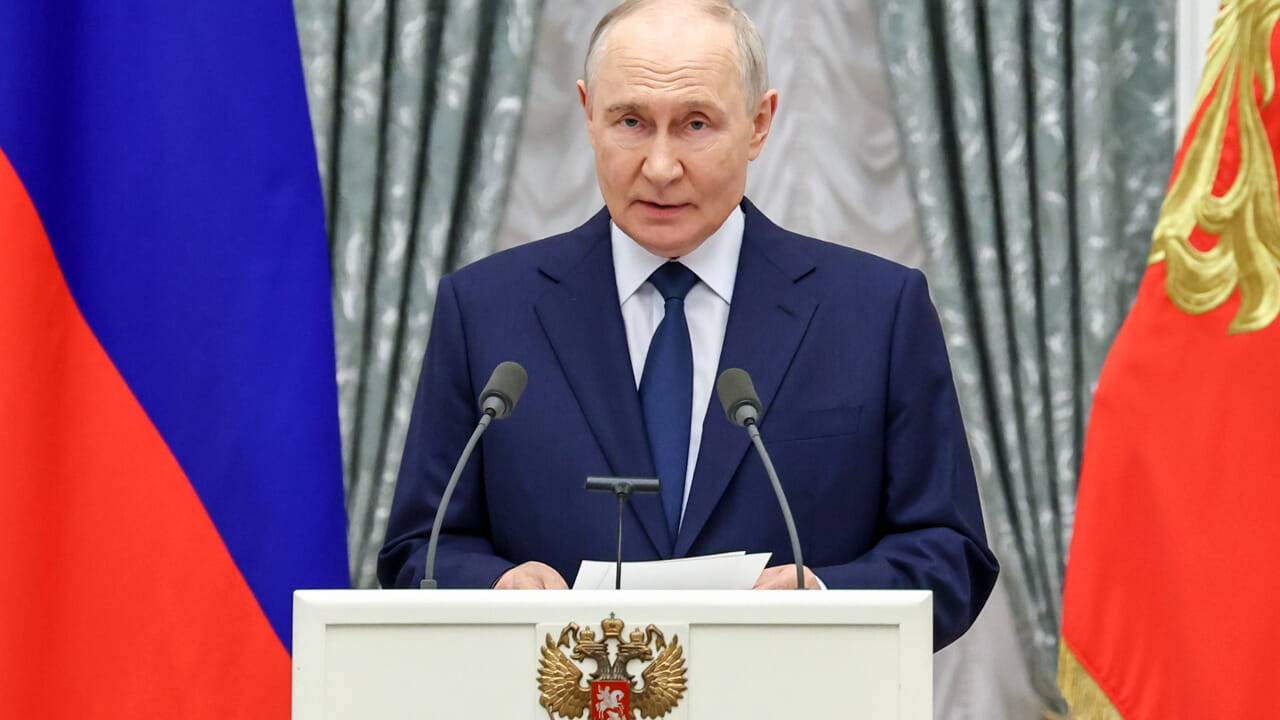
The resolution, spearheaded by Lithuanian MEP Rasa Juknevičienė of the European People’s Party, arrives amid growing concern that the EU’s fragmented approach has left it vulnerable to a “war without war” being waged by hostile state actors. “For too long, Europe has feared that a more decisive response might provoke Moscow. But the opposite is true,” Juknevičienė stated, encapsulating the sentiment driving the initiative. “Putin continues to cross one red line after another, and Russia’s hybrid warfare is becoming increasingly dynamic. The Kremlin interprets our hesitation as weakness. We must not be afraid to respond firmly and impose real consequences for Russian aggression.” The parliamentary text explicitly identifies Russia as the most serious hybrid threat, either operating directly or through proxies such as Belarus, while also naming China, Iran, and North Korea as states conducting campaigns that could harm European security interests. The fundamental challenge, as outlined by MEPs, lies in the very nature of hybrid operations, which are designed to appear as isolated incidents and remain below the threshold of armed conflict while producing effects comparable to conventional aggression.
A central pillar of the Parliament’s proposal is the urgent need to connect the dots between disparate events that are currently monitored primarily at a national level. The resolution argues that a cyberattack in one country, damage to undersea infrastructure in another, and an online disinformation campaign in a third may appear independent but could be integral parts of the same coordinated operation. To address this, MEPs are calling for the EU to systematically aggregate data from multiple member states to identify “patterns of coordinated hybrid campaigns that no single Member State can identify alone.” This function, they argue, should be formally recognised as an EU competence for coordination and support. The Parliament is urging governments to enhance intelligence sharing and significantly strengthen the Single Intelligence Analysis Capacity (SIAC), the structure that pools intelligence analysis capabilities within EU institutions. The vision is to transform SIAC into the EU’s primary hub for consolidating information on hybrid threats, while respecting the principle of “need-to-know” to ensure sensitive national security information is only accessible to those who genuinely require it.
Perhaps the most significant philosophical shift demanded by the resolution concerns the timing and nature of the EU’s response. Parliament argues that Europe must move decisively “from a reactive to a proactive strategy,” capable not only of responding after an attack occurs but also of “deterring, disrupting and responding” to hybrid operations in real-time. The text posits that hybrid acts should be considered a form of warfare, even in the absence of conventional military force, and that any violation of a member state’s sovereignty should be met with “effective, proportionate and coordinated” measures. To operationalise this principle, MEPs are calling for a new European action plan against hybrid warfare, complete with common procedures, closer cooperation between civilian and military structures, and predefined response chains. This would be complemented by a new, comprehensive sanctions regime specifically targeting hybrid threats. While the EU already possesses instruments to respond to cyberattacks and a 2024 sanctions framework aimed at Russia’s destabilising activities, Parliament contends the current system remains too fragmented and calls for enhanced tracking of illicit financing, including cryptocurrencies used to support attacks against European democracies.
A substantial portion of the resolution is dedicated to the battle for information, or “cognitive warfare,” which the Parliament identifies as a critical front in the hybrid conflict. The text highlights the growing threat posed by disinformation, deepfakes, networks of automated accounts, and the algorithmic amplification of divisive content. The resolution warns that artificial intelligence is making these campaigns “faster, cheaper and harder to detect,” necessitating a more robust and agile defence. MEPs are calling for stricter enforcement of existing EU regulations concerning the transparency of recommendation systems, political advertising, and coordinated inauthentic behaviour. Furthermore, they urge the strengthening of the EU’s rapid alert system to enable real-time responses to information manipulation, with particular emphasis on protecting the integrity of election periods across the Union. The goal is to build societal resilience against attempts to influence perceptions, beliefs, and behaviour, recognising that the ultimate target of hybrid warfare is often the democratic will of the people themselves.
The final major front outlined in the resolution is the physical protection of critical infrastructure and the reduction of strategic dependencies. The Parliament views energy systems, transport networks, communications, satellites, and undersea cables not as separate entities but as an interconnected web, where an attack on one component can trigger cascading failures across the continent. The resolution calls for regular stress-testing exercises, enhanced surveillance, and stable cooperation between public authorities and private companies that own and operate essential infrastructure. Special attention is given to undersea cables, which carry the vast majority of intercontinental internet traffic. MEPs propose a multi-layered approach combining satellite data, surface sensors, and underwater systems to detect and attribute potential sabotage more quickly, alongside the development of alternative routing systems to maintain connectivity during disruptions. The text also addresses the less visible vulnerability of foreign technology dependence, expressing particular concern about high-risk components, especially those from China, installed in solar inverters, wind turbines, connected vehicles, and digital devices that can be remotely controlled. In closing, the Parliament frames this comprehensive strategy as a necessary evolution of European security, advocating for closer cooperation with NATO while asserting that the EU must develop its own autonomous capacity to defend against a threat that knows no borders. The resolution, while not legally binding, sets a clear directive for the European Commission and member states to translate these ambitious proposals into concrete legislative and operational action.