


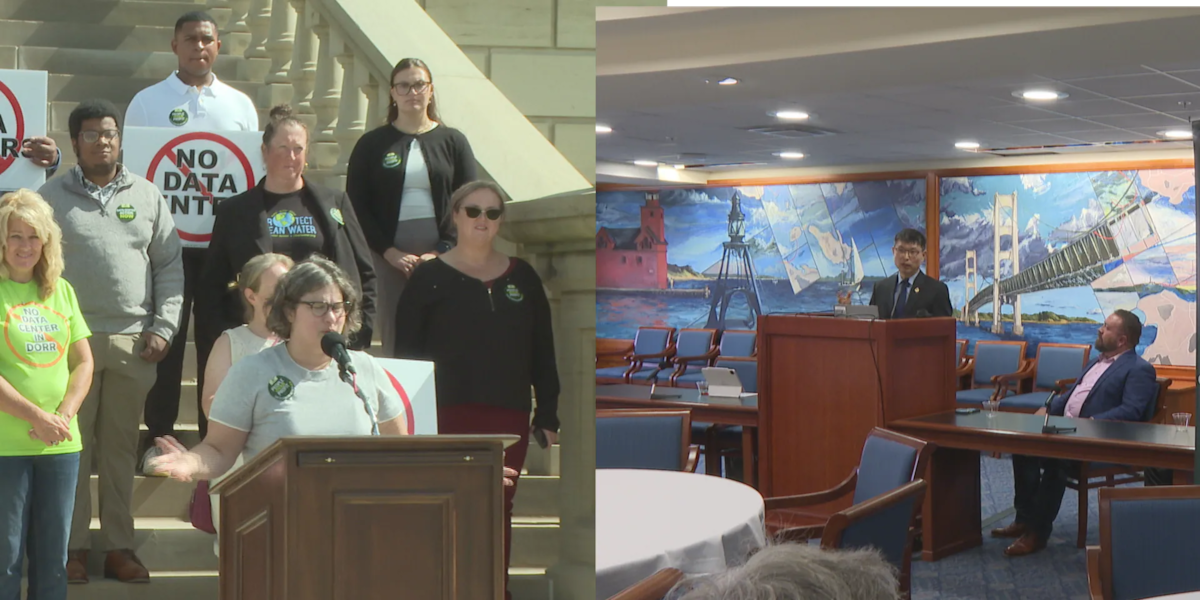
The following is a six-paragraph news article based on the topic of data centers and their environmental impact, reflecting the themes in the WILX report.
From rural Michigan towns to the outer suburbs of Lansing, a strange new kind of industrial building is appearing: a windowless, warehouse-like structure humming day and night with computer servers, cooling systems, and backup generators. Data centers, the unseen backbone of modern digital life, are now among the most debated land uses in the country. In a recent report, WILX highlighted how many residents and local officials feel “overwhelmed with misinformation” about what these facilities actually mean for the environment. That phrase captures a growing tension between economic development, technological demand, and environmental protection. Data centers store and process everything from banking transactions and social media feeds to artificial intelligence models and medical records. As more of life moves online, the facilities have grown larger and more numerous. But their environmental footprint is not always visible: no smokestacks billowing black smoke, no chemical odor, no obvious waste piles. Yet they consume massive amounts of electricity and water, produce noise, require acres of land, and can strain local power grids and water systems. The controversy is not just about whether data centers are “bad” for the environment; it is about how to separate fact from exaggeration, genuine hazards from legitimate trade-offs, and corporate green claims from physical resource use. What makes the issue especially difficult is that data centers are not a single, uniform industry. A small server room in a town library and a hyperscale cloud facility have little in common beyond the machinery inside. Environmental impacts depend on location, design, energy sources, cooling technologies, and local oversight. The result is a public conversation full of confusion, oversimplified rhetoric, and, too often, false choices.
The most significant environmental issue surrounding data centers is electricity — and the greenhouse gases and pollution associated with generating that electricity. A single hyperscale data center can consume as much power as a small city, with electrical loads ranging from 100 megawatts to over 500 megawatts at the largest facilities. In the United States, data centers already account for more than 4 percent of total electricity consumption, according to some estimates, and that figure is expected to grow sharply as artificial intelligence computing expands. AI model training and inference require enormous computational power, turning data center campuses into energy hogs. In Michigan, where the grid still relies heavily on natural gas and coal, additional demand can mean utilities run fossil fuel plants longer, delay retirements of older units, or propose new gas-fired generation. This creates a paradox: the same data centers that support “green” digital services like video conferencing and electric vehicle charging can cause higher emissions if they are built without associated clean energy. Many data center operators claim to be 100 percent renewable by purchasing renewable energy certificates or by owning wind and solar farms elsewhere. But that does not mean every server is physically powered by renewable electrons. At times of peak demand, the marginal power source may still be a gas plant. Meanwhile, data centers also require backup diesel generators, which emit particulate matter, nitrogen oxides, and carbon monoxide when tested or used during outages. The grid itself must be hardened with new transmission lines and substations, which have their own environmental footprints. Utilities argue that data centers can pay for infrastructure upgrades and, through demand response, help balance the grid. But their presence can also drive up electricity rates for residential customers if the cost of new transmission is spread across ratepayers. The real issue, experts say, is not to avoid data centers but to require them to be paired with storage, renewable generation, and tariff structures that make clean power available to all.
The second major environmental concern is water. Data centers need to dissipate heat generated by servers, and water cooling is often the most efficient method. Large facilities in hot climates have been known to withdraw tens of millions of gallons of water each year. In some drought-prone regions, data centers have faced intense backlash for competing with drinking water supplies and agriculture. In the Midwest, including Michigan, water appears more abundant, but local water systems still have limits. A data center’s cooling towers can use significant volumes of water each month, especially during summer heat. Some of that water evaporates, resulting in net water loss from the local watershed. The rest is returned as warmer wastewater, which can harm aquatic ecosystems if not properly managed. Cooling systems also use chemicals such as biocides, anti-corrosion agents, and scale inhibitors to prevent buildup. If those chemicals are discharged without adequate treatment, they can enter rivers, streams, or groundwater. Misinformation flows in both directions: some opponents claim data centers are draining entire aquifers dry; some promoters claim modern facilities use “zero water” except in emergency cases. The truth is that some use evaporative cooling, some use closed-loop chilled water systems, and some use air or liquid cooling depending on location. Closed-loop systems still rely on water for factory production and eventually require top-up fluid. Even “waterless” systems can use large amounts of energy for cooling, creating a trade-off between water consumption and carbon emissions. Environmental regulators are only beginning to scrutinize data centers as industrial water users. In many Michigan townships, data centers are treated simply as light industrial facilities and may not need a water withdrawal permit if the municipal utility provides water. But if thousands of homes lose water pressure or wells drop because of a large data center’s consistent demand, the local community will carry the burden. Water impact studies, public disclosure of cooling methods, and limits on peak withdrawals should be part of any approval process, but many local boards lack the technical expertise to impose those conditions.
Beyond energy and water, data centers create a quieter but real set of environmental and community impacts. These facilities can cover hundreds of acres, replacing farmland, forests, or open space with concrete pads, buildings, parking lots, and huge transformer stations. Stormwater runoff from those impervious surfaces can increase erosion, carry pollutants to streams, and overwhelm local drainage systems. Noise pollution is another common complaint: transformers hum, cooling fans roar, diesel generators rumble during weekly tests, and construction activity runs around the clock. Low-frequency noise travels especially far and can be a source of chronic stress for neighbors. Environmental justice concerns also arise. Data centers are often sited in rural, low-income, or minority communities because land is cheap, transmission lines are available, and political resistance is limited. These communities may already face higher levels of air pollution or lack access to high-quality healthcare. Adding diesel exhaust, noise, and stormwater runoff to the burden raises fundamental fairness questions. The construction phase is especially disruptive, with hundreds of trucks on rural roads, erosion, dust, and sediment runoff. Once built, data centers do not create many permanent jobs compared to factories or warehouses. A large facility might employ only a few dozen technicians and engineers, so the economic benefits are not equally distributed among neighbors. At the end of the servers’ life, e-waste and lithium-ion batteries create another disposal problem. The industry says it has made great strides in efficiency, and that is true: the energy used to move a byte or process a transaction has fallen dramatically over the past decade. But the sheer growth of data use often cancels out efficiency gains, a phenomenon known as the Jevons paradox. This is not to say data centers are environmental villains; it is to say they are industrial facilities whose impacts should be analyzed with the same rigor as any other large operation. A proper environmental review is not an unfair burden; it is a basic safeguard.
Economic arguments often dominate local debates. Data center developers point to construction jobs, tax revenue, and regional investment. But the reality is more nuanced. Construction jobs are temporary, and operational jobs are relatively few, often requiring specialized skills that residents may not immediately possess. Tax abatements are common, especially in Michigan, where state law provides sales and use tax exemptions as well as real property tax abatements for large-scale data center projects that meet investment thresholds. Local municipalities may also offer property tax abatement through brownfield or commercial rehabilitation tools. In exchange, they receive state-shared revenue, but the total return may be far less than promised if the facility would have located there anyway. Some communities argue that data centers stabilize the tax base and fund public services without putting much strain on schools or social services. Others point out that data centers require significant upgrades to roads, water, sewer, and electricity, costs that sometimes fall on existing residents and ratepayers. The industry says it is committed to good corporate citizenship and often negotiates host-community agreements, but these agreements are not subject to mandatory public approval in many jurisdictions. Misinformation thrives in this vacuum. Some residents hear that data centers are “just like office buildings,” while others hear that they cause cancer or instantly destroy property values. Neither is accurate. The truth is that a well-regulated data center can be an acceptable industrial use, while a poorly regulated one can create decades of environmental and social harm. Communities need clear data, independent analysis, and legal authority to impose conditions. They also need public planning processes that include residents from the beginning, not after incentives have been approved. The “overwhelmed with misinformation” phrase reflects the failure of open communication. Utilities and developers release glossy sustainability reports, but those reports rarely describe actual load profiles, water use by month, or emissions from backup generators. Local officials, meanwhile, may be compelled to sign non-disclosure agreements that limit their ability to discuss projected resource use with the public.
The path forward is not to ban data centers, nor to let them sign blank checks on the environment. Michigan and other states should adopt comprehensive standards for energy, water, noise, and lifecycle materials. A data center permit should require real-time monitoring of electricity consumption, water withdrawal, and wastewater discharge. On-site renewable generation and battery storage should be mandated where feasible, along with commitments to new clean energy projects rather than purchased offsets. Air permits should account for backup generator testing and maintenance. Water permits should set maximum withdrawal and require cooling towers to use recycled water or non-potable sources. Noise limits should be based on continuous sound levels, not peak decibel readings, and should protect nighttime quiet. Environmental justice should be central to siting: no new data center should go into a community that already faces elevated pollution levels without rigorous cumulative-impact analysis. Local governments should have the ability to require performance bonds to cover decommissioning, battery recycling, and site restoration. At the federal level, the Environmental Protection Agency could standardize data center environmental reporting to provide communities with comparable information. The industry itself is beginning to respond: the Climate Neutral Data Centre Pact and various efficiency standards have pushed operators toward renewable power and better water management. But self-regulation is not enough. The digital transition is real, and someone will host the data. The question is how and where. What data centers actually mean for the environment depends on choices made today by utility regulators, legislators, planning boards, and voters. Public hearings should not be arenas for misinformation campaigns, but they also should not be rubber-stamp ceremonies. If communities have trustworthy data and enforceable standards, they can decide for themselves whether a data center is worth the trade-off. If they are left in the dark, they will instinctively say no. The WILX report’s headline points to the central problem: people are overwhelmed. They hear conflicting claims, vendor promises, and dire warnings. Combating misinformation requires transparency, not public-relations spin. It requires reporters to keep asking tough questions, regulators to publish the facts, and officials to make decisions in the open. Data centers do mean something for the environment — exactly what is still being written, site by site, permit by permit, megawatt by megawatt.