


Paragraph 1
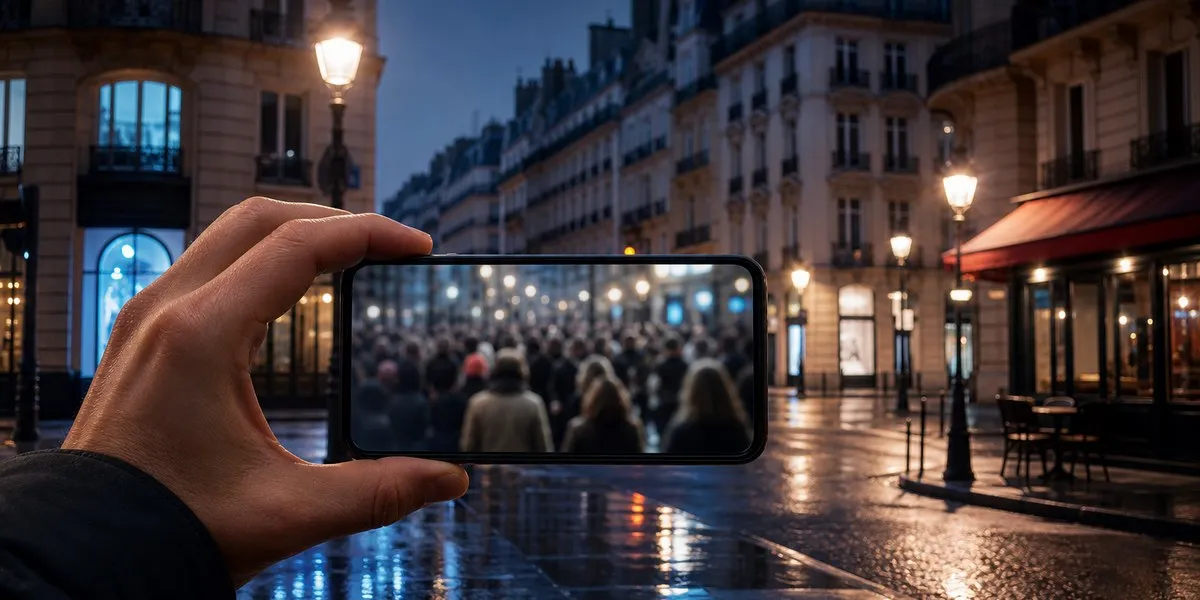
French President Emmanuel Macron launched a blistering attack on foreign leaders who have sought to exploit France’s recent street unrest for their own political gain, describing their comments as “as unacceptable as they are stupid.” Speaking during a visit to Doha, Qatar, Macron initially stopped short of naming his critics, but when pressed by a journalist to clarify whether he was referring to former United States President Donald Trump, he replied with a pointed “among others.” The French leader’s remarks come amid a tense period of domestic upheaval, as France grapples with violent protests, looting, and arson that erupted over the weekend in several major cities, including Paris, Marseille, Lyon, and Limoges. Macron’s visit to Qatar, ostensibly focused on diplomatic and energy matters, was overshadowed by the unfolding crisis at home, and his comments in Doha reflect the growing frustration of his government with external commentary regarding internal French affairs. The president specifically took aim at politicians in the midst of election campaigns who, he said, are spreading narratives promoted by certain circles and using France’s difficulties as a stage for their own political purposes. His words, reported by The Guardian, signal a deepening concern in Paris that manipulative information, including AI-generated images depicting scenes that never occurred in France, is being circulated online to feed a distorted international image of the unrest. The episode underscores the increasingly blurred line between domestic protest and global information warfare, as foreign actors seize on visible instability to shape narratives favorable to their own audiences.
Paragraph 2
The most direct target of Macron’s criticism was Donald Trump, who during the campaign ahead of the midterm elections to the United States Congress linked violence in France to what he called “migrants, jihadists and communists.” Trump’s characterization, typical of his inflammatory political style, was quickly seized upon by his supporters as evidence of a broader failure of European governance and migration policy. However, Macron’s response was unusually severe, rejecting the former president’s framing not only as factually wrong but as a dangerous interference in the internal affairs of a sovereign state. The French president’s use of the word “stupid” was a deliberate departure from the diplomatic language usually reserved for relations between allied nations. By saying “among others,” Macron also hinted that Trump is not the only foreign leader whose commentary has irritated Paris. The context suggests that several politicians, particularly those facing electoral pressure, have found it convenient to invoke France’s unrest as a cautionary tale or a rhetorical weapon. Macron accused such figures of being willing to “use France for their own political purposes,” a charge that carries heavy weight in a country that has long viewed itself as a defender of universal values and democratic stability. He also warned about the proliferation of AI-generated images, which are being used to fabricate scenes of violence and chaos that did not actually take place. This new dimension of disinformation has made it harder for French authorities and media to correct false impressions, as synthetic visual content is increasingly difficult for ordinary viewers to distinguish from authentic footage.
Paragraph 3
The unrest that triggered this international firestorm began as largely peaceful demonstrations over the cost of living and rapidly escalated into some of the most serious civil disorder seen in France in years. Over the weekend, protests in Paris, Marseille, Lyon, and Limoges descended into violence, with rioters clashing with police, looting shops, and setting cars ablaze. In Limoges, the city hall building was set on fire and partially destroyed, a shocking image that dominated French news broadcasts and provided ammunition for critics both at home and abroad. The French government was forced into an embarrassing admission: it had lost control of the large-scale unrest on Saturday. This acknowledgment marked a significant reversal for an administration that had repeatedly promised to maintain order and protect public buildings. The violence was fueled by deep-seated anger over inflation, rising energy costs, and stagnant wages, which have squeezed ordinary households across the country. The Yellow Vests movement, which first exploded onto the streets in 2018 in opposition to fuel taxes and government policies perceived as benefiting the wealthy, has regained momentum in recent months as economic pressures have intensified. Although the demonstrations initially drew attention to the cost-of-living crisis, they also provided cover for opportunistic elements intent on causing destruction. Police reported multiple arrests, and shops in central Paris boarded up their windows in anticipation of further clashes. The government’s admission of losing control was a stark reminder of the fragility of public order in a country with a long tradition of street protests, and it invited criticism from across the political spectrum, with opposition leaders accusing Macron of arrogance and neglect.
Paragraph 4
In response to the escalating crisis, the French government promised a robust security crackdown, including the deployment of additional police forces and, potentially, military personnel to protect key sites and restore order. Partial nighttime curfews were introduced on Monday and Tuesday in areas of Paris, Marseille, and Lille that had been particularly prone to violent protests and looting. These measures appeared to have a calming effect, as the following nights were relatively quiet compared to the chaos of Saturday. However, the calm was widely seen as temporary, with authorities bracing for further trouble in the days to come. The Yellow Vests movement has formally applied to hold a march in central Paris the following Saturday, and student groups have planned their own protests on the same day to demand increased funding for education. Macron made clear that his government would not allow demonstrators to repeat the scenes of destruction witnessed over the weekend, vowing that those who try to cause disorder in city centres will be prevented from doing so. The promise of military involvement represents a significant escalation, reflecting the severity with which the government views the current threat. Yet deploying troops to French streets is a sensitive issue, as it evokes memories of previous states of emergency and raises questions about the balance between security and civil liberties in a democratic society. The curfews, while limited in scope, have already drawn criticism from civil liberties groups, who argue that they punish ordinary citizens rather than targeting the small minority of violent protesters. Nevertheless, public opinion appears to be split, with many French citizens weary of the disruption and eager for a return to normalcy, even if it requires a heavy-handed response.
Paragraph 5
The unrest and the government’s handling of it have exposed deep fissures within French society and raised uncomfortable questions about Macron’s presidency. His economic reforms, including changes to unemployment benefits and pension rules, have long been controversial, but the current cost-of-living crisis has lent new urgency to complaints that his policies favor the wealthy and fail to protect ordinary workers. The Yellow Vests movement, which resists formal leadership and has spawned a variety of local and national demands, remains a powerful symbol of grassroots discontent. Its mobilization ahead of the upcoming Saturday march threatens to unite a broad coalition of angry citizens, from suburban parents struggling to pay heating bills to rural workers feeling abandoned by the state. Student groups are also demanding a greater share of the national budget, arguing that education has been chronically underfunded for years. If these disparate forces converge on the streets of Paris and other cities, the potential for renewed violence is high. Macron, who has staked his reputation on maintaining France’s stability and international standing, now faces the most serious domestic challenge of his second term. His decision to travel to Qatar in the middle of the crisis was criticized by some opponents, but the government defended the trip as necessary for securing energy supplies and international cooperation. Meanwhile, trade unions announced nationwide mobilization for November 5, vowing to hold mass demonstrations across the country to pressure the government into addressing the underlying economic grievances. This growing alliance between labor unions and grassroots protest movements could prove the most significant threat yet to Macron’s agenda, forcing him into a choice between continued reform and political survival.
Paragraph 6
Internationally, the crisis in France has become a proxy for larger political battles. Macron’s clash with Trump highlights the extent to which domestic instability in one country can be weaponized by foreign leaders for their own electoral advantage. Trump’s reference to “migrants, jihadists and communists” was not aimed at explaining conditions in France, but rather at rallying his base in the United States ahead of the midterm elections. By using France as a negative example, he sought to paint a picture of chaos under liberal immigration policies and failed governance. Macron’s retort, delivered with fury and dismissiveness, reflects a broader European concern about the erosion of trust in democratic institutions and the power of digital disinformation. The spread of AI-generated fake images has added a new layer of complexity to this battle, making it nearly impossible for journalists and officials to separate reality from fiction. In his Doha remarks, Macron called for greater vigilance against such manipulations and stressed the importance of truth in public discourse. Yet his own position remains vulnerable. The international attention on France’s unrest has damaged its image as a stable and prosperous nation, and the government’s admission that it lost control of the situation only reinforced the perception of crisis. The coming weeks will be decisive. If the government successfully prevents further violence, the unrest may fade into memory as a brief, painful episode. If not, the combined pressures of inflation, union mobilization, and street protests could plunge Macron into the most severe political crisis of his tenure. For now, the president’s message is clear: he will not tolerate the destruction of public property or the exploitation of France’s difficulties by foreign politicians. Whether that resolve is enough to restore order remains an open question, as French citizens prepare for a week of demonstrations, potential curfews, and continued uncertainty. The world, including those leaders Macron has so bluntly criticized, will be watching closely.