


Paragraph 1: The Evolving Battlefield and the New Weaponry of Perception
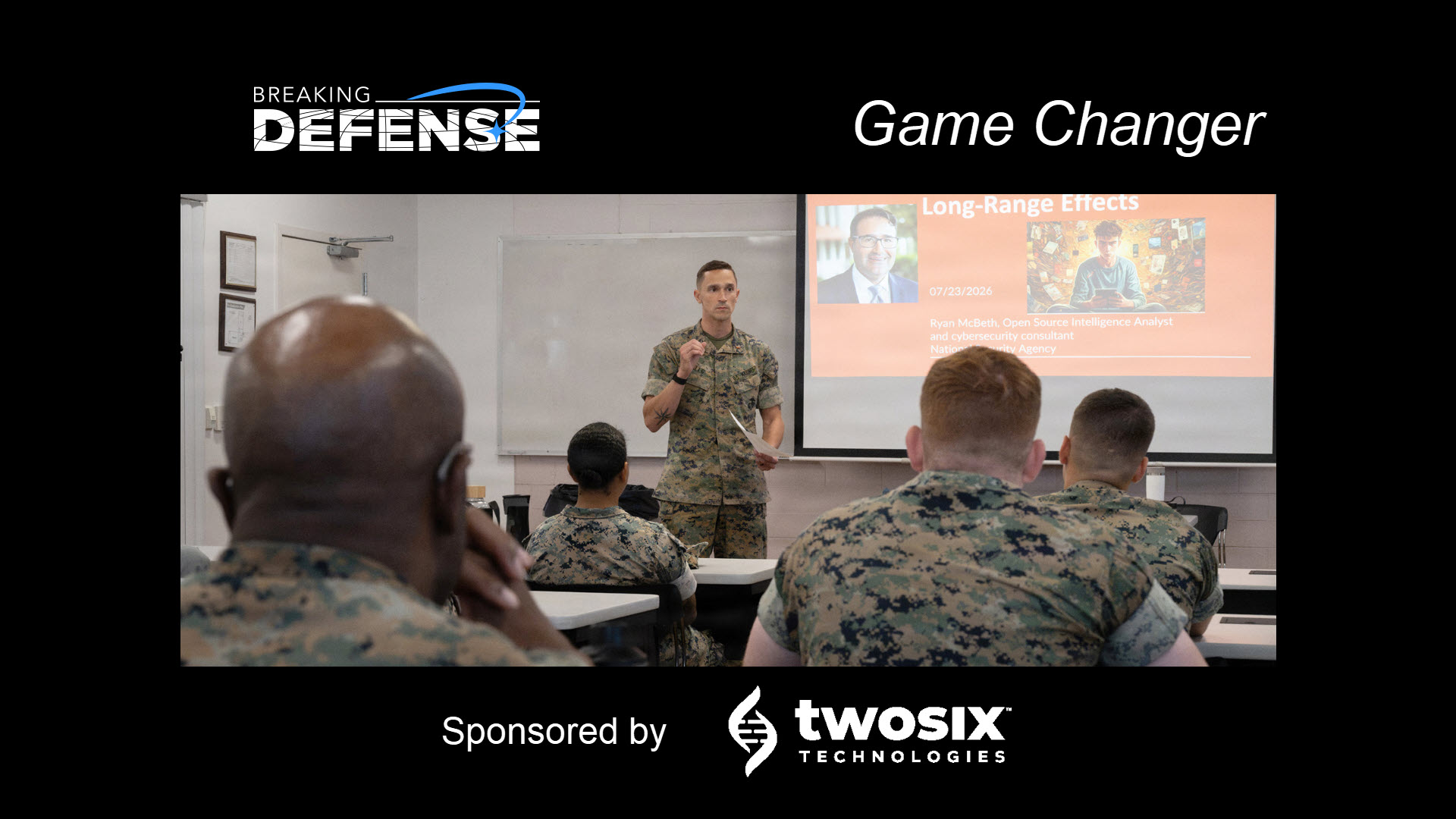
In the modern era, the battlefield is no longer defined solely by kinetic firepower or territorial conquest; it is increasingly shaped by the contested domain of human perception. The digital ecosystem, once hailed as a democratizing force for global communication, has evolved into a volatile landscape where information—and its deliberate corruption—has become a primary weapon of statecraft and asymmetric warfare. As the promotional analysis from Breaking Defense’s Game Changer series underscores, the contemporary threat environment is being fundamentally redefined by the proliferation of memes, AI-generated videos, and swarms of social media bots. These tools are not mere ephemera of internet culture; they are sophisticated instruments capable of executing dis- and misinformation campaigns at unprecedented speed, scale, and sophistication. For defense establishments, intelligence agencies, and policymakers, the ability to effectively identify, respond to, and neutralize these campaigns has shifted from a niche technical concern to a core strategic imperative. The perception of adversaries and allies alike now hangs in the balance of a digital arms race where a viral falsehood can undermine diplomatic relations, destabilize elections, or erode public trust in democratic institutions. Understanding this new paradigm requires a comprehensive examination of how these tools operate, the psychological vulnerabilities they exploit, and the emerging frameworks—including integrated analytical tools and strict data integrity—that hold the key to effective defense and strategic advantage in the information age.
Paragraph 2: The Weaponization of Internet Culture: Memes as Tactical Munitions
Central to this new information warfare ecosystem is the humble meme, which has transcended its origins as a vehicle for humor and social commentary to become a potent tactical munition in the arsenal of modern propagandists. Unlike traditional top-down propaganda, memes are participatory, shareable, and deeply embedded in the linguistic and visual vernacular of specific online communities. This organic quality makes them uniquely dangerous; they allow state-sponsored actors and fringe groups to inject narratives that spread laterally through peer networks, bypassing traditional media gatekeepers and critical editorial scrutiny. The irony, humor, and irony-laden detachment of the meme format provide a degree of plausible deniability, making it difficult for platforms and regulators to police. By leveraging formats that resonate with specific subcultures—from ‘finsta’ accounts to niche Reddit communities—operations can seed divisive narratives on sensitive topics such as migration, healthcare, or military intervention, all while appearing to emerge from grassroots sentiment. The speed at which a meme can mutate, be remixed, and traverse platforms means that by the time fact-checkers debunk the text of a particular image, a hundred visual variations have already taken its place. This has forced a re-evaluation of threat detection, moving away from keyword-based monitoring toward image-recognition and cultural context analysis to track the virality of these visual narratives. The memetic battlefield is therefore one of rapid adaptation, where the ability to leverage cultural nuance is as critical as the underlying technical infrastructure.
Paragraph 3: The Deepfake Dilemma: Navigating the Era of AI-Generated Synthetic Media
If memes are the infantry of the new information war, then AI-generated videos—commonly known as deepfakes—are its strategic bombers, capable of delivering devastating psychological payloads with near-perfect precision. The technology underpinning synthetic media has evolved at a dizzying pace, moving from obviously manipulated clips to hyper-realistic, real-time simulations that are difficult for even trained human observers to detect. This evolution presents a critical destabilizing threat: the erosion of the “liar’s dividend.” As Breaking Defense’s coverage suggests, the sheer volume of AI-generated synthetic content creates a pathological skepticism where the public can no longer trust the proverbial “seeing is believing.” Genuine, damning videos of an adversary committing an atrocity—or an ally making a controversial statement—can be dismissed as fabricated, allowing bad actors to evade accountability for real-world actions. Conversely, a fabricated video released moments before a major geopolitical event can spark panics, cause market crashes, or push a hostile nation into a diplomatic crisis. The eye-glazing speed at which these videos can be produced and distributed on social platforms exacerbates the problem, allowing a single deepfake to saturate a public information space before the algorithms utilized by platforms can even flag it for review. Consequently, the defense establishment is pivoting toward developing robust provenance mechanisms, blockchain-based verification, and digital watermarking standards—though these approaches remain in a perpetual race against the generative models that evolve to bypass them.
Paragraph 4: The Bot Swarm: Amplifying Falsehoods and Manufacturing Consent
The distribution and amplification of these memetic and video attacks is not organic; it is meticulously engineered through the pervasive use of social media bots designed to fabricate consensus and create false leverages. These automated agents, often managed by hostile intelligence agencies or private influence brokers, operate in synchronized swarms to artificially boost trending hashtags, drown out counter-narratives, and game engagement metrics to make fringe opinions appear mainstream. The power of the bot lies in its ability to create the illusion of a groundswell of public opinion. When a legitimate user sees a controversial viewpoint with thousands of likes and hundreds of retweets, they are psychologically conditioned to assume it has social validation, a phenomenon known as the illusory truth effect. Furthermore, bots are used as “brigades” to harass journalists, researchers, and activists who expose malinformation, creating a chilling effect on investigative reporting. The infrastructure of these bot networks is becoming more sophisticated, utilizing AI to generate realistic profile pictures, unique biographical details, and conversational interactions that can fool even advanced botometer tools. Countering this requires a shift from static detection (identifying a bot once) to dynamic behavioral analysis, which tracks the intent and pattern of accounts over time. This also necessitates a move beyond defensiveness toward “active defense”—the coordinated effort to disrupt these networks, expose their origins, and inoculate the public against their manipulative tactics, thereby preventing the mass production of consent for adversary narratives.
Paragraph 5: Integrated Defense: The Rise of Unified Counter-Propaganda Platforms
To effectively counter these sophisticated and varied attacks, the legacy approach of relying on disparate tools for decontextualized tasks is no longer sufficient. The insights from Breaking Defense emphasize the necessity of “integrated tools”—comprehensive platforms that fuse detection, contextual analysis, and response mechanisms into a single cohesive operational picture. An effective response requires connecting the dots between the discovery of a bot network, the use of a specific AI-generated asset, and the amplification of a specific meme narrative. An integrated suite allows analysts to visualize the entire kill chain of a disinformation campaign, from the creation phase to the amplification phase to the media penetration phase. These platforms often leverage machine learning to identify narrative clusters, mapping the spread of information across multiple platforms in real-time, while simultaneously providing the communication teams with the templates and channels to launch immediate counter-narratives. This is not merely about defensive disruption; it is about shaping the operational environment. By responding rapidly with verified truths and alternative narratives, a nation can pre-empt the cognitive impact of an enemy’s attack, effectively hardening its society against the intended psychological effects. However, the success of these integrated tools hinges entirely on the quality and immutability of the data fed into them. If the systems ingest polluted or unverified data, the analysis will be flawed, leading to misdirected responses or even the accidental amplification of the adversary’s message.
Paragraph 6: The Primacy of Data Integrity and Securing the Future of Information
Ultimately, as the analysis argues, the linchpin of any successful information warfare defense strategy is data integrity. In a domain where fake videos, manipulated statistics, and bot-generated hype are the weapons of choice, verifying the legitimacy, source, and chronology of incoming data is the sine qua non of strategic advantage. This involves not just cybersecurity in the traditional sense of preventing breaches, but a broader commitment to ensuring that the raw intelligence used for AI models and analytic forecasts is pure. If an adversarial operation can poison the data lakes feeding an integrated response platform, they can effectively blind the defense mechanism, causing it to attack shadows or, worse, demolish genuine allied operations. Therefore, the defense community is focusing a significant amount of effort on blockchain-secured data trails, cross-referencing with open-source intelligence (OSINT) and human intelligence (HUMINT), and establishing strict verification protocols before a piece of data is used for a strategic assessment. The future of information warfare will be a high-stakes cybernetic game of ones and zeros, where he who controls the cleanest data controls the narrative. For decision-makers in the Pentagon, NATO, and allied defense agencies, the future is not about blockading the internet, but about building a resilient digital footprint. It is a future that requires agile collaboration between technology vendors, media analysts, and field operatives to not only survive an information attack but to turn the adversary’s own strategy of deception against them, ensuring that truth, while slower, remains the most effective weapon in the arsenal.