


Damascus Hosts Key Talks on Media Development as Syria and Germany Explore Counter-Disinformation Cooperation
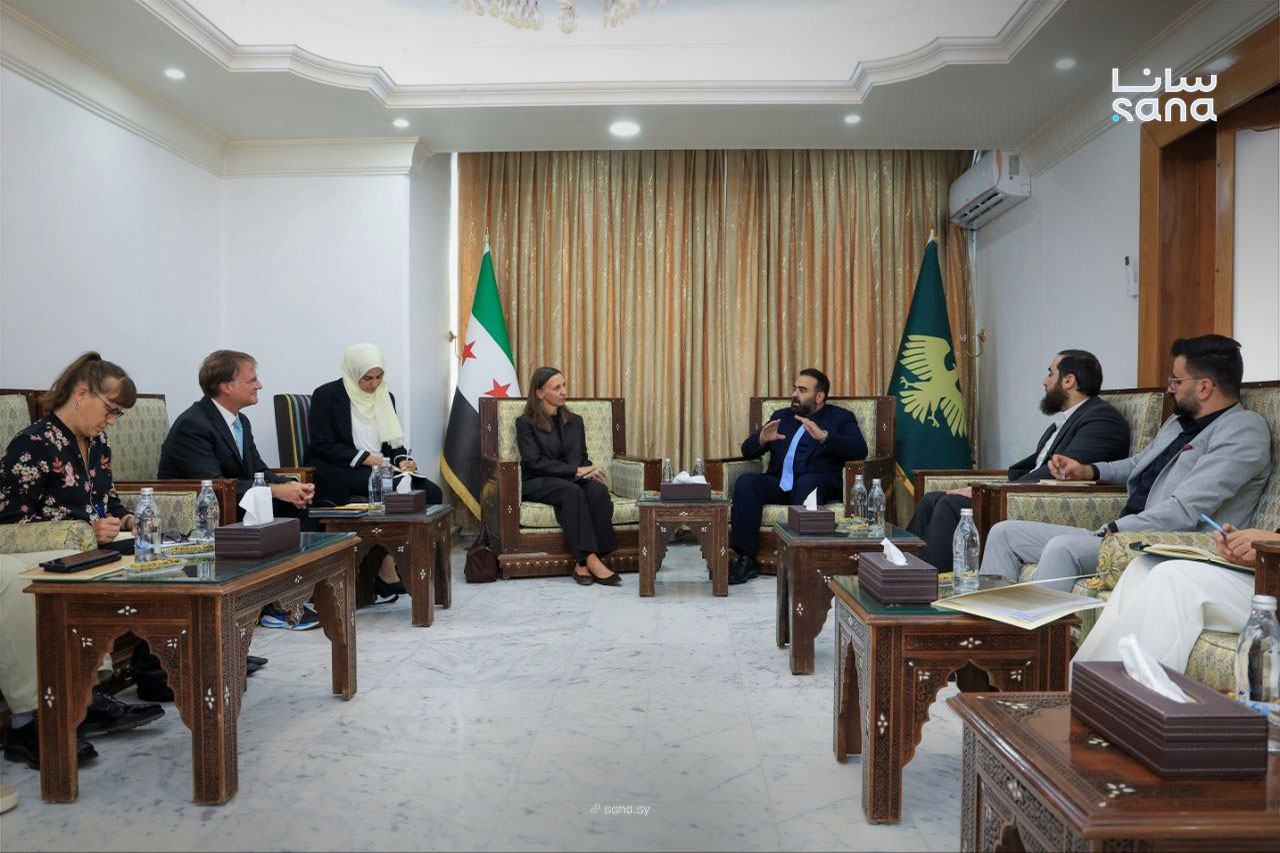
DAMASCUS, Sept. 9 (SANA) — In a significant diplomatic and developmental engagement, Syria’s Information Minister, Khaled Zaarour, convened a pivotal meeting on Wednesday with Stefan Schulz, the head of the GIZ’s BRIDGE program, a dedicated initiative aimed at strengthening Syrian civil society capacities. The high-level discussions, held in Damascus, were centered on forging a collaborative path toward the modernization and professionalization of Syria’s media landscape. The meeting, as reported by the Information Ministry on its official Telegram channel, was also attended by Mia Rebecca Takada and Johanna Stucki, representatives of the German Embassy in Damascus, underscoring the diplomatic weight of the proceedings. This gathering represents a notable step in the ongoing, albeit complex, dialogue between the Syrian government and German-affiliated development agencies, signaling a mutual interest in addressing the pressing informational challenges that have emerged in the country over the past decade.
The core of the discussions revolved around two critical, intertwined objectives: bolstering field operations and enhancing public-awareness campaigns to actively counter disinformation, while simultaneously developing robust tools and programs to mitigate its long-term impact within Syria. This focus is particularly salient given the torrent of false narratives, propaganda, and manipulated content that have exacerbated tensions and deepened societal fractures since the onset of the conflict in 2011. The proliferation of digital media, while offering new avenues for communication, has also created a fertile ground for the rapid dissemination of unverified and malicious information. By placing counter-disinformation at the heart of the bilateral agenda, both parties acknowledged that rebuilding Syria’s social fabric requires not only physical reconstruction but also a concerted effort to restore a shared, factual reality, free from the distortions that have long plagued the public sphere.
Beyond the strategic framework for countering falsehoods, the meeting delved into the practical mechanics of capacity building, with a specific emphasis on joint training programs designed to elevate the professional skills of media personnel. The initiative aims to equip journalists, editors, and content creators with the modern technical capabilities and ethical standards required to navigate the increasingly complex information ecosystem. This collaborative venture is intended to foster a generation of media professionals who are not only adept at storytelling but are also skilled in verification, source-checking, and responsible reporting. The objective is to move beyond basic vocational training, instead instilling a deep-rooted commitment to journalistic integrity and the principles of public service that are essential for the sector to regain public trust. By enhancing the proficiency and resilience of media professionals, the program aspires to create a self-sustaining environment of accountability and quality.
Furthermore, the two sides articulated a shared readiness to establish direct coordination with the German Press Council, a move that paves the way for a broader exchange of expertise and the harmonization of professional standards. The German Press Council, a voluntary self-regulation body, operates on the principles of press freedom and responsible journalism, adjudicating complaints based on a detailed code of conduct. This proposed collaboration signals a willingness on the part of the Syrian ministry to engage with international best-practice models for media ethics and self-governance. Such coordination is envisioned to transcend the theoretical, involving practical workshops, the sharing of regulatory frameworks, and the development of mechanisms for handling public grievances regarding media conduct. This would not only enhance the credibility of Syrian media operations but could also serve as a bridge toward deeper institutional ties between the respective journalistic communities in the two countries, facilitating a continuous flow of knowledge and experience.
The meeting also laid a strong emphasis on the geographical expansion of such initiatives, stressing the need to extend their reach to different parts of Syria. Recognizing that the challenges of disinformation and professional underdevelopment are not confined to the capital, the discourse highlighted the importance of decentralizing these capacity-building activities. By reaching out to provinces and regions across the country, the program aims to ensure a more equitable distribution of resources and opportunities, fostering a nationwide cadre of capable media practitioners. This strategic expansion is seen as vital to building a professional and informed media sector that is responsive to the diverse needs of the Syrian population and capable of confronting contemporary challenges, regardless of location. Such a spread is also essential for ensuring that the subsequent benefits—improved professional skills and a more robust defense against informational threats—are shared across the entire nation, contributing to the overall stability and cultural resilience of the country.
Stefan Schulz’s presence at the meeting reflects the long-standing commitment of the Deutsche Gesellschaft für Internationale Zusammenarbeit (GIZ), a German government-owned enterprise that has been a cornerstone of international development for more than five decades. With a global footprint spanning over 120 countries, including a sustained presence in Syria, GIZ brings a wealth of technical expertise and a proven track record in capacity development in post-conflict and transitional contexts. The BRIDGE program itself is a testament to the ongoing focus on empowering Syrian civil society, and this specific engagement with the media sector marks a strategic evolution of that mandate. As Syria navigates a complex period of reconstruction and stabilization, the involvement of international partners like GIZ serves as a critical complement to domestic efforts, ensuring that the rebuilding process is supported by the necessary infrastructure for a vibrant, credible, and professionally independent media ecosystem that can serve as a pillar of a stable society.