


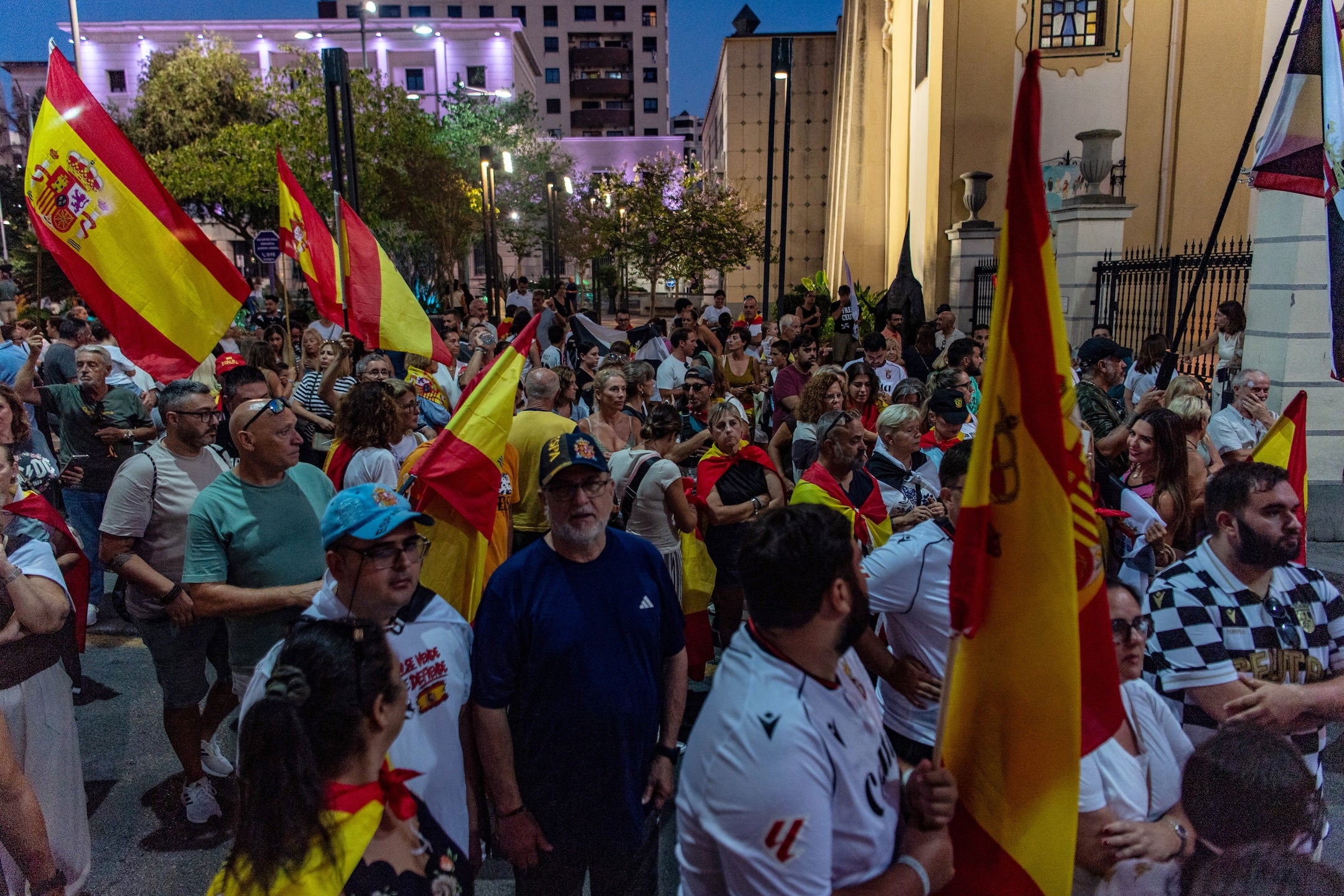
MADRID — Spanish Prime Minister Pedro Sánchez on Monday accused Israel and Russia of orchestrating disinformation campaigns against Spain’s government as it grappled with a mass migration emergency that brought more than 72,000 people to Ceuta, a Spanish exclave on Morocco’s Mediterranean coast, in late July. Local authorities said at least 100 people died during the crossings, and the sudden influx overwhelmed the tiny territory, leaving thousands of migrants sleeping in public squares, sports halls, and temporary reception centers while Spanish officials struggled to process the largest such arrival in recent memory. In his first interview since the border crisis, Sánchez told the Spanish radio network Cadena SER that the emergency had become a target for coordinated false narratives promoted by the Russian and Israeli governments and by international far-right networks. “After July 30th and 31st, there was an expansion of these hoaxes and this disinformation by social networks associated with both Russia and Israel, and with an international far-right movement that always uses migration, not only to attack Spain, but also to attack Europe and divide it,” Sánchez said. The prime minister and Morocco’s Interior Ministry had previously blamed human trafficking networks for exploiting misinterpretations of a change in Spain’s border policy, saying smugglers lured thousands of people into believing that the border had been efectively opened. But Sánchez’s latest accusations went furter, suggesting that the migrant surge and its online aftermath were being weaponized by state actors seeking to destabilize his government and weaken European unity. The comments immediately set off a diplomatic confrontation, drawing sharp denials from Israel and Russia and placing Spain at the center of a regional political storm.
In the interview, Sánchez said the European Union’s European External Action Service, the bloc’s diplomatic body, had produced research showing that Russia and Israel were behind the disinformation campaigns, though he did not provide specific evidence or name the particular networks, posts, or accounts involved. The EEAS did not immediately respond to a request for comment on Sánchez’s characterization of its findings. The prime minister’s claims reflected growing concerns among European officials about foreign interference in domestic debates, particularly on migration, an issue that has repeatedly fueled political polarization across the continent. Online theories proliferated widely after the Ceuta crossings, including some that falsely said Israel had orchestrated the crisis in order to undermine Spain’s government. Other false narratives accused Spanish authorities of intentionally engineering the arrival to distract from domestic problems or of secretly cooperating with traffickers. Sánchez appeared to be addressing those theories directly, describing them as coordinated attempts to inflame public anger. His reliance on EU intelligence and analytical resources also indicated that Madrid sees the Ceuta episode not simply as a border security problem but as part of a broader information war with geopolitical dimensions. European institutions have repeatedly warned about Russian disinformation campaigns designed to exploit migration crises in EU member states, but the direct accusation against Israel by a sitting European prime minister was significantly more unusual and reflected the sharp deterioration in Spanish-Israeli relations since the beginning of the Gaza war.
Sánchez said it was “evident” that Israel and Russia had been motivated by Spain’s political positions “regarding the genocide in Gaza and Putin’s invasion of Ukraine.” The phrase, which Sánchez used directly in his interview, underscored his government’s increasingly assertive foreign policy posture under the Socialist prime minister. Sánchez has been among Europe’s most vocal critics of Israel’s conduct in Gaza and Iran, and his government has repeatedly called for a ceasefire, the protection of palestinian civilians, and compliance with international humanitarian law. Spain has also been a strong backer of Ukraine since Russia launched its full-scale invasion, sending military aid and hosting Ukrainian refugees. Sánchez’s framing suggested that he believes Spain is being punished for refusing to align with Israeli and Russian interests on issues of international conflict. The reference to an “international far-right movement” added another layer, pointing to the role of anti-migration parties and influencers that have gained strength in several European countries. Sánchez has long warned that such movements and foreign actors are seeking to divide Europe on migration and other questions, and he has tried to position Spain as a champion of humane migration governance within the EU. His comments to Cadena SER were therefore as much about domestic and European audiences as about foreign governments, particularly as Spain prepares for new political challenges and seeks to maintains its influence in Brussels.
Israeli Foreign Minister Gideon Sa’ar responded with unusual sharpness on Monday, saying Sánchez was “lying shamelessly” and that his statements “will not distract from Sánchez’s disgraceful failure to manage his country’s affairs.” Sa’ar did not offer further explanation of what he meant by failure, but the wording reflected the depth of the strain in bilateral relations. Israel has repeatedly accused European critics of double standards during the Gaza conflict and has argued that it is defending itself against terrorism. For Israel, the Spanish prime minister’s latest remarks went beyond policy difference into direct enemy-level accusation: alleging that the Jewish state was using disinformation to try to bring down a European government. The Israeli foreign minister’s statement also sought to turn the attention back to Spain’s domestic and border management, a tactic aimed at highlighting Sánchez’s political vulnerability on migration. Spain has experienced heated political debates over migration in recent years, and the Ceuta crisis gave conservative and far-right opponents an opportunity to attack Sánchez from the right. In Spain, opposition parties quickly seized on Sánchez’s conspiracy-laden framing to portray him as distracted and paranoid, while government supporters defended his right to name foreign actors he believes are interfering in Spanish affairs. The episode has thus become not only a diplomatic crisis but also a political one inside Spain, with each side in the domestic debate using the Ceuta surge to rally its own base.
Kremlin spokesperson Dmitry Peskov also denied any Russian involvement, telling Russian state broadcaster RBC that Moscow had nothing to do with the migrant crisis or with any disinformation campaigns. Russia has long denied accusations of interfering in foreign elections and societies, despite extensive finding by Western intelligence agencies and academic researchers pointing to influence operations designed to sow chaos in democratic countries. Sánchez’s accusation against Russia was less surprising than the accusation against Israel, since European officials have regularly warned about Kremlin-backed disinformation on migration, vaccine policy, and other sensitive social issues. Still, the Spanish prime minister’s decision to pair Russia and Israel in the same sentence was seen as a deliberate attempt to highlight what Madrid considers a pattern of hostile behavior by governments that oppose Spain’s foreign-policy choices. Russia’s invasion of Ukraine has made Spain and most EU countries firm adversaries of Moscow, and Spanish officials have repeatedly joined EU efforts to impose sanctions on Russian officials and entities. Peskov’s denial was brief and gave no indication that the Kremlin was willing to engage with the substance of Sánchez’s claims. The Russian response appeared designed to cast Sánchez as erratic and to dismiss the issue without allowing it to become an extended diplomatic argument. The fact that Sánchez made his accusations during a radio interview, without publishing detailed evidence, left room for both Israel and Russia to characterize his statements as baseless and politically motivated.
The broader diplomatic context makes Monday’s exchange difficult to overstate. Spanish-Israeli diplomatic ties, first established in 1986, have deteriorated severely since the start of the Gaza war in 2023, with Madrid recognizing palestinian statehood, and banning ships carrying arms to Israel from docking in Spanish ports. By 2026, both countries had recalled their ambassador, a sign of how low the relationship has fallen. Spain’s government under Sánchez has positioned itself as one of Europe’s most vocal critics of Israel’s military campaign, and the prime minister has personally used the word “genocide” to describe events in Gaza, a formulation that Israel regards as deeply hostile. The dispute over Ceuta adds a new layer to that deterioration, because it implicates Israel not only in the war in the Middle East but also in Spanish domestic affairs. Russia, meanwhile, remains a major focal point for EU foreign policy, and Spain has been part of the bloc’s efforts to support Ukraine against Moscow’s invasion. Sánchez’s accusations, if substantiated with evidence, could lead to new EU discussion about foreign disinformation campaigns; if not, they risk being dismissed as overreach by a leader under domestic political pressure. For now, the crisis in Ceuta has subsided, but the political consequences are still unfolding, with Sánchez insisting that Spain has been targeted by states and movements that want to see his government weakened and Europe divided. The six-paragraph narrative of the crisis, from crowded Ceuta crossings to a war of words with Tel-Aviv and Moscow, illustrates how deeply migration has become entangled with geopolitics in the Mediterranean.