


Journalists Urged to Shield Nigeria’s 2027 Elections from AI-Driven Misinformation
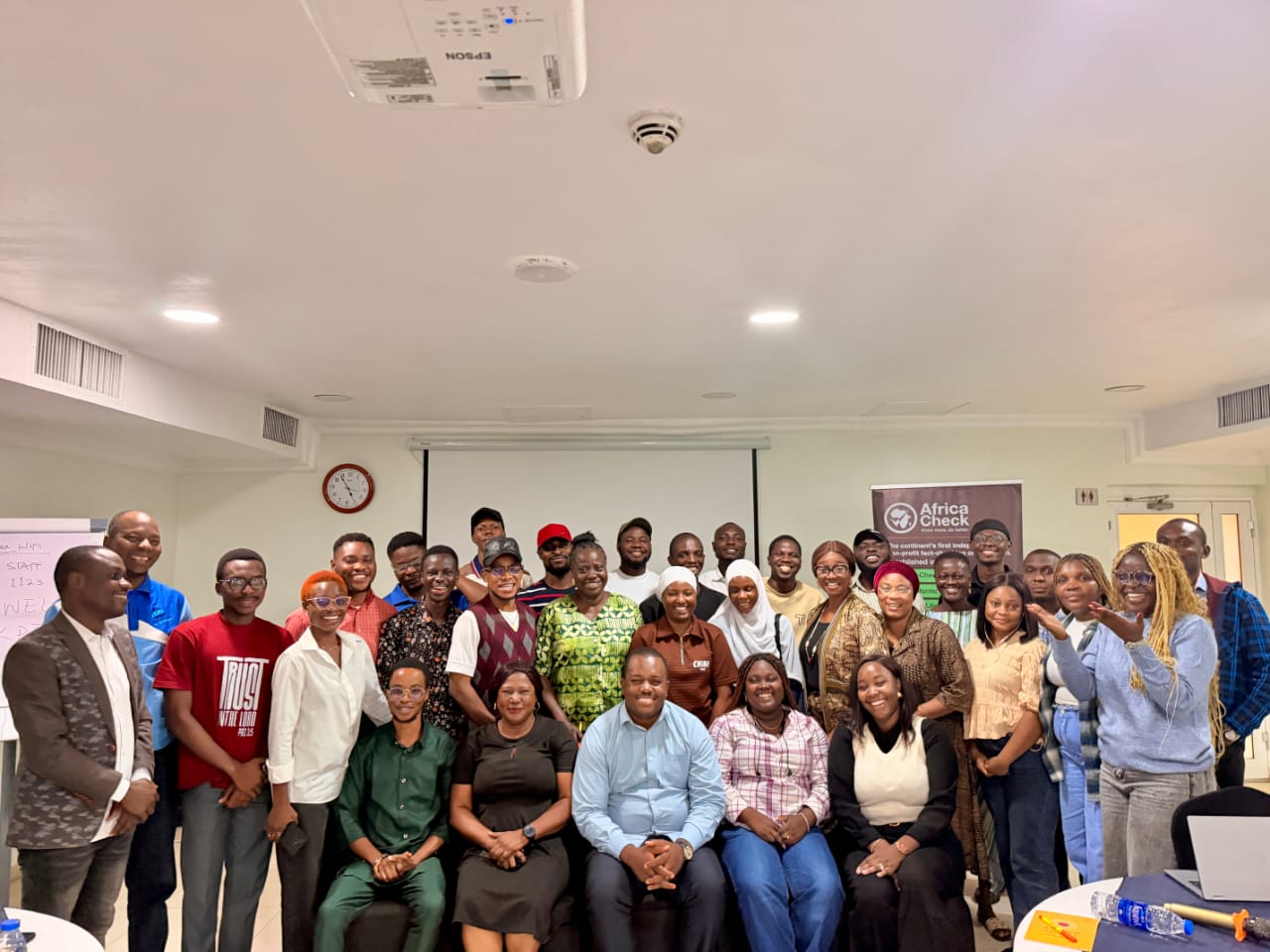
As Nigeria prepares for the 2027 general elections, journalists have been urged to ensure that voters receive accurate information and are protected from misinformation driven by artificial intelligence (AI). The call was made during a training session organised by Africa Check, the independent fact-checking organisation, on election coverage and the responsible use of AI. The facilitator, Allwell Okpi, a journalist, fact-checker and media trainer, said reporters must act as gatekeepers of the information space, especially in a period when false narratives can spread faster than ever before. He warned journalists against amplifying false narratives, including those originating outside Nigeria and deliberately designed to influence electoral outcomes. Okpi stressed that the integrity of the information ecosystem would play a decisive role in shaping public perception of candidates, political parties and the electoral process itself. With AI tools making it easier to produce convincing but fabricated content, he said the responsibility on journalists had grown significantly. They must not become unwitting conduits for manipulated media or unverified claims, particularly when such content could alter voter behaviour or undermine confidence in democratic institutions.
The central message of the training was that verification must precede publication. Okpi noted that AI tools have made it easier to produce fake photographs, manipulated videos and synthetic audio, all of which can be deployed maliciously during an election cycle. He warned that publishing such content without proper verification risks giving it the credibility of a news report. A piece of false information, once published or broadcast by a recognised media outlet, can quickly be accepted as fact and shared across social media platforms, creating a cycle of distortion that is difficult to reverse. During elections, false claims about candidates, voter registration and results can mislead voters and discourage participation in the electoral process. Okpi advised journalists to trace the original source of any piece of content, establish when and where it was produced, check for signs of alteration and seek independent confirmation from authoritative sources. Where a claim cannot be verified, he said, journalists should state this clearly rather than hint at its truth or present it as unconfirmed but credible. He also encouraged newsrooms to institutionalise these practices by establishing election verification teams, adopting editorial guidelines on the use of AI and implementing clear procedures for correcting errors when they occur. Such measures, he argued, would help build a culture of accountability and reduce the risk of AI-generated misinformation entering the public domain through legitimate media channels.
Okpi also addressed the responsible use of AI in journalism, stressing that technology should serve as a tool rather than a replacement for human judgement. He acknowledged that AI can assist journalists with transcribing audio, translating content and tracing the origins of images and videos, all of which are valuable functions in a fast-paced election environment. However, he cautioned that detection tools can produce inaccurate results, and their findings should be treated as leads rather than conclusive evidence. Journalists must support any automated analysis with human judgement and expert advice before drawing conclusions. Okpi further emphasised that transparency by the Independent National Electoral Commission (INEC) is equally important in combating misinformation and preserving trust. He recalled that during the 2023 general elections, delays in uploading presidential election result sheets to the INEC Result Viewing Portal (IReV) generated controversy, despite the deployment of the Bimodal Voter Accreditation System (BVAS). The episode, he said, highlighted that technology alone cannot secure public trust without proper testing and clear explanations when systems fail. Voters, he argued, need to understand what went wrong and what steps are being taken to prevent similar problems, otherwise even the most advanced electoral technology can become a source of suspicion and rumour.
Asked whether INEC was ready to use AI in the electoral process, Okpi expressed cautious optimism but said it remained unclear how the technology would be deployed. He urged journalists to question the commission about the purpose, testing and safeguards of any AI application it intends to introduce, and he called on INEC to publish its technical assessments in advance. Public scrutiny, he said, is essential to ensure that AI is not used in ways that are opaque, biased or vulnerable to manipulation. Okpi also clarified that AI should not be confused with electronic voting, as the two are separate issues. While AI may be used in voter registration, result transmission or data analysis, the fundamental question of how votes are cast and counted remains a distinct matter that requires its own careful consideration. Journalists, he said, must be precise in their reporting on these topics so that voters do not conflate different aspects of electoral technology. By demanding clear information from INEC and other stakeholders, the media can help demystify the role of AI and reduce the potential for misunderstanding and misinformation. Okpi’s remarks reflected a broader concern about the growing complexity of the information landscape and the need for journalists to adapt without abandoning their core principles of accuracy, fairness and accountability.
Okpi also linked declining public confidence in elections to voter apathy, saying that INEC must convince Nigerians that the 2027 polls would be credible. He stated that political parties and candidates must comply with electoral rules, and that the media has a role in holding them to account. Journalists, he said, could contribute by scrutinising campaign claims, examining electoral complaints and explaining how voters could check their registration status, locate their polling units and understand voting procedures. He also suggested working with community media to publish corrections in local languages, which would help reach audiences particularly vulnerable to misinformation. In a country as diverse as Nigeria, language barriers and limited access to mainstream platforms can leave many citizens exposed to rumours and falsehoods. By ensuring that accurate information is available in the languages people understand best, journalists can reduce the impact of misleading content and empower voters to participate meaningfully in the democratic process. Okpi acknowledged that training alone would not be enough. Editorial independence, reliable information and institutional accountability would remain essential as the 2027 elections approach. Media organisations must resist pressures from political interests and commercial considerations that could compromise their coverage, while also investing in the skills and technologies needed to respond to new threats. Without these safeguards, he warned, the fight against misinformation would be an uphill battle.
In his concluding remarks, Okpi said that by making verification routine and demanding transparency from electoral institutions, journalists could help Nigerians make informed democratic choices. He described the 2027 elections as a critical test for both the media and the electoral system, and he called on reporters to approach their work with a sense of responsibility and purpose. The battle for credible elections, he said, is not only fought at polling units and result collation centres; it is also fought in newsrooms, on social media and in the minds of voters. AI presents both risks and opportunities, and the outcome will depend on how journalists use it and how well they protect the public from its misuse. Okpi’s message to the assembled journalists was clear: the credibility of Nigerian democracy is closely tied to the credibility of the information that circulates before, during and after elections. By adhering to professional standards, verifying every claim and holding powerful institutions to account, the media can help ensure that voters are not manipulated by synthetic media or foreign interference. As the countdown to 2027 begins, the role of fact-checkers and responsible journalists has never been more important. Their work, he argued, will determine whether Nigerian voters are equipped to make choices based on truth rather than deception, and whether the country can move toward elections that are not only peaceful and free, but also credible in the eyes of the people.