


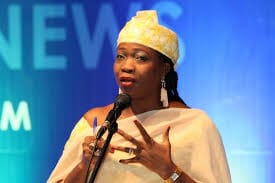
ABUJA — The All Progressives Congress (APC) Presidential Campaign Council (PCC) has launched a major initiative aimed at turning Nigeria’s vast overseas population into a strategic political force ahead of the 2027 presidential election. The Directorate of Diaspora Mobilisation, a newly unveiled arm of the PBAT/APC 2027 PCC, announced plans to deploy Nigerians living abroad and its international networks to counter misinformation about Nigeria and the administration of President Bola Ahmed Tinubu. At a press briefing in Abuja, the Director of the directorate, Abike Dabiri-Erewa, disclosed a comprehensive five-point strategy designed to mobilise diaspora support for Tinubu’s re-election. She said the directorate would use digital advocacy, diaspora chapter mobilisation, fundraising, voter education, and rapid responses to misinformation to promote the administration’s policies and achievements. The announcement signals a clear recognition that the 2027 campaign will be fought not only on the ground in Nigeria, but also in the global information space, where false narratives and misleading reports can shape the perceptions of both domestic voters and the international community. By enlisting the diaspora, the APC campaign hopes to build a credible network of voices that can challenge negative stories, explain complex policy decisions, and project a more accurate image of Nigeria’s progress under Tinubu.
Dabiri-Erewa framed Nigerians abroad as vital stakeholders in the country’s development, not peripheral observers. She described them as doctors, nurses, engineers, students, traders, innovators, and community leaders who send more than twenty billion dollars annually back home in remittances. That money sustains families, supports businesses, and contributes to the national economy in ways that are often underestimated. Beyond financial contributions, members of the diaspora hold professional expertise and social influence within their host communities in the United States, the United Kingdom, Canada, South Africa, the United Arab Emirates, Saudi Arabia, France, Germany, Australia, Turkey, India, and Kazakhstan. According to Dabiri-Erewa, these overseas Nigerians are not outsiders but stakeholders whose voices can help communicate developments in Nigeria to their families, friends, and communities across the world. They are also well positioned to explain the realities of life in Nigeria to foreign audiences, correcting negative impressions and challenging narratives that misrepresent the country. The directorate’s strategy is therefore built on the belief that the diaspora has the trust, reach, and credibility to serve as a powerful bridge between the administration and the wider public.
The first component of the strategy involves harmonising and activating APC diaspora chapters in countries around the world, creating an organised and coordinated structure for political engagement. This will ensure that Nigerian communities abroad are not fragmented, but instead work together under a unified campaign framework. The second component is a digital advocacy initiative tagged “Operation Tell Your Story,” through which diaspora members will be provided with short videos, infographics, and other communication materials highlighting the administration’s policies and achievements. The campaign is designed to address issues such as foreign exchange reforms, foreign reserves, support for small businesses, housing programmes, and opportunities for students. By giving diaspora members accurate, accessible, and shareable content, the directorate hopes to amplify the government’s message through personal networks and social media platforms. The initiative recognises that, in an age of digital misinformation, a message delivered by a trusted relative or friend is often more convincing than one delivered by an official institution. Diaspora members will be encouraged to adapt these materials to their local contexts, ensuring that the information reaches not only Nigerians abroad but also their contacts back home and in host countries.
Dabiri-Erewa acknowledged that the removal of fuel subsidies had caused hardship for many Nigerians, but she firmly defended the decision as a necessary step to reform the economy. She said, “President Bola Ahmed Tinubu has decided not to manage our feelings, but to fix the system. And it takes a bold leader to do that.” According to her, Nigerians abroad understand the distortions and difficulties created by the previous foreign exchange system, and they are well placed to help explain the rationale behind the administration’s reforms to people at home. The directorate’s messaging will therefore go beyond simple celebration of achievements; it will also confront the painful trade-offs of reform. The campaign will argue that short-term discomfort is unavoidable if Nigeria is to achieve long-term economic stability and growth. By engaging diaspora members who have lived and worked in economies that operate on market principles, the campaign hopes to provide credible explanations for policies that might otherwise be misunderstood. This is intended to reduce the political space for misinformation and build greater public understanding of the difficult choices facing the country.
The third component of the strategy focuses on mobilising diaspora fundraising through structured platforms. These funds will support campaign activities, voter education materials, town hall meetings, and grassroots mobilisation efforts. The goal is not merely to collect money, but to channel diaspora resources into a well-organised campaign infrastructure that can reach voters across Nigeria. The fourth component centres on voter registration awareness and homecoming mobilisation. Nigerians abroad are being encouraged to remind eligible family members and community residents to register, collect their Permanent Voter Cards, and participate in elections. This is a recognition that political influence is not limited to persuasion; it also depends on getting supporters to the polls. The fifth component, rapid responses to misinformation, underpins the entire strategy. The directorate will monitor false claims about Nigeria and the administration, responding quickly with accurate information through diaspora networks and international channels. Together, these five elements form a comprehensive approach to electioneering that leverages the diaspora’s financial resources, communications skills, and personal connections to strengthen the campaign of President Tinubu and the APC.
The unveiling of this diaspora mobilisation plan marks a new phase in Nigerian political campaigning, one that recognises the growing importance of the global Nigerian community. With more than twenty billion dollars in annual remittances, the diaspora represents not only a source of economic strength but also a reservoir of political and social capital. By organising and deploying this network, the APC campaign hopes to counter misinformation, promote the administration’s achievements, and build a formidable coalition ahead of 2027. The success of the initiative will depend on the ability of diaspora chapters to coordinate effectively, the quality and credibility of the communication materials, and the willingness of Nigerians abroad to actively participate. Dabiri-Erewa’s message is clear: Nigerians abroad are not spectators in the country’s political journey; they are stakeholders with a vital role to play. As the 2027 election draws closer, the campaign is betting that the voices of Nigerians in the diaspora, telling their stories and sharing their perspectives, can help shape the national conversation and influence the outcome at home.