


SANTA CRUZ — Santa Cruz County voters heading to the polls this November can expect “business as usual,” according to County Clerk Tricia Webber, who is working diligently to dispel widespread misinformation and rebuild public trust in the nation’s voting systems ahead of the Nov. 3 general election. This year’s election cycle has been uniquely turbulent, Webber noted, with an unprecedented wave of election-related noise emanating from the federal government and prompting heightened anxieties about ballot security among voters across the country, including right here in Santa Cruz County. In March, President Donald Trump signed an executive order attempting to restrict mail-in voting for the upcoming midterm election, a measure that was ultimately rejected by the Supreme Court on Sept. 14. While that ruling affirmed the right of states to continue sending out mail-in ballots under the same long-standing processes they have used for years, the damage had already been done. Webber revealed that she began receiving a steady stream of calls from concerned local voters worried that they wouldn’t receive their ballots in the mail or that they would be required to pay postage to return them. All of these concerns, Webber assured, have been thoroughly debunked. “There’s such distrust based off everything that has trickled down over the past several months with vote-by-mail, that we’re not sure that voters are hearing us as well as they have in the past,” Webber said during a media day event at the County Government Center. “Everything is as it goes.”
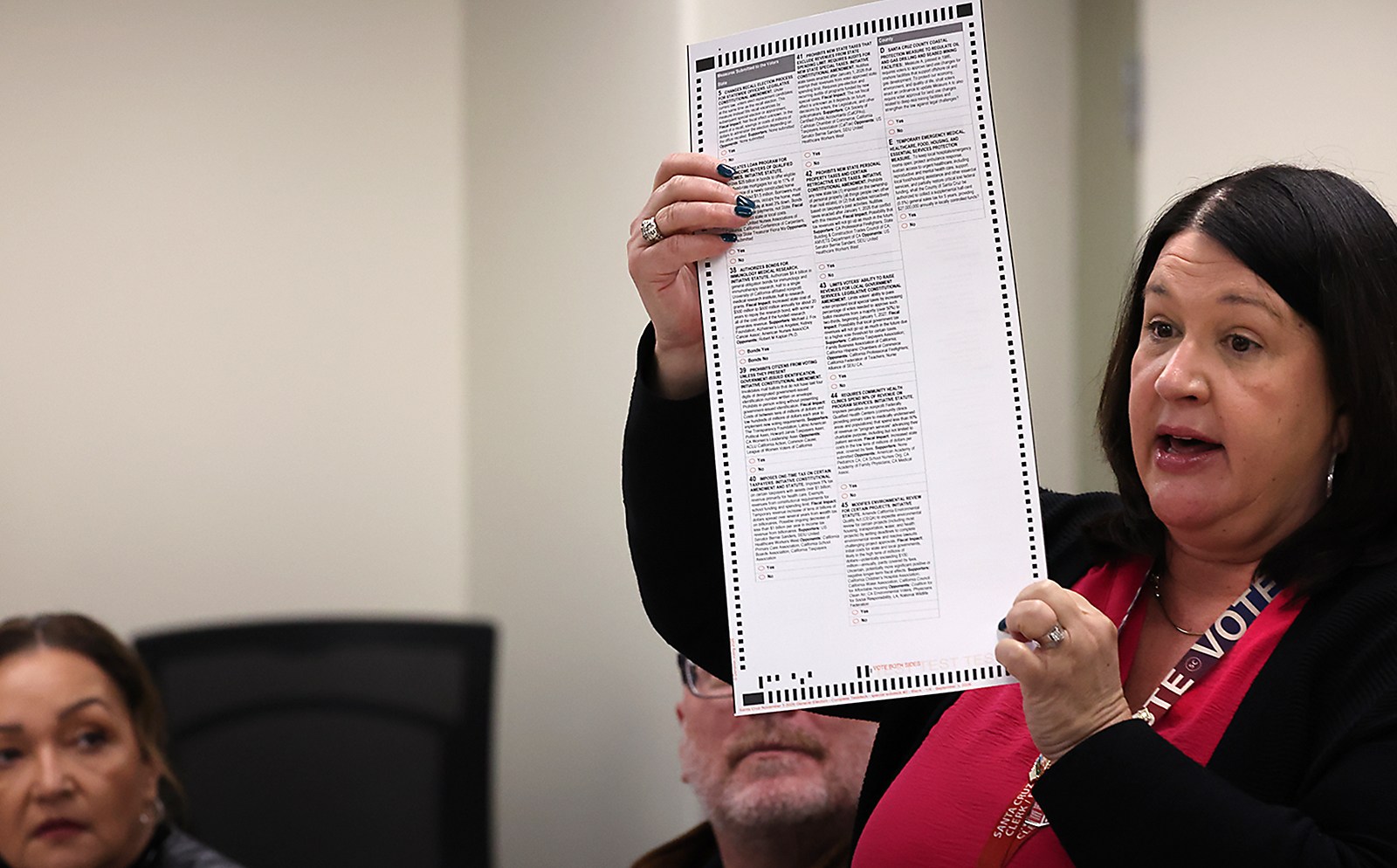
At a time when faith in democratic institutions is being tested, the Santa Cruz County Elections Department is pulling out all the stops to ensure that every eligible voter understands exactly what to expect when their ballot arrives in the mail. The familiar 19-inch vote-by-mail ballot will look precisely the same as it has in previous election cycles, Webber confirmed, and it will be delivered in the exact same manner voters have come to expect. No postage is required, she emphasized, clearing up one of the most persistent myths circulating in the community. The county will mail its official voter information guide to all registered voters on Sept. 25, followed by the distribution of more than 172,000 ballots beginning Oct. 2. Election officials are urging patience, advising voters to wait a full week after that date before requesting a replacement ballot, as mail transit times can vary significantly depending on location and postal service volumes. For those who prefer to cast their ballot in person or need assistance, in-person voting will open at three locations starting Oct. 5, with additional voting centers opening progressively throughout the month and continuing right up until Election Day.
To further combat election anxiety and foster a deeper understanding of the voting process, the county has launched a robust community outreach initiative in partnership with local libraries. The “Ballots and Books” program, a collaboration between the Elections Department and Santa Cruz Public Libraries, offers family-friendly events where voters can register to vote, drop off their completed ballots, request replacement ballots, use accessible voting machines, and enjoy children’s activities — all in a welcoming, low-pressure environment. These events will rotate through eight library locations including Aptos, Boulder Creek, Branciforte, Capitola, Freedom, Live Oak, Downtown Santa Cruz, and Watsonville, running throughout the three weeks preceding the election. Building on this momentum, the county will host its annual Family Democracy Day on Oct. 17 at the Watsonville Public Library, Simpkins Swim Center, and a yet-to-be-determined location in the San Lorenzo Valley. Christopher Platt, director of Santa Cruz Public Libraries, described the event as an educational experience where children and parents can explore firsthand how the voting process works and what it truly means to participate in a democracy. “Libraries want to support people voting and their ability to vote and that’s why we’re here and that’s why we do what we do,” Platt said.
Beyond these educational events, Santa Cruz County is embracing a somewhat unconventional strategy to speed up the tabulation process and provide near-instant gratification for those eager to see election night results. Webber is enthusiastically encouraging voters to cast “naked ballots” — a term that has nothing to do with shedding clothing, but rather refers to returning the mail-in ballot without its accompanying outer envelope directly to a designated drop box or in-person voting location. These naked ballots are processed separately and are guaranteed to be included in the initial election night returns, providing a rapid tally that reflects the community’s will as early as possible. “If you want your voice heard at 8:01 p.m., or sometime up to midnight on election night, a naked ballot is the best way to go, because those are guaranteed to be in the count by the end of election night,” Webber explained. In contrast, ballots returned inside their envelopes can take approximately 48 hours to process, as election workers must complete the signature verification process, carefully extract each ballot from its envelope, flatten the paper, and prepare it for tabulation. For those who prefer the traditional method, mail-in ballots must be postmarked on or before Nov. 3 and received by Nov. 10 to be counted. The deadline to register to vote and receive a ballot and voter guide by mail is Oct. 19, though prospective voters can register in person and cast their ballot at any in-person voting location right up until the polls close on election night.
Accessibility remains a top priority for the county, as election officials work to ensure that no resident is barred from participating in the democratic process due to physical, linguistic, or other barriers. In-person voting locations throughout Santa Cruz County will be equipped with ballot marking devices, physical and audio ballots available in English, Spanish, Japanese, and Thai, and large-print voter guides for those with visual impairments. The county also offers voter assistance services for individuals who cannot travel to a voting location, including pre-arranged transportation to and from a voting center. Additionally, the county’s innovative ballot-mobile will be making its way through neighborhoods across Santa Cruz County, bringing the same services available at traditional in-person voting locations directly to residents who might otherwise have difficulty accessing them. This comprehensive approach to accessibility reflects a deep-seated commitment to the principle that every voice deserves to be heard, regardless of physical ability, language proficiency, or economic circumstance.
The county is also investing significant resources into ensuring the accuracy and integrity of the election, backed by $196,000 in state funding earmarked for expediting the vote-counting process. Of that amount, 75% will be allocated toward equipment, staffing, technology, or space improvements, with the remaining 25% dedicated to community outreach and education efforts. Webber noted that the county received little guidance on specific uses for the funds, and since Santa Cruz County doesn’t require additional space or new vote-by-mail sorting equipment, the lion’s share will be directed toward enhanced staffing to speed up ballot processing. In the 28 days following the election, county election workers will conduct a meticulous audit of every aspect of the election, performing manual tallies, verifying write-in votes, and double-checking precinct-level ballot counts to ensure accuracy down to the last vote. “There is nothing we do that is secret, everything we do is out there for all of us to watch and observe,” Webber emphasized. “We just want to make sure that the election is run transparently, accurately and safely, and that everybody who chooses to participate will have their voice heard.” With these comprehensive measures in place, Santa Cruz County voters can approach the upcoming election with confidence, knowing that their ballots are secure, their voices will be counted, and the fundamental democratic process remains as robust as ever.