


Poland and Australia join forces against disinformation and hybrid threats
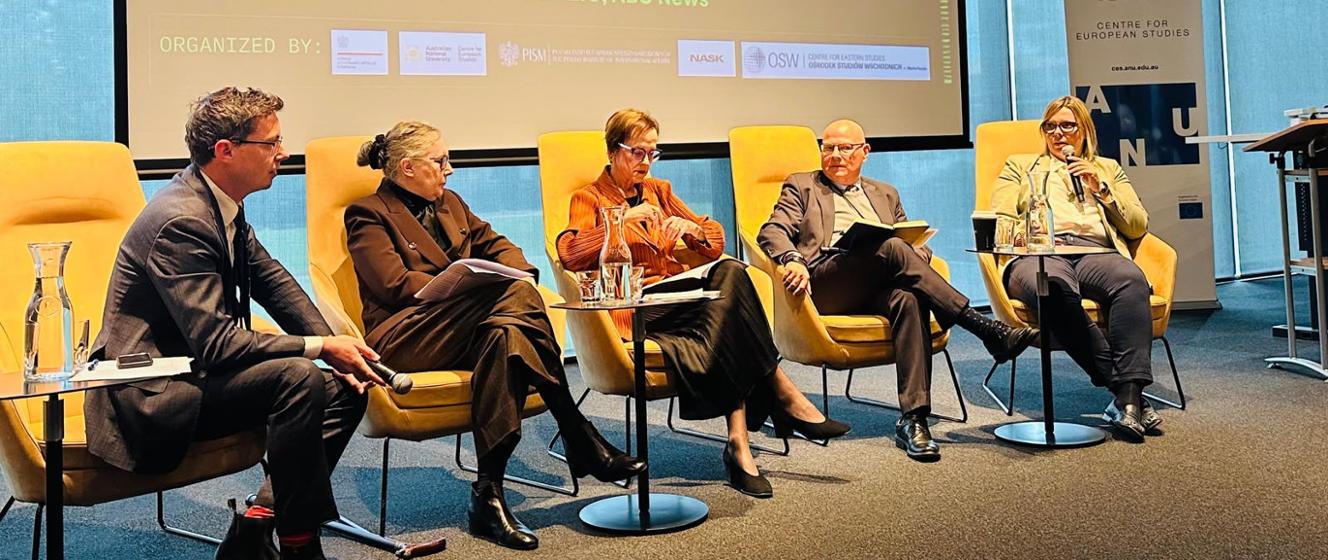
In a landmark display of trans-regional solidarity, the Embassy of the Republic of Poland in Canberra hosted a three-day study visit from 14 to 16 October 2026, bringing together Polish experts in the field of countering disinformation with their Australian counterparts. The delegation, composed of representatives from Poland’s Ministry of Foreign Affairs, the NASK National Research Institute, and two leading think tanks—the Polish Institute of International Affairs (PISM) and the Centre for Eastern Studies (OSW)—undertook a packed program designed to deepen mutual understanding of hybrid threats and to forge new pathways for cooperation. The centrepiece of the visit was an international conference titled “The Battle for Truth: Countering Disinformation Across Europe and the Indo-Pacific,” organized jointly by the Embassy of Poland in Canberra and the Australian National University Centre for European Studies (ANU). The event drew together policymakers, academics, media professionals, and diplomats, all confronting a common challenge: the weaponization of information by state and non-state actors seeking to undermine democratic institutions. The conference was not an isolated event but rather the culmination of two days of intensive discussions, bilateral consultations, and thematic workshops that underscored the growing alignment between Poland and Australia on matters of strategic resilience.
The visit took place against a backdrop of escalating global instability. The ongoing Russian aggression against Ukraine, now in its fourth year, has demonstrated clearly that disinformation is not a secondary phenomenon but a central tool of modern warfare. Kremlin-backed media outlets, social media bots, fake websites, and covert influence operations have been used to manipulate public opinion, destabilize governments, and weaken support for Ukraine among Western allies. At the same time, the Indo-Pacific region has become a theatre of intensifying geopolitical competition, with state actors deploying similar information warfare techniques to assert dominance and erode trust in democratic governance. For Poland, located on NATO’s eastern flank and sharing a border with both Russia and Belarus, the threat of hybrid warfare is existential. For Australia, a key partner in the Indo-Pacific, the challenge comes in different forms—foreign interference in elections, espionage, and the spread of narratives aimed at undermining the rules-based international order. The discussions in Canberra were thus framed by a recognition that, although geographic distances separate Warsaw and Canberra, the effects of disinformation are global, and the response must be collaborative.
The three-day program was meticulously structured to maximize engagement at multiple levels. In addition to the high-level conference on the final day, the Polish delegation held a series of meetings with officials from the Australian Department of Foreign Affairs and Trade (DFAT) and other government agencies responsible for national security, cybersecurity, and strategic communications. These meetings offered an opportunity for the two sides to exchange views on threat assessments, legal frameworks, and best practices in countering foreign interference. The agenda also included informal interactions with media representatives, academic centers, and members of the diplomatic corps accredited in Canberra, providing a broader perspective on how different sectors perceive and respond to the disinformation challenge. Dedicated thematic workshops allowed Polish and Australian experts to dive deeper into specific topics, such as attribution of information operations, the role of artificial intelligence in creating deceptive content, and the importance of media literacy in building societal resilience. This multi-layered approach ensured that the visit was not merely an exchange of pleasantries but a substantive working session that produced actionable recommendations and reinforced personal networks among practitioners.
The Polish delegation brought with it a wealth of practical experience from one of the most targeted countries in Europe. Poland has faced sustained disinformation campaigns orchestrated by Russian intelligence services, often designed to sow discord within Polish society, undermine trust in NATO and the European Union, and whitewash the historical record of Russian imperialism. The NASK National Research Institute, which operates under the supervision of the Ministry of Digital Affairs, has been at the forefront of detecting and analyzing disinformation narratives, developing early-warning tools, and coordinating responses across government agencies. PISM and OSW, two of Poland’s most respected think tanks, have contributed extensive research on Russian hybrid warfare, election interference, and the Kremlin’s influence operations in Central and Eastern Europe. Their experts shared case studies, analytical frameworks, and lessons learned from campaigns targeting Poland—including attempts to exploit migration issues, historical grievances, and energy policy. This knowledge is particularly valuable for Australia, which has been developing its own counter-disinformation capabilities in response to foreign interference campaigns identified by domestic intelligence agencies. The exchange was thus a two-way street: Polish methods and institutional structures were presented as possible models, while Australian approaches to public information campaigns and online platform regulation provided fresh perspectives that Polish experts could adapt to their own context.
Australia, for its part, has emerged as a significant actor in countering foreign interference in the Indo-Pacific. The country has experienced attempts to meddle in its political processes, with foreign powers seeking to influence elections and undermine trust in democratic institutions. Australian agencies have developed robust mechanisms for detecting and exposing such activities, including the Foreign Interference Transparency Scheme, which requires individuals and organisations acting on behalf of foreign principals to register their activities. The exchange with Polish experts was therefore highly complementary, as both countries face similar threats but operate in different regional environments. The discussions highlighted the importance of cross-regional partnerships, particularly in tracking the global spread of disinformation narratives that often originate in one region and are quickly adapted for audiences in another. For example, narratives about the war in Ukraine are not confined to Europe; they are actively disseminated in the Indo-Pacific with the aim of dividing the international community and undermining sanctions against Russia. Similarly, disinformation about China’s policies in the South China Sea can influence European perceptions and complicate EU-member states’ responses to Indo-Pacific conflicts. The Polish-Australian dialogue recognized that no single country can effectively address these transnational threats alone, and that information sharing and coordinated action among like-minded nations are essential.
The key outcome of the visit, as emphasized by participants, was greater awareness of the urgent need to intensify cooperation and partnerships between like-minded countries, both within established international frameworks such as NATO and the European Union, and through bilateral and minilateral arrangements. Poland and Australia have traditionally cooperated through various channels, including the EU-Australia partnership and NATO’s global partners network, but the study visit underscored the potential for deeper engagement on hybrid threats. Areas for future collaboration could include joint research projects on disinformation trends, the development of shared training programs for government officials and civil society actors, and the coordination of responses to cross-border influence operations. The conference also served as a reminder that the defense of democratic societies requires not only technical solutions but also a long-term commitment to strengthening media literacy, promoting critical thinking, and fostering an informed citizenry. In the face of growing authoritarian pressure on the international stage, the alliance between Poland and Australia—geographically distant but strategically aligned—represents a hopeful example of how countries can unite to protect the truth, uphold democratic values, and build resilience against hybrid threats. The conversations begun in Canberra will not end with the closing of the conference; they will continue through ongoing contacts, collaborative initiatives, and a shared resolve to ensure that false narratives do not prevail.