


The Rise of a Digital King: Capt. Traoré and the Online Glorification of Military Rule in West Africa
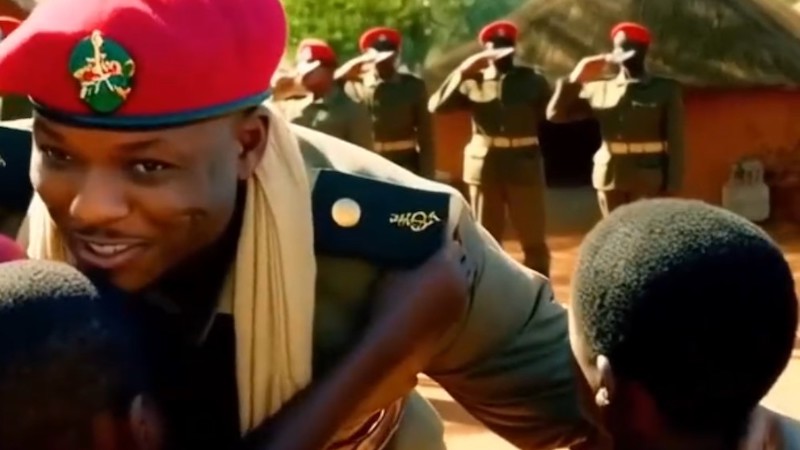
A wave of digital propaganda is sweeping across West Africa, bolstering the image of military rulers in Burkina Faso, Mali, and Niger. At the center of this online campaign is Captain Ibrahim Traoré, Burkina Faso’s leader, portrayed as a youthful savior of the continent. Viral videos, memes, and social media posts lionize Traoré, often utilizing manipulated or AI-generated content to falsely attribute progress and development under his leadership. This meticulously crafted digital strategy aims to create a cult of personality around Traoré, solidifying his power and influencing public perception both within Burkina Faso and across the region. The campaign’s pervasiveness is unprecedented, raising concerns about the manipulation of information and the erosion of democratic values.
The online campaign surrounding Traoré transcends organic support. Investigations reveal a network of third-party actors, likely linked to foreign interests, orchestrating the dissemination of pro-Traoré content. This includes the use of low-budget, easily debunked AI-generated videos showcasing fictitious development projects and associating Traoré with events in which he did not participate. These fabricated portrayals, while often crude, effectively exploit the widespread reliance on social media for news and information, particularly in regions with limited access to traditional media. The campaign plays on existing anxieties and grievances, presenting Traoré as a strongman capable of addressing deep-seated societal challenges.
Paradoxically, the reality on the ground starkly contrasts with the digital facade. The Sahel region, encompassing Burkina Faso, Mali, and Niger, has witnessed a surge in violent extremism since the coups. Groups affiliated with al-Qaeda and the Islamic State have expanded their operations, leading to displacement, violence, and escalating fatalities. In Burkina Faso alone, the number of people killed by terror groups has nearly tripled since Traoré seized power. This deteriorating security situation underlines the disconnect between the online portrayal of stability and progress and the worsening realities faced by the population.
The fertile ground for misinformation in the Sahel is further cultivated by the region’s political instability and limited media infrastructure. The military juntas have curtailed press freedoms and restricted dissent, creating an environment where pro-authoritarian narratives can thrive. Russia, seeking to expand its influence in Africa, has capitalized on these vulnerabilities by investing heavily in disinformation campaigns. Through its "African Initiative" news agency and a network of social media influencers, Russia disseminates pro-Kremlin narratives and anti-Western propaganda, aiming to sway public opinion and undermine democratic institutions.
Russia’s information warfare exploits Africa’s growing digital landscape. With hundreds of millions of Africans now online, social media has become a primary source of information, particularly in areas with limited access to traditional media. This digital dependence makes populations vulnerable to manipulation and misinformation. The African Initiative leverages platforms like VKontakte and Telegram, disseminating carefully crafted narratives that paint Russia as a partner and defender of African sovereignty, while vilifying Western nations and promoting the appeal of military rule. This carefully orchestrated campaign plays on existing anti-colonial sentiments, portraying Russia as an ally against Western imperialism.
The implications of this disinformation campaign extend beyond the Sahel. The manufactured popularity of Traoré has resonated in other African nations, notably Nigeria, raising concerns about potential spillover effects. The romanticized portrayal of military intervention and strongman leadership undermines democratic norms and could inspire similar uprisings in other vulnerable states. Furthermore, Russia’s growing influence in the region, facilitated by its information warfare strategy, raises serious concerns about the exploitation of natural resources and the potential for further destabilization. The irony is palpable: Russia presents itself as an anti-colonial force while simultaneously embedding its operatives and mercenaries within the military and government apparatuses of these African nations, facilitating the extraction of vast mineral wealth, including billions of dollars in gold. This neo-colonial dynamic undermines the very principles Russia purports to uphold. The convergence of political instability, disinformation, and foreign exploitation poses a grave threat to the future of the Sahel, highlighting the urgent need for strategies to counter misinformation and promote democratic governance.