


Paragraph 1: The Official Announcement and Ukraine’s Immediate Rejection
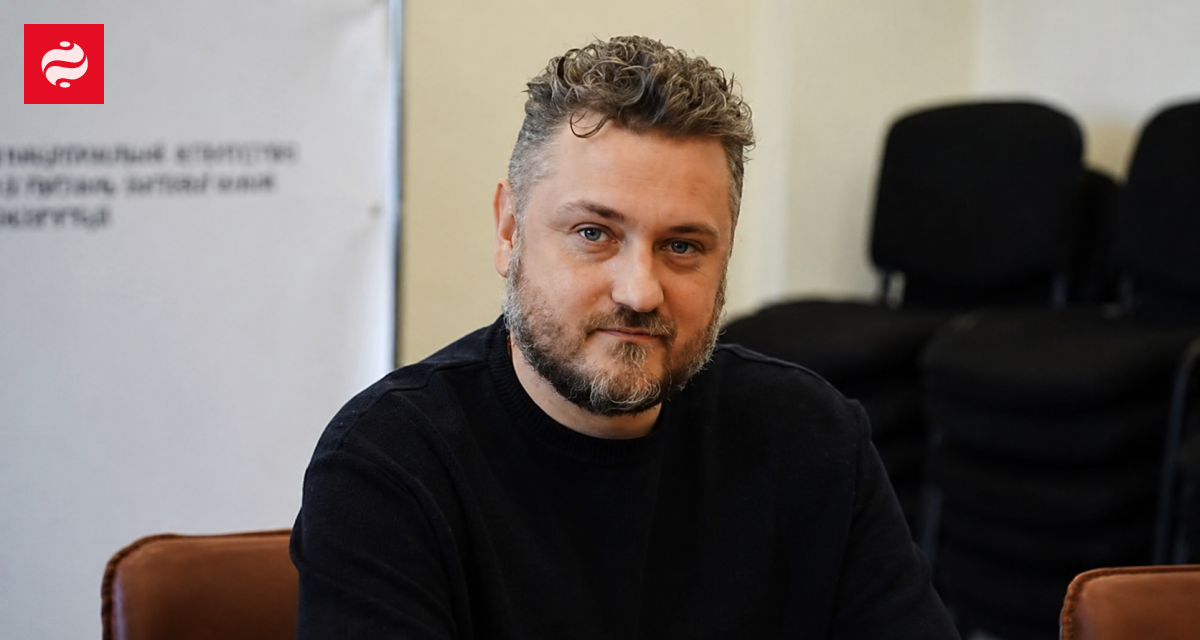
In a highly charged development that underscores the escalating propaganda war alongside the physical conflict, the Russian Defense Ministry, via the state-run news agency Interfax, announced on August 30 its preparations for massive strikes targeting Ukraine’s energy infrastructure. Framing these impending attacks as a direct “response” to Kyiv’s alleged strikes on Russian civilian and fuel-and-energy infrastructure, Moscow attempted to pre-emptively justify a wave of military aggression expected in the coming weeks. However, Ukrainian officials were swift and unequivocal in their rebuttal. Andrii Kovalenko, the Head of the Center for Countering Disinformation (CPD) at the National Security and Defense Council of Ukraine, categorically dismissed the Russian narrative as a lie and a deliberate misinformation tactic. Kovalenko emphasized that the Kremlin’s attempt to pin the blame for the impending destruction on Ukraine is a manipulative reversal of reality, aimed at confusing domestic audiences and the international community about the true aggressor in the conflict)Skip to content. The Russian announcement sets the stage for a brutal winter, mirroring previous campaigns of energy terrorism, but Ukraine is already bracing for a dual-front assault: one physical, targeting the power grid, and one informational, targeting global perception.
Paragraph 2: Refuting the “Response” Narrative—A History of Energy Terrorism
The core of Kovalenko’s argument rests on a chronological and factual record that directly contradicts Moscow’s claims. He pointed out that Russia initiated attacks on Ukrainian energy infrastructure as early as 2022, a period when Ukraine lacked entirely the capability for deep strikes deep into Russian territory. This historical fact dismantles the premise that Russia is currently reacting to Ukrainian provocations. Throughout 2022 and 2023, Russia systematically launched wave after wave of missile and drone barrages against electrical substations, hydroelectric dams, and thermal power plants, specifically designed to plunge millions of civilians into darkness, cold, and desperation during the winter months. This was a premeditated strategy of collective punishment, not a tactical retaliation. Kovalenko stressed that the strikes on the energy sector had been planned by the Russian military establishment for a long time, regardless of any Ukrainian actions. By claiming a causal link to Ukraine’s recent drone operations against Russian oil refineries, Moscow is actively attempting to rewrite history and absolve itself of its long-standing policy of targeting critical civilian infrastructure. The Ukrainian official clarified that the Russian Federation is simply blurring reality with its relentless propaganda machine, hoping that repetition will eventually erode the truth. The reality, however, remains immutable: Russia is the original and primary aggressor who weaponized winter itself.
Paragraph 3: The Strategic Purpose of Pre-Announcing Mass Strikes
Beyond merely lying, the Russian Defense Ministry’s explicit pre-announcement of “massive strikes” serves a calculated military and psychological purpose. By broadcasting their intentions, the Kremlin aims to sow panic and anxiety among the Ukrainian civilian population, forcing them to live in constant anticipation of incoming missiles and drones. This psychological terror weapon is designed to destabilize daily life, disrupt economic activity, and pressure the Ukrainian government into concessions. Concurrently, this announcement acts as a signal to Russian domestic audiences, portraying President Vladimir Putin’s regime as strong and decisive against Ukrainian “terrorists.” It is a classic disinformation technique utilized in hybrid warfare, where the threat of action is as potent as the action itself. Furthermore, by stating that these strikes are a response to Ukraine, Russia seeks to delegitimize Ukraine’s right to self-defense, which includes striking legitimate military targets within Russian territory. Kovalenko highlighted this specific tactic of “information shadowing,” where Russia attempts to control the narrative around its own terrorism by creating a false equivalence between Russia’s indiscriminate attacks on civilian power grids and Ukraine’s precise strikes on Russian military-industrial complexes. This psychological operation is meticulously designed to fracture Western support by framing Ukraine as an equal aggressor, thereby blurring the moral clarity of the war.
Paragraph 4: Contextualizing Ukraine’s Deep Strike Capabilities and Russian Vulnerability
The Russian claim of retaliation conveniently ignores the timeline of Ukraine’s military development. Ukraine only began developing and deploying long-range drones capable of striking deep into Russian territory in mid-to-late 2024, carrying out strikes on Russian oil refineries, ammunition depots, and airfields. These strikes, while strategically important for degrading Russia’s war machine, are a direct consequence of Russia’s own full-scale invasion rather than an unprovoked act of aggression. Moscow is attempting to shift global attention from its own illegal war and occupation to frame Ukraine’s legitimate defensive strikes as escalatory. However, the asymmetry is stark. Russia attacks Ukrainian civilian power plants to freeze the population; Ukraine attacks Russian military logistics to cut off supplies. The Kremlin’s effort to equate these two disparate actions is a cynical exercise in moral equivalence. By pre-announcing the strikes, Russia also hopes to intimidate Ukraine into halting its deep-strike campaign, but Kovalenko warned that such tactics will fail. The Russian military likely intends to use this announcement to gauge reactions, test air defense systems, and prepare staggered attacks designed to maximize damage while maintaining the illusion of a justifiable tit-for-tat maneuver.
Paragraph 4: Disinformation as a Core Tool of Russian Warfare
Kovalenko’s remarks highlight a broader, systematic use of disinformation as an instrument of war. The Russian government regularly deploys false narratives to shape the perception of its military operations, both internationally and domestically. The announcement regarding energy strikes is just the latest in a series of fabricated justifications and outright fabrications propagated by Moscow. For instance, on August 12, Russian officials claimed to have “captured” a village in the Kharkiv region that, however, had ceased to exist thirty years ago. This bizarre assertion exposed the depths of Russian fabrication, where even non-existent geographic targets are used to simulate battlefield victories. Similarly, in late July, the CPD was forced to debunk rumors regarding an alleged medium-range ballistic missile threat from Iran, indicating a pattern of Russia seeding false intelligence to fabricate pretexts for actions or to create divisions among Ukraine’s allies. These actions, combined with the current energy strike narrative, reveal a systematic information architecture designed to dominate the cognitive battlefield)Skip to content. The strategy involves flooding the information space with contradictions and lies, making it difficult for the average observer to distinguish between reality and propaganda, thereby destabilizing public morale and eroding trust in reliable sources.
Paragraph 5: The Implications for the Upcoming Winter and International Perception
The threatened massive strikes on Ukraine’s energy facilities carry severe implications for the upcoming winter season. If executed, they could lead to prolonged blackouts, heating failures, and a humanitarian crisis for millions of Ukrainians. Russia has demonstrated a consistent pattern since 2022 of resorting to energy terrorism as its primary means of attempting to break Ukrainian resilience when it fails on the battlefield. The pre-announcement serves to warn Ukraine to begin emergency preparations, but it also allows Russia to claim “fair warning” should civilian casualties occur, another cynical distortion of the rules of war. For Ukraine’s international partners, this announcement serves as a critical test. Kovalenko’s message is clear: the West must not fall for the false equivalency propagated by the Kremlin. If Western leaders accept the Russian framing that Ukraine is provoking strikes on its own grid, they might be swayed to pressure Kyiv into halting deep strikes, thereby ceding a tactical advantage. However, Ukraine’s position is uncompromising. By exposing the lie, the CPD hopes to firmly establish that Russia is the sole aggressor and that attacks on the energy grid are premeditated crimes of war, not defensive responses.
Paragraph 6: The Battle for Truth and the Path Forward
In conclusion, the Russian Defense Ministry’s announcement of massive strikes on Ukraine’s energy infrastructure is a two-tiered threat: an imminent physical attack and a psychological operation designed to distort reality. Andrii Kovalenko’s response highlights Ukraine’s determination to counter these fabrications with factual evidence, reminding the world that Russia began destroying Ukrainian energy infrastructure years ago, unprovoked and without impunity. The Russian strategy is to “blur reality,” as Kovalenko noted, but Ukraine is committed to keeping the facts clear. The upcoming months will likely be brutal, with winter preparations hampered by the constant threat of aerial attacks. Yet, the resilience of the Ukrainian people and the clarity of their information defense provide a bulwark against Moscow’s attempts to rewrite history. The international community must recognize these Russian announcements not as genuine responses to aggression, but as the standard operational protocol of a terrorist state. As the strikes approach, the world will watch to see whether Ukraine’s grid can withstand the assault unaided, and whether the global community will firmly side with the truth propagated by Ukraine’s institutions or the manipulated fiction pushed by the Kremlin. Ultimately, the fight for Ukraine’s energy security is inextricably linked to the fight for truth in the information domain.