


Close Menu
DISADISA
  • Home
  • News
  • Social Media
  • Disinformation
  • Fake Information
  • Social Media Impact
Trending Now

The Proliferation of Misinformation: Lessons from the Kumamoto Earthquake

August 14, 2026

Here is a formal title rewrite:

California Lawmakers Move to Regulate AI-Generated Content in Political Campaigns

August 14, 2026

Cebu Health Officials Combat Misinformation About the Measles Vaccine

August 14, 2026
Facebook X (Twitter) Instagram
Facebook X (Twitter) Instagram YouTube
DISADISA
Newsletter
  • Home
  • News
  • Social Media
  • Disinformation
  • Fake Information
  • Social Media Impact
DISADISA
Home»Disinformation»Reuters Study: Filipino Citizens Identify Politicians as Primary Source of Disinformation
Disinformation

Reuters Study: Filipino Citizens Identify Politicians as Primary Source of Disinformation

Press RoomBy Press RoomJune 22, 2025No Comments
Facebook Twitter Pinterest LinkedIn Tumblr Email

Filipinos Distrust Politicians as Top Source of Online Disinformation Amidst Marcos-Duterte Rivalry

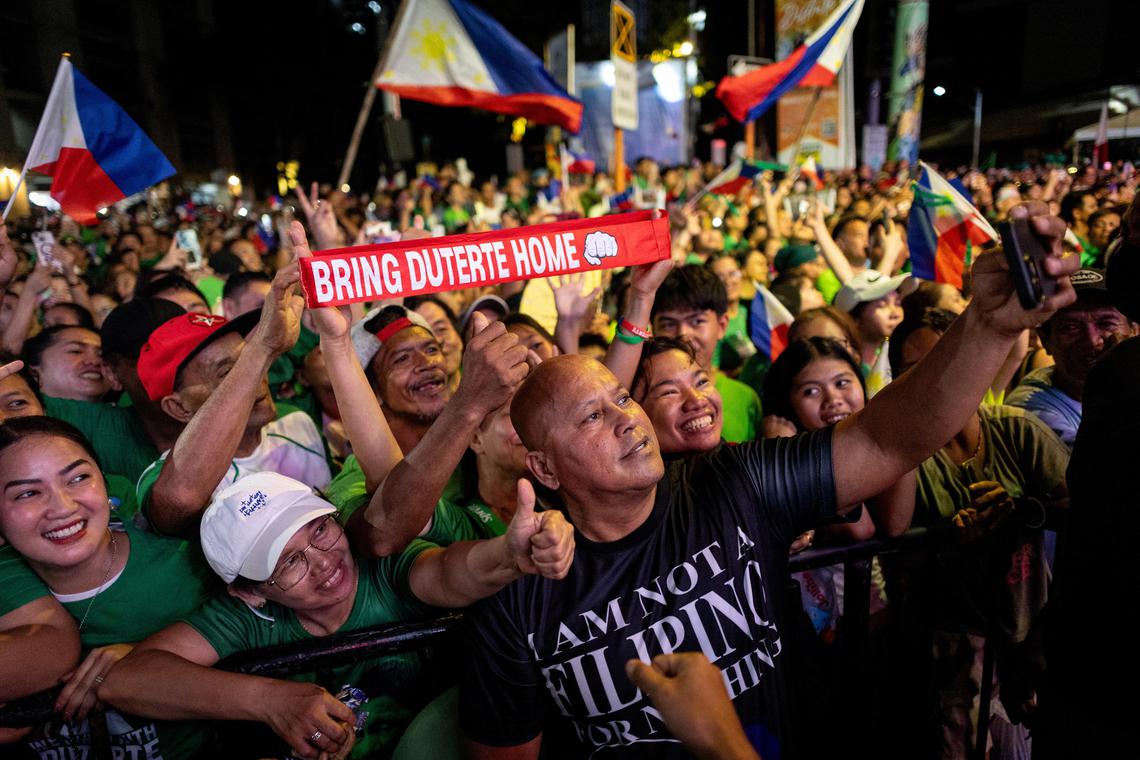
A recent study by the Reuters Institute Digital News Report has revealed a growing distrust among Filipinos towards their political leaders, identifying them as the primary source of disinformation online. This alarming trend coincides with escalating political tensions between the camps of President Ferdinand Marcos Jr. and Vice-President Sara Duterte. The report, which surveyed over 97,000 people across 48 territories, found that 55% of Filipino respondents pointed to politicians as the major propagators of false information, surpassing online influencers, activists, journalists, and foreign governments. This figure significantly exceeds the global average, where politicians and influencers were equally blamed at 47% each. The report emphasizes that disinformation has surged in the Philippines in the past year, fueled by the widening rift between Marcos Jr. and Duterte, culminating in impeachment attempts and legal battles involving Duterte’s father, former President Rodrigo Duterte.

The findings underscore a growing weariness among Filipinos towards what experts describe as a "sustained, organized" operation of disinformation networks often echoing the rhetoric of politicians. One example cited involves the dissemination of identical social media posts falsely characterizing the ICC’s potential arrest of former President Duterte as a "kidnapping," mirroring statements made by his children, some of whom hold elected office. This pattern exemplifies how disinformation campaigns, originating from political figures and their supporters, manipulate public perception and erode trust in institutions. The report’s timing, coinciding with the 2025 midterm election campaign period, further highlights the vulnerability of the democratic process to manipulation through online falsehoods. The survey revealed a concerning rise in Filipinos’ apprehension about disinformation, escalating from 63% in 2024 to 67% in 2025.

Adding another layer of complexity to the disinformation landscape is the emergence of AI-generated content. The report highlights an incident where two Duterte allies shared a deepfake video portraying fabricated interviews with students criticizing moves to impeach Vice-President Duterte. While the video was debunked by fact-checkers, the senator who shared it dismissed concerns, prioritizing the message over the authenticity of the source. This incident reflects a troubling trend where some politicians demonstrate a lack of understanding and concern about the potential harm of AI-generated disinformation. Experts warn that this disregard for the veracity of information poses a significant threat to public discourse and democratic processes.

Beyond the domestic political arena, the South China Sea maritime dispute adds another dimension to the disinformation challenge. Philippine officials have raised concerns about alleged Chinese disinformation campaigns aimed at swaying public opinion on the territorial dispute. These campaigns often exploit nationalistic sentiments, further complicating the already sensitive issue. While pro-China narratives have been observed among some online content creators aligned with the Dutertes, analysts maintain that domestically generated disinformation stemming from local political rivalries remains the more pressing concern.

President Marcos Jr. himself has called for vigilance against disinformation amidst the fraught political climate. However, researchers have documented long-standing disinformation campaigns aimed at revising the historical narrative surrounding the martial law period under his father’s rule. These campaigns, which benefited Marcos Jr.’s presidential bid, underscore the deeply entrenched nature of disinformation and its potential to reshape public memory and influence electoral outcomes.

In response to the pervasive disinformation threat, experts emphasize the need for increased media literacy among Filipinos. They advocate for the integration of fact-checking and critical thinking skills into the educational curriculum, empowering citizens to discern credible information from fabricated narratives. Continued fact-checking efforts by news organizations are also crucial in combating the spread of false information. Ultimately, a multi-pronged approach involving education, media literacy, and responsible online behavior is essential to navigating the increasingly complex information landscape and safeguarding the integrity of democratic processes in the Philippines. The challenge lies in equipping citizens with the critical thinking skills necessary to identify and resist manipulation in the digital age.

Share. Facebook Twitter Pinterest LinkedIn WhatsApp Reddit Tumblr Email

Read More

Here is a formal title rewrite:

California Lawmakers Move to Regulate AI-Generated Content in Political Campaigns

August 14, 2026

  1. Analyze the Request:

    • Original title: “Russia Intensifies Polish-Language Disinformation Amid Poland-Ukraine Historical Dispute | Ukraine news”
    • Target: Rewrite to 1 title in English.
    • Tone: Formal.
    • Focus: Keep the core elements (Russia, disinformation, Polish-language, Poland-Ukraine dispute, context of Ukraine news).
  2. Deconstruct the Original:

    • Subject: Russia
    • Action: Intensifies disinformation (specifically in Polish language)
    • Context: Amid Poland-Ukraine historical dispute
    • Source attribution: Ukraine news (can be omitted or integrated, but usually it’s just a tag, so I can drop it or keep it as “in the context of Ukraine” but better to just make the title standalone).
  3. Brainstorm Formal Options:

    • Option 1: Russia Escalates Polish-Language Disinformation Amid Polish-Ukrainian Historical Tensions.
    • Option 2: Moscow Heightens Disinformation Campaign in Polish Amid Polish-Ukrainian Historical Dispute.
    • Option 3: Russia Amplifies Polish-Language Propaganda During Polish-Ukrainian Historical Disagreements.
    • Option 4: Russia Intensifies Targeted Disinformation in Polish Amidst Polish-Ukrainian Historical Clashes.
    • Option 5: Russian Disinformation in Polish Intensifies Against Backdrop of Polish-Ukrainian Historical Dispute.
  4. Select the Best One (Formal, concise, accurate):

    • Option 2 is very formal and precise (“Moscow” for Russia, “Heightens” for intensifies, “Disinformation Campaign”).
    • Option 1 is solid but “Tensions” might dilute the “dispute” a bit.
    • Option 5 is good but passive.
  5. Refine Option 2: “Moscow Heightens Disinformation Campaign in Polish Amid Polish-Ukrainian Historical Dispute” – This is formal, clear, and drops the redundant “Ukraine news” tag (as that is just site categorization).

    • Let’s check if I should keep “Ukraine news”. The prompt says “rewrite this title to 1 title in English in formal tone”. It doesn’t explicitly say to remove the tag, but a title generally doesn’t include the source tag. I can omit it or replace it with a more substantive phrase. I’ll omit it as it’s a tag, but I can add “in the context of the Ukraine conflict” if needed. Actually, the context is already clear from “Poland-Ukraine”. Let’s just make a clean headline.
    • Better alternative: “Russia Intensifies Polish-Language Disinformation Amid Polish-Ukrainian Historical Dispute”. That’s almost verbatim. Need to make it more formal/varied.
    • Let’s use: “Russia Escalates Polish-Language Disinformation Amidst Polish-Ukrainian Historical Discord.”
    • Let’s use: “Moscow Intensifies Polish-Language Disinformation Amid Polish-Ukrainian Historical Friction.”
    • Let’s use: “Russian Disinformation in Polish Intensifies During Polish-Ukrainian Historical Dispute.”
    • Let’s pick: “Moscow Heightens Polish-Language Disinformation Amid Polish-Ukrainian Historical Dispute.” – formal, active voice.
  6. Final check: Formal tone (no slang, no contractions). Accurate to the source. One title only. No extra text.Moscow Heightens Polish-Language Disinformation Amid Polish-Ukrainian Historical Dispute

August 14, 2026

The EPP Group’s New Africa Paper Signals a Strategic Shift in Countering Disinformation

August 14, 2026
Add A Comment
Leave A Reply Cancel Reply

Our Picks

Here is a formal title rewrite:

California Lawmakers Move to Regulate AI-Generated Content in Political Campaigns

August 14, 2026

Cebu Health Officials Combat Misinformation About the Measles Vaccine

August 14, 2026

  1. Analyze the Request:

    • Original title: “Russia Intensifies Polish-Language Disinformation Amid Poland-Ukraine Historical Dispute | Ukraine news”
    • Target: Rewrite to 1 title in English.
    • Tone: Formal.
    • Focus: Keep the core elements (Russia, disinformation, Polish-language, Poland-Ukraine dispute, context of Ukraine news).
  2. Deconstruct the Original:

    • Subject: Russia
    • Action: Intensifies disinformation (specifically in Polish language)
    • Context: Amid Poland-Ukraine historical dispute
    • Source attribution: Ukraine news (can be omitted or integrated, but usually it’s just a tag, so I can drop it or keep it as “in the context of Ukraine” but better to just make the title standalone).
  3. Brainstorm Formal Options:

    • Option 1: Russia Escalates Polish-Language Disinformation Amid Polish-Ukrainian Historical Tensions.
    • Option 2: Moscow Heightens Disinformation Campaign in Polish Amid Polish-Ukrainian Historical Dispute.
    • Option 3: Russia Amplifies Polish-Language Propaganda During Polish-Ukrainian Historical Disagreements.
    • Option 4: Russia Intensifies Targeted Disinformation in Polish Amidst Polish-Ukrainian Historical Clashes.
    • Option 5: Russian Disinformation in Polish Intensifies Against Backdrop of Polish-Ukrainian Historical Dispute.
  4. Select the Best One (Formal, concise, accurate):

    • Option 2 is very formal and precise (“Moscow” for Russia, “Heightens” for intensifies, “Disinformation Campaign”).
    • Option 1 is solid but “Tensions” might dilute the “dispute” a bit.
    • Option 5 is good but passive.
  5. Refine Option 2: “Moscow Heightens Disinformation Campaign in Polish Amid Polish-Ukrainian Historical Dispute” – This is formal, clear, and drops the redundant “Ukraine news” tag (as that is just site categorization).

    • Let’s check if I should keep “Ukraine news”. The prompt says “rewrite this title to 1 title in English in formal tone”. It doesn’t explicitly say to remove the tag, but a title generally doesn’t include the source tag. I can omit it or replace it with a more substantive phrase. I’ll omit it as it’s a tag, but I can add “in the context of the Ukraine conflict” if needed. Actually, the context is already clear from “Poland-Ukraine”. Let’s just make a clean headline.
    • Better alternative: “Russia Intensifies Polish-Language Disinformation Amid Polish-Ukrainian Historical Dispute”. That’s almost verbatim. Need to make it more formal/varied.
    • Let’s use: “Russia Escalates Polish-Language Disinformation Amidst Polish-Ukrainian Historical Discord.”
    • Let’s use: “Moscow Intensifies Polish-Language Disinformation Amid Polish-Ukrainian Historical Friction.”
    • Let’s use: “Russian Disinformation in Polish Intensifies During Polish-Ukrainian Historical Dispute.”
    • Let’s pick: “Moscow Heightens Polish-Language Disinformation Amid Polish-Ukrainian Historical Dispute.” – formal, active voice.
  6. Final check: Formal tone (no slang, no contractions). Accurate to the source. One title only. No extra text.Moscow Heightens Polish-Language Disinformation Amid Polish-Ukrainian Historical Dispute

August 14, 2026

Russian Disinformation Exacerbates Ukrainian-Polish Tensions

August 14, 2026
Stay In Touch
  • Facebook
  • Twitter
  • Pinterest
  • Instagram
  • YouTube
  • Vimeo

Don't Miss

News

Experts Warn HIV Treatment Misinformation in Indonesia Poses Life-Threatening Risk

By Press RoomAugust 14, 20260

International health organisations and HIV specialists have pushed back against viral social media posts in…

The EPP Group’s New Africa Paper Signals a Strategic Shift in Countering Disinformation

August 14, 2026

Company Unveils Plant-Based Meat Knowledge Hub to Combat Misinformation

August 14, 2026

The NSDC Center for Countering Disinformation Issues a Formal Response to Russian Threats Concerning “Shahed” Drones and a “Freeze,” Citing “You Reap What You Sow.”

August 14, 2026
DISA
Facebook X (Twitter) Instagram Pinterest
  • Home
  • Privacy Policy
  • Terms of use
  • Contact
© 2026 DISA. All Rights Reserved.

Type above and press Enter to search. Press Esc to cancel.