


India’s PIB Battles Disinformation Campaign Targeting EAM Jaishankar and US-India Relations
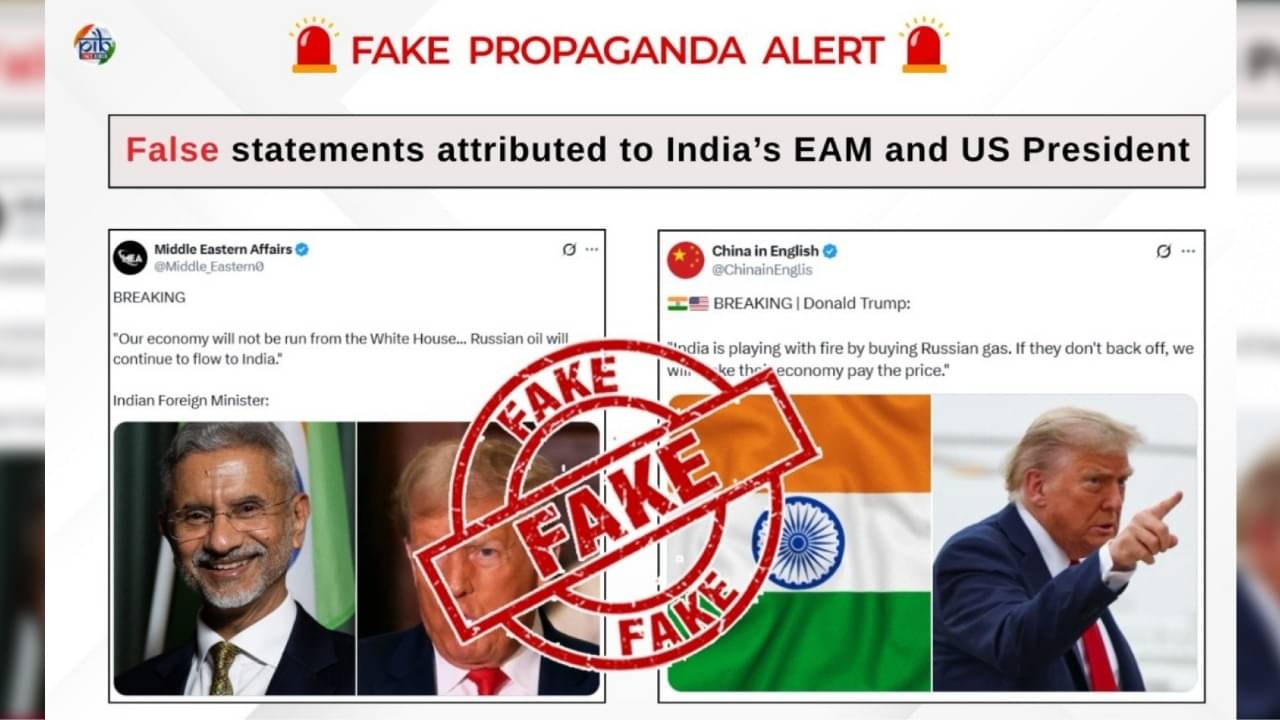
New Delhi – The Press Information Bureau (PIB) Fact Check unit is engaged in an ongoing effort to combat disinformation campaigns targeting India’s foreign policy and its relationship with the United States. On Monday, the PIB exposed two social media accounts, “Middle Eastern Affairs” and “China in English,” for fabricating quotes attributed to External Affairs Minister S. Jaishankar and former US President Donald Trump. These fabricated statements aimed to sow discord and misrepresent India’s stance on crucial geopolitical issues, particularly concerning trade relations with Russia and the US. This incident underscores the growing challenge of online disinformation and its potential to undermine international relations.
The fictitious quotes attributed to EAM Jaishankar suggested a defiant stance against US pressure regarding India’s purchase of Russian oil. One fabricated quote declared, “Our economy will not be run from the White House…Russian oil will continue to flow to India.” Simultaneously, a fake quote attributed to former President Trump threatened economic repercussions against India for its continued energy trade with Russia: “India is playing with fire by buying Russian gas. If they don’t back off, we will make their economy pay the price.” These fabricated statements were designed to inflame tensions and create a false narrative of conflict between India and the US.
The PIB acted swiftly to debunk these claims, exposing the fabricated nature of the quotes and emphasizing that neither EAM Jaishankar nor former President Trump had made such statements. This rapid response underscores the importance of timely fact-checking in mitigating the spread of disinformation and preventing it from shaping public opinion. The PIB’s efforts highlight the critical role of government agencies in identifying and countering online misinformation campaigns that can have significant real-world consequences.
The PIB’s investigation revealed that both “Middle Eastern Affairs” and “China in English” have a history of disseminating disinformation. Just days prior to the latest incident, these accounts were caught spreading false claims about India potentially suspending bilateral agreements with the US due to alleged hostile economic policies. This pattern of behavior suggests a deliberate and coordinated effort to undermine trust and create friction between India and its international partners. The repeated attempts to spread disinformation by these accounts warrant further investigation into their origins and motivations.
The profiles of “Middle Eastern Affairs” and “China in English” present a veneer of legitimacy, claiming to offer analysis and coverage of geopolitical developments. “Middle Eastern Affairs” purports to provide insights into political, economic, security, and strategic issues across the Middle East, Asia, and beyond. Similarly, “China in English” claims to offer information on political and military affairs spanning from East to West. However, their repeated dissemination of false information exposes their true intent: to manipulate public opinion and spread disinformation under the guise of legitimate news sources.
The incident highlights the broader challenge of combating disinformation in the digital age. The rapid spread of false information through social media platforms poses a significant threat to informed public discourse and international stability. The PIB’s efforts to expose and debunk these fabricated narratives emphasize the need for vigilance and critical thinking in the face of online information. It also underscores the crucial role of fact-checking organizations and government agencies in combating the spread of disinformation and promoting media literacy among the public. The PIB’s call to “Stay alert. Stay informed” serves as a vital reminder for individuals to verify information from official sources before sharing or believing it, contributing to a more informed and resilient information ecosystem.