


Pakistan Criminalizes Online Disinformation, Sparking Journalist Protests and Censorship Concerns
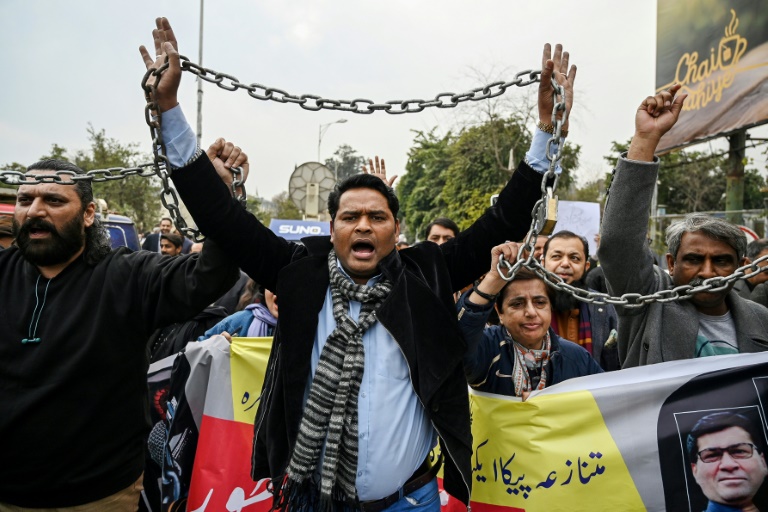
Islamabad, Pakistan – In a move that has ignited a firestorm of criticism from journalists and human rights advocates, Pakistan enacted legislation on Tuesday criminalizing online disinformation. The new law, swiftly passed through the National Assembly and Senate, prescribes penalties of up to three years in jail for individuals who intentionally disseminate false information online that could incite fear, panic, disorder, or unrest. Journalists staged walkouts in protest, denouncing the measure as a blatant attempt to stifle dissent and further restrict press freedom in the country.
The media landscape in Pakistan has become increasingly fraught in recent years, with journalists reporting rising state censorship. This has driven a significant portion of the public to turn to social media for news consumption. Independent journalists, particularly those operating on platforms like YouTube, have emerged as prominent voices, often providing alternative perspectives to the mainstream media narrative. The new law, however, directly targets these online spaces, raising concerns about its potential impact on freedom of expression and access to information.
Critics argue that the government, struggling with legitimacy after allegations of election rigging in 2022 and facing mounting pressure from the popular, yet imprisoned, former Prime Minister Imran Khan, is using the law to consolidate its power and control the narrative. Khan, who was jailed on corruption charges he claims are politically motivated, has seen his party, Pakistan Tehreek-e-Insaf (PTI), face a severe crackdown, with thousands of supporters detained and his name censored from television broadcasts. As a result, PTI’s campaigning has largely migrated online, where their tech-savvy base continues to mobilize support and call for protests.
The new legislation mandates social media platforms to register with a newly formed regulatory body, empowering Pakistani intelligence agencies to investigate disinformation and allowing any citizen to file a case. Non-compliance risks temporary or permanent bans on these platforms. This provision has drawn particular scrutiny, with critics fearing its potential for misuse and abuse, especially given the existing climate of restricted press freedom. The law’s vague wording regarding what constitutes "false" or "fake" information further exacerbates concerns about its potential to be weaponized against critical voices and political opponents.
Journalists express deep resentment over the lack of consultation during the legislative process, feeling betrayed by the government’s assurances of collaborative engagement. They view the law as a draconian measure implemented through coercion rather than open dialogue, vowing to challenge it on every available platform. This sentiment echoes a growing frustration within journalistic circles about the increasingly restrictive environment they face, even drawing comparisons to periods of dictatorship.
Digital rights activists express alarm over the escalating trend of restrictive laws being introduced under the pretext of public interest or national security. They argue that the true intent is to consolidate power and control the flow of information, further eroding the already fragile state of press freedom in Pakistan. Pakistan currently ranks 152 out of 180 countries in the Reporters Without Borders press freedom index. This latest legislation underscores a troubling pattern of legal measures that stifle dissent and restrict access to information, raising profound questions about the future of democratic freedoms in the country. Coupled with existing terrorism legislation often used to suppress critical voices, the new law paints a bleak picture for journalists and those seeking to exercise their right to freedom of expression. The international community watches closely as the situation unfolds, concerned about the implications for human rights and the shrinking space for independent journalism in Pakistan.