


Paragraph 1: The Escalating Physical Conflict and Global Economic Fallout
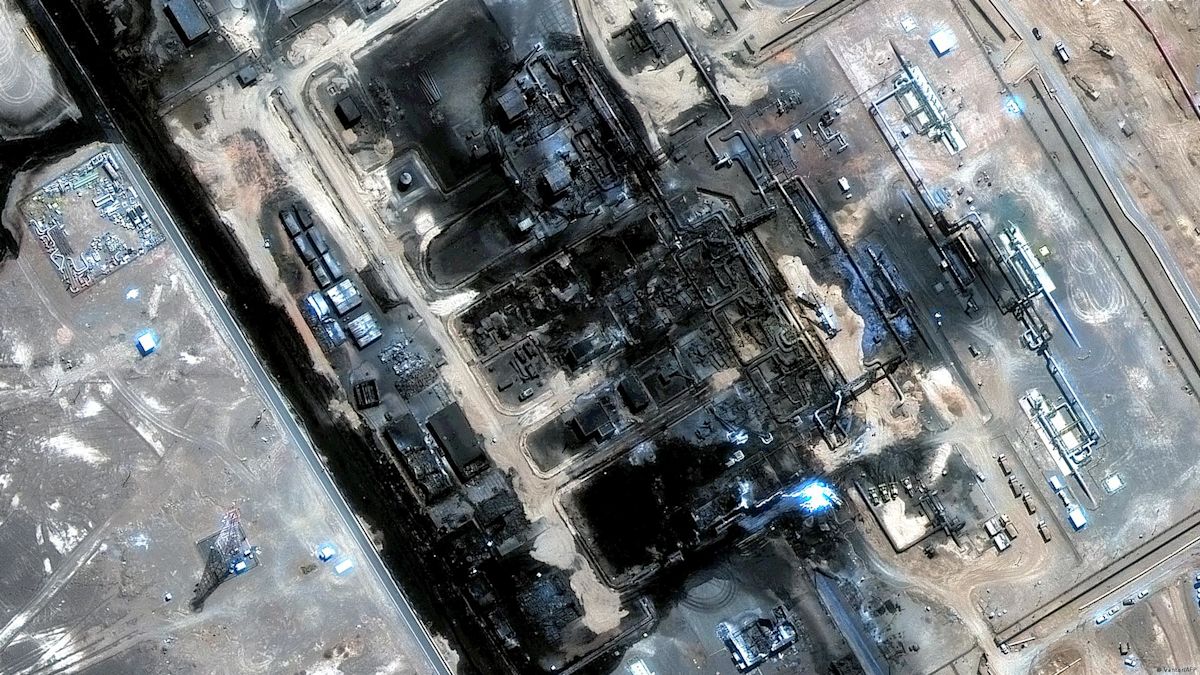
The long-simmering conflict between the Iran-backed Houthi rebels and the Saudi-led coalition has violently reignited in recent days, marking one of the most significant escalations since the expiration of the UN-brokered truce in 2022. Houthi forces have executed rapid and decisive advances along the Red Sea coast, seizing crucial territory that brings the Bab el-Mandeb Strait—a vital maritime chokepoint through which an estimated 10% of global trade passes, including vast quantities of oil destined for Europe and Asia—directly within reach of their artillery and missile batteries. In response, the Saudi-led coalition has unleashed a brutal campaign of airstrikes, targeting Houthi supply lines, arms depots, and command centers, while the Houthis have retaliated by launching sophisticated drones and ballistic missiles deep into Saudi territory, including toward cities like Abha and Jeddah. The immediate consequence of this renewed fighting is not merely a human tragedy, but a seismic shockwave through the global economy. Shipping insurance premiums have skyrocketed, and major logistics companies are being forced to consider rerouting vessels around the Cape of Good Hope, adding weeks to transit times and billions to operational costs. The strategic significance of this Red Sea front cannot be overstated; the Houthis demonstrated their capability to disrupt international commerce when they previously targeted vessels, and the current ground offensive appears explicitly designed to increase that leverage, threatening to strangle the Suez Canal corridor and provoke a broader naval confrontation involving international powers. The physical battlefield, however, is only half the story. This brutal struggle for territorial control is being fought in parallel by an equally vicious—and arguably more insidious—propaganda war, where the truth itself is under assault. As the Saudi airstrikes and Houthi drones reshape the landscape of the Red Sea coast, a parallel and equally significant conflict is being waged across social media platforms. Here, in the echo chambers of X (formerly Twitter), Telegram, and TikTok, a torrent of manipulated images, artificially generated videos, and outright fabrications is flooding the digital sphere, shaping international perceptions of a conflict that is increasingly difficult to verify through traditional journalistic means. The combination of a physical war with a hyper-accelerated information war has created a profoundly dangerous environment where lies, spreading faster than the missiles themselves, dictate the narrative of who is winning, who is losing, and, critically, what the international community believes is actually happening on the ground.
Paragraph 2: Case Study One – The AI-Generated Explosion and the Illusion of Combat
The first pervasive example of this disinformation epidemic involves a nine-second video clip that has gone astronomically viral, amassing hundreds of thousands of views. The footage depicts a colossal explosion erupting between urban buildings, sending fireballs skyward as terrified screaming fills the audio track. The caption accompanying the video, written in Arabic, claimed with authority that “Yemeni forces are carrying out the strongest strikes in various areas in Saudi Arabia, including Abha.” The clip was subsequently reposted across multiple languages, each version presenting the footage as irrefutable evidence of the Houthis’ military prowess and their ability to inflict massive damage on Saudi infrastructure. However, investigative analysis conducted by DW’s fact-checking teams reveals a story far more complex and deceptive than a mere battlefield success. The video is not authentic battlefield footage; it is entirely artificially generated. Upon meticulous frame-by-frame examination, visual anomalies become glaringly apparent—patterns of the explosions appear repetitive and algorithmic, and the smoke disperses in unnaturally uniform shapes. A real explosion of this magnitude would generate an intense, blinding flash of light that would wash out the camera’s exposure, yet the lighting remains perfectly stable. More damningly, the physical environment fails to react to the blast; adjacent buildings stand intact, their windows unbroken, defying the laws of physics. Perhaps the most obvious tell is found in the final seconds of the clip, where a lamppost materializes out of thin air in the middle of the frame—a clear hallmark of generative AI models struggling to maintain spatial consistency. Audio analysis adds another layer of deception; the speaker’s voice remains monotone and unperturbed throughout, showing no reaction to the supposedly cataclysmic detonation behind them, and the sound of the explosion itself lacks the deep bass frequencies and debris-cracking roar of a genuine blast. Technical verification using Hive Moderation’s AI detection software confirmed the video’s artificial origin, reporting a high probability of synthetic generation. Furthermore, a reverse image search uncovered that the exact same video was circulating globally as recently as June, falsely claimed to have been filmed during explosions in Iran—demonstrating a troubling trend of recycled, AI-manufactured content being repurposed to fit whatever geopolitical narrative is currently trending.
Paragraph 3: Case Study Two – The Convoy Ambush and the Weaponization of Authentic Footage
The second viral piece of disinformation analyzed by DW is arguably more sophisticated and therefore more dangerous, because it takes genuine footage and re-contextualizes it to serve a false narrative. A 30-second clip surfaced showing a convoy of military vehicles traversing a barren desert landscape. Moments later, a series of massive explosions erupt, engulfing the vehicles in massive plumes of smoke and fire. The video was posted with a caption celebrating it as a heroic Houthi ambush: “The most beautiful thing I’ve seen: Houthis ambush against the Saudi-Backed Mercenaries’ convoy in Yemeni.” However, this powerful visual evidence is entirely fabricated—not through AI generation, but through clever editing and misinformation. A timestamp visible in the video frame points directly to March 10, 2024, indicating that the footage is not recent. DW’s reverse image search traced the sequence to an older video published on YouTube in April 2024. That original video, with its original Arabic caption, depicted a spectacular Houthi military exercise, specifically a simulated ambush and attack on “Israeli positions” and “US and British forces,” visible through prominently displayed flags. The footage, in fact, was traced back to a 42-minute compilation published by Yemeni War Media, a media outlet closely affiliated with the Houthi movement. The critical manipulation here lies in the audio track. While the video depicts a military exercise, the audio that now overlays the clip is not the sound of gunfire or authentic explosions. Investigators discovered that the dramatic commentary, explosions, and shouting were lifted from a football (soccer) match played in 2018, with specific clips matching the audio of that sporting event. This tactic of audio replacement serves a dual purpose: it adds manufactured urgency and verisimilitude to the visual, and it helps evade basic algorithmic detection that might flag recycled video if the original audio were left intact. This case perfectly illustrates the evolution of disinformation tactics—moving from creating fake footage to hijacking real footage and stripping it of its original context to manufacture a fictional victory or defeat, thereby manipulating public opinion about the tactical situation in Yemen.
Paragraph 4: The Information Vacuum and the Researcher’s Perspective
These examples are not isolated incidents but rather symptoms of a systemic information disorder that has plagued the Yemen conflict since its inception. Hannah Porter, a researcher who has spent years studying fake news and disinformation within Yemen and its wider information environment, explains that the current crisis is a breeding ground for this type of manipulation. The root cause, according to Porter, lies in the absence of reliable, independent information. “There is less international attention in Yemen than there might be in other conflicts around the world. And, because there is not sufficient attention paid to Yemen, I think that allows more space for disinformation to spread not only within Yemen and in the region, but globally about Yemen,” she told DW. Media watchdogs, including Reporters Without Borders, have repeatedly underscored that reporting from vast swathes of Yemen remains extraordinarily hazardous. Journalists face constant threats of detention, kidnapping, and assassination from all warring factions, and independent media outlets have been systematically crushed or forced to align with the Houthi or Saudi narratives. The Houthis control the capital, Sanaa, and northern territories where they have imposed strict censorship and ideological controls, while southern areas face their own constraints. This severe restriction on press freedom creates a profound information vacuum. In this vacuum, social media becomes the primary source of news for the global public and even for many policymakers, and it is a vacuum that malicious actors are eager to fill. Porter emphasizes that the vast majority of footage circulating cannot be trusted, noting that “it is very difficult to get reliable information, especially now and especially in the north [of Yemen].” The reliance on unverified clips from social media channels means the global public is effectively at the mercy of propagandists, whether they be Houthi-affiliated media units, Saudi state broadcasters, or Iranian-backed disinformation agencies. Every beautifully shot explosion, every dramatic ambush video, must now be treated with extreme suspicion, because the infrastructure for verifying authenticity is almost completely absent in the contested warzones.
Paragraph 5: Historical Context and the Strategic Importance of the Red Sea Front
To understand why this disinformation is so potent, one must look at the historical and strategic framework of the conflict. The Houthis, a Zaydi Shia movement, seized Yemen’s capital, Sanaa, in 2014, effectively overthrowing the internationally recognized government. In 2015, a coalition of Arab nations led by Saudi Arabia launched a massive military intervention to restore the government, inadvertently escalating a civil war into a devastating regional proxy war. Iran has provided the Houthis with a growing arsenal of ballistic missiles, cruise missiles, and advanced drones, transforming them into a formidable fighting force capable of striking deep into Saudi territory and threatening international shipping lanes. The UN successfully brokered a truce in April 2022, which brought a fragile lull to the fighting, but the peace deal expired without an extension, and fighting has since resumed with a vengeance. The current offensive on the Red Sea coast is strategically brilliant for the Houthis. The Bab el-Mandeb Strait is the gateway to the Suez Canal, a vital artery for global trade. By effectively threatening this chokepoint, the Houthis bypass the problems of insurgency and position themselves as a direct threat to global commerce, ensuring they cannot be ignored by the international community. This is where disinformation becomes a force multiplier. A fake video showing massive destruction in a Saudi city can panic global markets, cause oil price spikes, and pressure the international community to demand a ceasefire or intervene militarily on the Houthis’ terms. Conversely, a fake video of a devastating Houthi ambush could demoralize Saudi forces and their allies, encouraging further defections or weakening political will to continue the costly war. The economic stakes are matched by the humanitarian catastrophe; over 24 million Yemenis are in dire need of humanitarian assistance, and the renewed violence threatens to plunge the country back into all-out famine. While the physical war grinds toward attrition, the information war offers a cheaper, faster way to shape the outcome, which is why actors invest so heavily in sophisticated manipulation tactics like AI generation and audio substitution.
Paragraph 6: The Imperative of Skepticism and the Future of War Reporting
The conclusion to be drawn from DW’s investigation is both alarming and instructive. In the modern landscape of informational warfare, the battle for public opinion is fought with pixels as much as with bullets. The two videos examined—the AI-generated explosion and the re-contextualized military exercise—demonstrate the full spectrum of deceptive tactics, from synthetic creation to narrative hijacking. Experts like Hannah Porter argue that the only defense is a ruthless adherence to skepticism. “Any image or video that you see that is purported to be of a specific battle in Yemen, you have to be really skeptical,” she advises, adding that one must “find a way to fact check it.” As AI technology becomes increasingly accessible and cheap, the barrier to creating convincing deepfakes plummets, making the task of fact-checkers and the public exponentially harder. The structural conditions in Yemen—lack of press access, killed journalists, and the pervasive influence of partisan media—mean that this problem will not resolve itself. The international community, consumers of news, and policymakers must adapt to a reality where video evidence can no longer be taken at face value. They must cross-reference sources, seek out organizations with on-the-ground presence (however rare), and understand the political motivations behind content creation. The conflict in Yemen is a harrowing preview of future warfare, where attrition on the ground is mirrored by attrition in the digital sphere. As the Houthis and the Saudi coalition continue to trade blows over the Red Sea, the true casualty may be the very concept of objective truth. The clip of the lamppost materializing out of thin air serves as a metaphor for the entire disinformation ecosystem: a constructed reality that collapses upon closer inspection, yet deceives the eye long enough to shape perceptions, drive policy decisions, and dictate the narrative of a war that has already cost hundreds of thousands of lives. In the absence of a free press, the algorithm—not the journalist—becomes the primary reporter, and the world must learn to read between the pixels.