


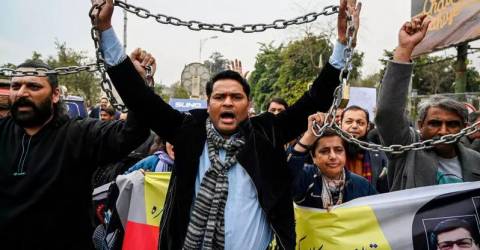
Pakistan Criminalizes Online Disinformation, Sparking Journalist Protests and Censorship Concerns
ISLAMABAD – Pakistan’s parliament has passed a controversial law criminalizing online disinformation, raising alarms among journalists and civil rights advocates who denounce it as a blatant attempt to stifle dissent and control the narrative. The legislation, swiftly pushed through the National Assembly and Senate despite widespread opposition, prescribes penalties of up to three years imprisonment for individuals who intentionally spread false information online that could incite fear, panic, or unrest. Critics argue this vaguely worded provision opens the door to widespread abuse and arbitrary application, targeting critical voices and independent media.
The law’s passage comes amid escalating concerns about press freedom in Pakistan, a country already ranked low in global indexes. Journalists have reported a steady increase in state censorship in recent years, compelling many to turn to social media platforms like YouTube to disseminate news and commentary. This shift, driven by perceived biases and restrictions within traditional media, has now become a target of government regulation under the new legislation. The government justifies the law as a necessary measure to combat the spread of fake news and maintain public order, but opponents view it as another tool to suppress free speech and consolidate power.
The timing of the law’s enactment is particularly significant, coming on the heels of a tumultuous political landscape. Following disputed elections last February, former Prime Minister Imran Khan’s arrest on corruption charges has fueled allegations of political persecution and widespread protests. Khan’s party, Pakistan Tehreek-e-Insaf (PTI), has heavily relied on social media to mobilize support and disseminate its message, as traditional media platforms are perceived as increasingly controlled. The new law is seen by many as a direct response to PTI’s online activism and a means to curtail its reach and influence. The government’s assurances of consultation with journalists before passing the law were dismissed as disingenuous, further exacerbating the distrust between the media and the state.
The law’s implications extend beyond individual journalists and political parties. Social media platforms like Facebook, TikTok, and WhatsApp, immensely popular in Pakistan, are now mandated to register with a newly established regulatory body. Non-compliance risks temporary or permanent bans, granting the government unprecedented control over online spaces. Additionally, intelligence agencies are empowered to investigate disinformation cases, raising concerns about potential surveillance and privacy violations. While the government claims the law aims to control the "anarchy" caused by social media, critics fear it will be used selectively to target dissenting voices and stifle critical reporting.
One of the primary concerns surrounding the new legislation is its vague and ambiguous language. The broad definition of "disinformation" provides ample room for interpretation and selective enforcement, potentially criminalizing even legitimate journalistic inquiries or critical opinions. The lack of clear guidelines leaves journalists vulnerable to arbitrary arrests and prosecutions, creating a chilling effect on independent reporting and investigative journalism. Furthermore, the law’s provision allowing any citizen to file a case against alleged disinformation raises concerns about potential misuse for personal vendettas or to silence critics.
The law’s passage has sparked widespread condemnation from journalist organizations, digital rights activists, and international observers. They argue that rather than addressing the root causes of disinformation, such as low digital literacy and lack of media access, the government is resorting to heavy-handed censorship, further eroding democratic principles. The protests by journalists across Pakistan highlight the growing resistance to the government’s perceived attempts to control the flow of information and restrict freedom of expression. The international community is watching closely as this unfolds, with concerns that the law could set a dangerous precedent for other countries seeking to curb online dissent under the guise of combating disinformation.