


Nepal battles flood of fake and AI-generated content as rescuers race to find missing
Kathmandu, Sep 1 (PTI) — Nepal is fighting a parallel battle against a deluge of misinformation as rescue and relief operations continue after devastating flash floods that have killed more than 900 people and left thousands missing. The government has ordered 72 social media users to remove inappropriate content over the past few days, and the Nepal Press Council, the country’s media regulatory body, has opened a dedicated portal titled “Special Complaints on the Bhotekoshi Incident” through which the public can report misinformation and graphic material related to the disaster. The Kathmandu Post reported that social media platforms have been inundated with dramatic videos and images purporting to show destruction caused by the flash floods in the Himalayan nation. While some of the footage is genuine, fact-checkers have found that several widely circulated videos and images are from disasters in other countries, recycled from earlier events, or generated and manipulated using artificial intelligence. The rapid spread of misleading content has complicated an already chaotic information environment at a time when families are desperately searching for missing relatives and authorities are trying to establish the full extent of the disaster. For social media users chasing views and virality, the tragedy has also become a source of lucrative content, prompting concerns among authorities, journalists and fact-checkers. The move by the Press Council signals an official recognition that misinformation can be as destructive as the flood itself, and that the digital space must be included in disaster management efforts. The portal is intended to serve as a rapid-response mechanism, allowing citizens to flag harmful posts before they spread further. But the sheer scale of the problem is evident from the number of complaints already received, and the fact that most of the offending content has been traced to personal accounts rather than established media outlets. This suggests that the crisis is being amplified by ordinary users, often without malicious intent, but sometimes with the deliberate aim of gaining followers, engagement, and even financial reward from the tragedy.
Among the most widely shared pieces of misinformation was a video purporting to show Home Minister Sudan Gurung inside a tunnel at the disaster site, helping with rescue operations. The footage, however, was traced to a tunnel rescue operation in Uttarakhand, India, and had originally been posted by the Fire Service Uttarakhand Police on August 14. This video was particularly harmful because it appeared to show a senior government official personally engaged in rescue work, lending false legitimacy to the claim that the government was on top of the situation. Another video posted on X on August 27, showing what appeared to be a catastrophic flood, garnered more than seven million views. It was assessed by Hive Moderation, an AI detection tool, as 97.2 per cent likely to have been generated through artificial intelligence, while X’s community notes also flagged it as fabricated. The fact that a synthetic video could attract millions of views before being debunked underscores the speed at which AI-generated content travels in a crisis. A separate video purporting to show a bridge collapsing during the Nepal-Tibet floods was also assessed as entirely AI-generated. Nepal Fact Check, a fact-checking website, debunked another video claiming to show a glacial lake outburst flood in Rasuwa. Fact-checkers traced the footage to a glacial outburst flood at Columbia Glacier in Alaska, in the United States. Similarly, “before and after” photographs claiming to show a settlement in Rasuwa before and after the floods were found to be fabricated by the Australian Associated Press fact-checking unit. These examples illustrate a disturbing trend: misinformation is no longer limited to mislabelled old videos. With generative AI tools, anyone can create convincing but entirely fake images and videos of disasters, making it much harder for the public, and even journalists, to distinguish truth from fiction. The visual language of disaster — rushing water, collapsed bridges, stranded people — is easily replicated by algorithms trained on vast datasets. Fact-checkers are now forced to rely on digital forensics, reverse-image searches, and AI detection software to verify even basic claims. In some cases, the technology is not advanced enough to make a definitive determination, and platforms must rely on community notes or user reports. This creates a gap in the verification process that can be exploited by bad actors, including those seeking to spread panic, incite anger, or simply make money from clicks. The Bhotekoshi flood has become a testing ground for how societies deal with AI-era misinformation during natural disasters.
The consequences of this misinformation go far beyond social media confusion. In a disaster zone, every false report can divert scarce resources away from real emergencies. Search-and-rescue teams have limited time, personnel, and equipment; if they are sent to a location based on a fabricated video, real victims may be left waiting. Families searching for missing relatives are also affected: a recycled video from another country can create false hope or unnecessary despair. The circulation of graphic footage showing bodies, injuries, and devastated communities, often without warnings or consideration for victims and their families, has added a layer of trauma. People who have lost loved ones may encounter images of the dead on their social media feeds before they have been formally identified or notified. The Press Council’s effort to remove “inappropriate content” is therefore not only about stopping lies; it is about protecting the dignity of victims and their families. Fact-checkers say the growing use of AI has added a new dimension to the longstanding problem of recycled and falsely attributed disaster footage. In previous floods and earthquakes, misinformation mostly consisted of old videos being presented as new. Now, entirely fabricated scenes can be created in a matter of seconds and made to look indistinguishable from real footage. This has created an impossible burden for fact-checking organisations, which are often small and underfunded, and for platforms, which are slow to act during breaking news events. The viral nature of disaster content also means that by the time a correction is issued, the false video has already been seen by millions. The algorithm-driven design of social media rewards outrage and fear, and disaster footage — whether real or fake — is one of the most engagement-friendly types of content. As a result, the tragedy in Nepal has become a source of lucrative content for some users, who do not care about the accuracy of what they share. This has prompted growing calls for social media platforms to adjust their algorithms during emergencies, to prioritise authoritative information, and to slow the spread of unverified content. But so far, these calls have met with limited success, and the burden of verification continues to fall on journalists and fact-checkers.
According to Nepal Press Council Chairman Umesh Shrestha, 72 social media users have been instructed to remove inappropriate content, most of it posted through personal accounts. The council’s dedicated portal had received 101 complaints by 5 pm on Saturday, including complaints against 67 personal accounts that had posted gruesome visuals, Shrestha said. “Similarly, complaints have been lodged against some online news portals and their social media pages,” he said, adding that mainstream media organisations had largely avoided publishing misleading information and excessively graphic visuals. “This is a positive takeaway,” Shrestha said. The fact that mainstream outlets have mostly behaved responsibly is important, because it shows that professional journalism still has a role to play in filtering information. However, the bulk of the misinformation is being spread through personal accounts, which are harder to regulate. Many of these accounts have large followings and are monetised through platform advertising or sponsored posts, creating a financial incentive to publish shocking content. The government’s Social Media Regulation and Management Committee, which has been tasked with addressing graphic content, AI-generated misinformation, fake QR codes and other forms of online deception, has also begun discussions with social media platforms, the Post report said. The mention of fake QR codes is particularly telling: scammers often exploit disasters by setting up fake donation pages and QR codes that divert money to private bank accounts. This adds a financial crime dimension to the misinformation crisis. Authorities face significant challenges in this new regulatory effort. Social media accounts are often anonymous or operate from outside Nepal, making it difficult to enforce local orders. Platforms are based in the United States and other countries, and they have their own content moderation policies, which may not align with Nepali regulations. The sheer volume of content generated during a fast-moving crisis overwhelms any manual review process. The Press Council’s portal is a useful first step, but it is reactive: it relies on citizens to report content after it has already been posted. Prevention would require platforms to proactively detect and block manipulated content, which remains a technical and political challenge. Nevertheless, the government’s willingness to publicly name the problem and take action is a departure from past disasters, when misinformation often went unchecked. The question now is whether the regulatory framework can keep pace with the technology.
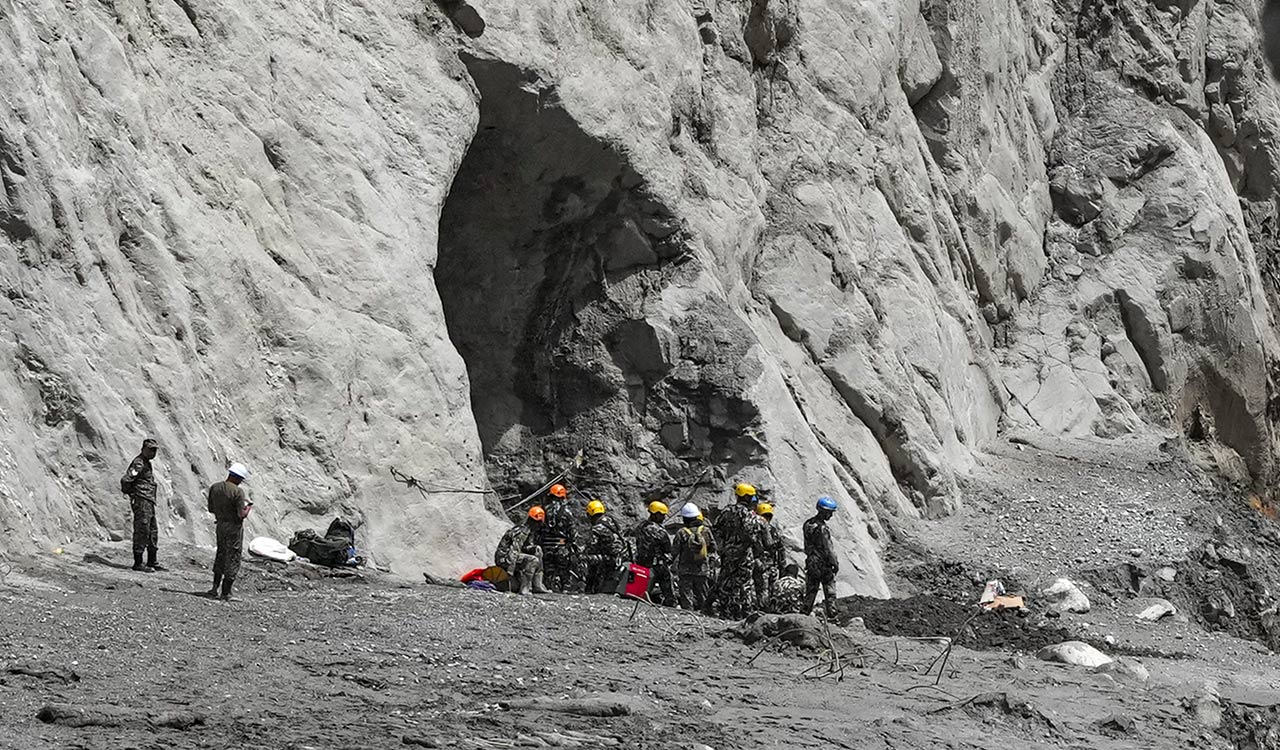
The disaster itself has been one of the worst in Nepal’s recent history. The flash floods, believed to have been triggered by a collapse or avalanche of ice and rock near the Nepal-Tibet border, devastated towns and villages in northern and central Nepal on August 26. Over 900 people were killed, while more than 4,245 people are still missing following the disaster, authorities said. The Bhotekoshi River, which flows south from the Himalayan border region, carried the floodwaters downstream, sweeping away homes, vehicles, roads and bridges and damaging hydropower projects. The scale of destruction has overwhelmed local resources and prompted a massive search-and-rescue operation involving security forces, volunteers and international aid agencies. Entire settlements have been reduced to rubble, and survivors have been left without food, water, electricity or shelter. The disaster has also raised broader questions about the vulnerability of Himalayan communities to climate change and glacial lake outburst floods. While the exact cause of the August 26 event is still being investigated, scientists have warned that rising temperatures are increasing the risk of catastrophic floods across the Hindu Kush-Himalaya region. The Bhotekoshi River, also known as the Sun Kosi, is an important tributary of the Ganges, and the floodwaters affected not only Nepal but also areas downstream in India and Bangladesh. The destruction of roads and bridges has made it difficult for rescue teams to reach remote areas, and the loss of hydropower projects has disrupted electricity supply in parts of the country. In this context, misinformation is not a sideshow; it is a direct threat to the response effort. Every hour spent debunking a fake video is an hour not spent on actual rescue coordination. The authorities have therefore urged the public to verify information before sharing it and to use the Press Council portal to report suspicious content. They have also asked social media platforms to remove graphic and false content immediately. But in a country where social media is often the primary source of news, especially for young people, the demand for accurate information is immense. The government’s communication strategy must compete with a torrent of algorithmically amplified fear, and it is not clear that it has the resources or expertise to do so.
As Nepal mourns and searches for the missing, the fight against misinformation is far from over. The Press Council’s portal provides an outlet for citizens to report harmful content, but experts say media literacy and platform transparency are equally important. Social media companies must enforce their own policies against harmful and manipulated content, particularly during humanitarian crises. The spread of AI-generated disaster footage is a global phenomenon, and Nepal’s experience offers a warning to other countries facing natural disasters. Without robust verification mechanisms, the public cannot distinguish between real evidence and digital fabrication. The tragedy has underscored the need for investment in fact-checking, open-source intelligence tools, and cooperation between governments, journalists and tech firms. It has also highlighted the importance of pre-bunking: informing the public about likely types of misinformation before or during an event, so that they are less likely to be fooled. Educational campaigns, in multiple languages, could help people identify AI-generated content and avoid sharing graphic images. For now, the immediate priority is to clear the digital space of lies and graphic exploitation so that rescue efforts can proceed and families can find accurate information about their loved ones. The Bhotekoshi floods will be remembered not only for their devastating toll, but also for the battle to keep truth alive in the age of AI. The lessons learned here — about the dangers of generative AI, the power of viral deception, and the importance of trustworthy information — will resonate far beyond Nepal. Governments around the world are struggling with the same issues, and the response to this disaster may serve as a model, or a cautionary tale, for how to handle them. In the end, the flood of misinformation may be more difficult to contain than the flood of water, because it can be reproduced endlessly and spread across borders in an instant. But the efforts of fact-checkers, journalists, and ordinary citizens who report false content offer hope. They are the digital first responders, and their work deserves recognition as an essential part of disaster response. As the waters recede, the challenge is to ensure that truth emerges from the wreckage.