


Housing leaders urged to draw clear lines on stigma and engage across political divide
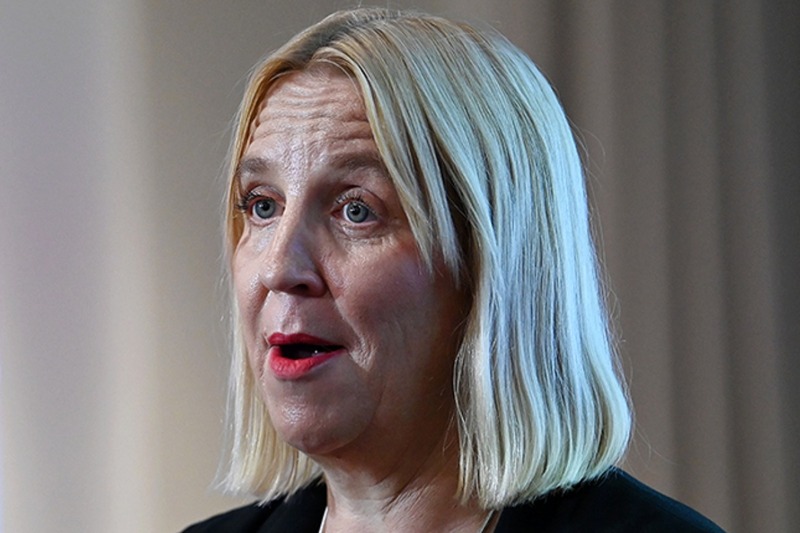
An MP has issued a stark challenge to social housing leaders, urging them to draw unambiguous lines on acceptable behaviour and political discourse while ensuring residents feel heard on the everyday issues that determine whether a tenancy works. Speaking during a policy session on the future of social housing, Ms Bance said the sector must not allow misinformation about who lives in social housing to go unchallenged, but neither should it lose the trust of tenants by becoming distant or combative. “So draw your lines, because our Black and minority ethnic staff and residents need us to draw the lines about what acceptable behaviour is, and those lines need to be absolutely clear,” she said. “But equally, residents need to feel that you are able to meet them where they are. You can hear their concerns, and you can take those concerns and act on them. It is still important that the repairs get done and that the allocations are fair.” Her comments reflect a growing sense within the sector that housing providers are being pulled in two directions at once: forced to defend their residents from hostile public narratives and political proposals that single out who should be allocated a home, while also rebuilding the basic covenant that repairs are completed on time, empty properties are let quickly and allocations are transparent. The appeal to “meet residents where they are” was intended as a warning against ivory-tower social landlords who indulge in abstract debates while tenants struggle with damp, disrepair and unaffordable rents. For Ms Bance, the credibility of any anti-stigma campaign rests first on the quality of the service residents receive; if residents feel listened to on nuisance, repairs and allocations, they are more likely to trust the organisation when it speaks about wider social justice. There is little point, she suggested, in denouncing prejudice from a distance if the same landlord cannot answer the phone, resolve a complaint or offer a realistic route from the waiting list to a secure home. In a system already under extreme strain, with record numbers of households in temporary accommodation and councils unable to meet demand for affordable housing, the debate over language and perception can seem almost abstract. But as Ms Bance’s own postbag demonstrates, housing is not an abstract issue for the families who write to her every week; it is the difference between security and homelessness.
Catherine Thomas, chief corporate affairs officer at Clarion, the largest housing association in England, reinforced the point that communications must be grounded in facts and delivered with confidence. Housing associations, she said, have a responsibility to consistently communicate and “myth bust some of this misinformation” that has accumulated around social housing. Her language was carefully calibrated: she did not argue that landlords should be partisan or pick fights with individual politicians, but she insisted that silence was not an option. “I don’t believe it is our role to enter aggressively or assertively the political debate around some of this noise which is happening about who lives in homes, but neither can we retreat from it,” Ms Thomas said. She went on to point out that social landlords are sitting on an enormous amount of information about their tenants and their support needs, from employment status and household composition to the specialised services that help people live independently. That information, she argued, should be used to “communicate effectively on some of these key issues,” rather than leaving a vacuum in which anecdote and misconception take hold. Asked directly whether housing associations should be engaging with Reform politicians, whose platform has included restrictive measures on housing for foreign nationals, Ms Thomas was unequivocal about the need to talk to people across the political spectrum. “We absolutely have to build relationships, and the closer those relationships are, the better chance we have of actually communicating accurate, evidence-based, insight-based information,” she added. The implication is not that landlords should endorse any party, but that they must be able to challenge falsehoods from a position of credibility and proximity, and that means doing the quiet, unglamorous work of lobbying and dialogue with those who may hold hostile views. In an era of instant outrage, the ability to meet a hostile backbencher or a viral social media post with patient facts can seem unfashionable, yet Ms Thomas insisted that the sector’s own data, on who tenants are, what support they receive, and what happens when allocations are delayed, is a persuasive tool that is currently underused.
The comments come at a moment when social housing has once again become a battleground in the debate over migration and national identity. Over the summer, both Reform and the Conservatives announced plans to ban foreign nationals from social housing, tapping into a narrative that scarce public resources are being handed to people who have no long-term entitlement to them. In reality, access to social housing is already tightly restricted by immigration status and habitual residence tests, and the vast majority of tenants are UK citizens or people with established rights to remain. But the political language itself has consequences, housing leaders argue: it helps create a climate in which Black and minority ethnic staff and residents face abuse, and in which social housing is seen as a privilege for outsiders rather than a fundamental public good. Ms Thomas’s call for “myth busting” was therefore not a technical point about communications strategy but an attempt to counter a narrative that has real effects on the ground. Her insistence on engaging “across the political spectrum” is also a recognition that housing associations cannot win arguments by shouting from the sidelines. If they refuse to speak to parties that are courting voters with anti-immigrant messages, they risk becoming irrelevant to the very conversations that shape policy. If, on the other hand, they become too closely identified with a particular party, they may be dismissed by exactly the voters they need to persuade. The task, as she framed it, is to maintain relationships without sacrificing the basic facts: that housing need is not caused by foreigners, that local people live in social housing, and that the sector is part of the solution to homelessness and affordability. That is a delicate line to walk, particularly when political slogans are designed to be immune to nuance. But it is also, in Ms Thomas’s view, the only way to prevent the sector from being defined by its opponents.
The session also turned to the role of government in influencing the language used about social housing and the stigma that attaches to tenants. Ms Bance suggested that, for all the concern about stigma, it was not the most urgent battle on her patch. She said thousands of residents in her constituency contacted her every week about securing a council home, and that desperate demand was itself proof that social housing was not yet seen as a mark of failure by the people who needed it most. “If this were so stigmatised, why on earth do so many people want it so desperately?” she asked. The question was rhetorical, but it cut against a well-established body of research showing that social housing tenants often feel ashamed or judged because of where they live. Ms Bance’s point was not that stigma is imaginary, but that the material failures of the housing system have overtaken symbolic ones in the current crisis. “Given the scale of the challenges we face, maybe in good times it will be a time to focus on the stigma of living in council housing or social housing. But we’re not in good times,” she said. “I wish we were in better times. I’m not sure that I think that’s a priority right now… I’m a material politician. How much money have people got in their pockets? Have they got a safe, secure tenancy? Do their repairs get done on time? I think we should focus on the bread and butter.” Her remarks were met with understanding from housing professionals who have spent years trying to persuade the public that social housing is a legitimate and valuable tenure, but who also know that a tenant with a leaky roof does not care whether the housing association has run a successful social media campaign. The urgent question, in her view, is not how social housing is talked about by government ministers, but whether the government is spending enough money to make decent housing a reality. That is a challenging message for anti-stigma campaigners, who often see language as the foundation of public support; but it is hard to argue that a family living in temporary accommodation has the luxury of worrying about whether the word “council” is used with a sneer.
Yet the persistence of stigma cannot be dismissed entirely. Earlier this year, a national tenant survey by the campaign group Stop Social Housing Stigma found that 68% of respondents believe successive governments since the Grenfell Tower tragedy have done little or nothing to counter the way social housing is perceived. That figure suggests that the “bread and butter” framing, while understandable, may underestimate how deeply stigma can undermine support for more social housing. If the general public believes that council estates are dangerous, poorly managed and reserved for people who do not work, it becomes much harder to persuade the Treasury to invest in new homes or voters to accept them in their neighbourhoods. Stigma also affects the treatment of tenants by the institutions they rely on: employment tribunals have heard cases of people who hid their addresses because they feared discrimination, and health and social care services have been known to make assumptions based on a postcode. For Black and minority ethnic tenants, the intersection of housing tenure with race means the line that Ms Bance wants drawn is not only about estate management but about basic dignity. Housing providers may be right that repairs and allocations matter enormously, and that a well-run landlord can change the reputation of a street better than any public relations campaign. But the political climate in which those repairs are done is itself shaped by ideas about who is deserving. If politicians are prepared to announce bans on foreign nationals from social housing as a vote-winning strategy, then the sector’s job of building support for new council homes becomes more difficult with every passing election cycle. The Grenfell inquiry and subsequent reports have repeatedly exposed the consequences of treating social housing residents as second-class citizens; the survivors and bereaved families who fought for justice did not ask for sympathy but for their homes to be treated with the same seriousness as those of private owners.
Taken together, the contributions suggest a sector searching for a settled response to a hostile environment. Ms Bance’s instinct is to focus on the tangible: tenancies, repairs, allocations, money in people’s pockets. Ms Thomas’s instinct is to focus on relationships, information and the patient work of dispelling falsehoods. Neither approach is mutually exclusive. A landlord that keeps its promises, listens to residents and deals with anti-social behaviour firmly can create the conditions in which accepted myths about social housing break down. A landlord that uses its data to tell a truthful story about who lives in its homes and what they need can help politicians understand the consequences of their rhetoric. The hardest part is the combination: drawing clear lines about acceptable behaviour, as Ms Bance demanded, without becoming remote and judgemental; engaging with politicians across the spectrum, as Ms Thomas advised, without giving credence to proposals rooted in prejudice; and insisting on the importance of ending stigma, as the Stop Social Housing Stigma survey shows residents want, even while acknowledging that the waitlist is long and the repairs are behind. Both leaders also implicitly acknowledged that social housing has rarely been under such pressure: waiting lists are long, stock is old, and investment in new supply is insufficient. In that context, the “bread and butter” concerns and the fight against stigma are not separate; they are two sides of the same coin. A resident who feels respected by their landlord is more likely to defend the tenure in conversation with neighbours; a resident who has been ignored for years is more likely to internalise the idea that social housing is a last resort. The task for the sector is to ensure that every interaction, from a telephone call about a rent statement to a consultation on estate regeneration, conveys the same message: this is a decent home, and you deserve to be treated with respect. The danger is that the sector is forced to choose between being a cheerleader and a defender, between political engagement and moral clarity. What this session seemed to conclude is that it must be both: clear about the lines, close enough to hear concerns, and never so focused on the noise that it forgets the basic promise that underpins social housing — a safe, secure, affordable place to call home.