


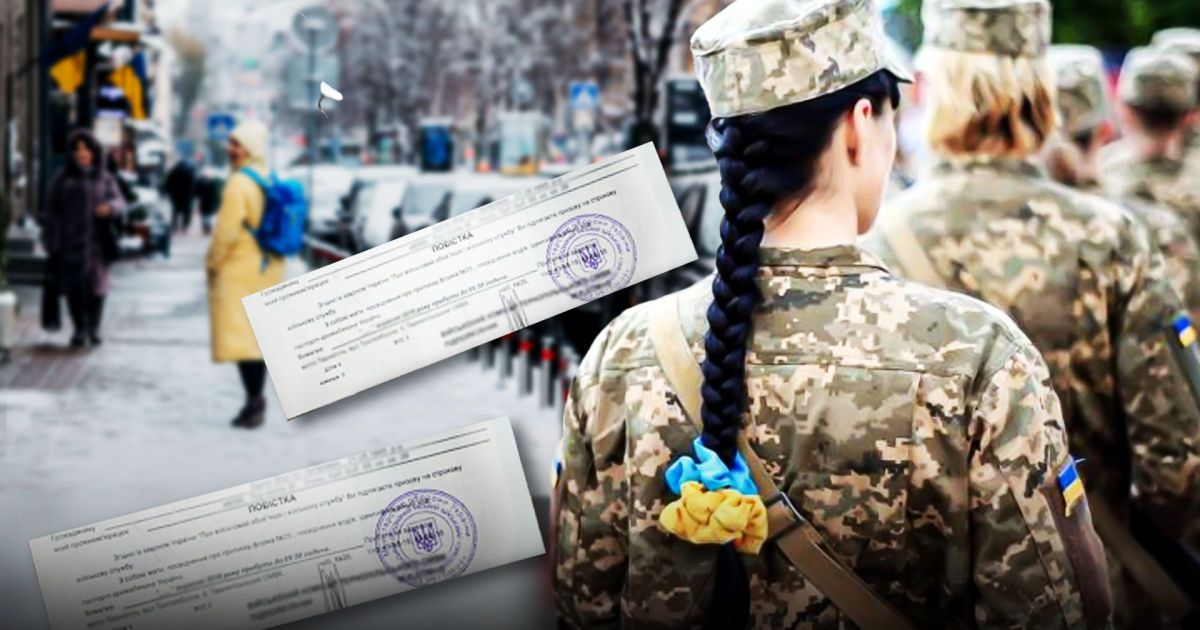
KYIV, Ukraine — European Commissioner for Defence Andrius Kubilius and Ukraine’s Centre for Countering Disinformation have firmly rejected a claim by Russia’s Foreign Intelligence Service (SVR) that the European Union is pressuring Ukraine to mobilise women into military service. The Russian allegation, circulated through Russian state media on 10 September, said the European Commission had welcomed the intensifying debate about the mobilisation of women in Ukraine and that European countries, facing a shortage of personnel, were insisting that Kyiv involve Ukrainian women in the armed forces. The refutation was delivered from two separate institutional angles. Kubilius, speaking to Radio Liberty, said he had no information whatsoever about any such action by the European Union. He described as strange the very idea that Europe might seek to tell Ukrainians exactly how to carry out mobilisation, particularly with regard to women. He added that he was not surprised such information had come from the Kremlin. The Centre for Countering Disinformation, which operates as a working body of Ukraine’s National Security and Defence Council, went even further. It labelled the Russian intelligence report as a complete hoax. According to the centre, there is no compulsory conscription of women in Ukraine, nor are there any plans to carry out such a measure. No EU or Ukrainian official has made any demands regarding the conscription of women, and no such initiatives have been put forward. The centre also said that there is no record of any legislative or internal discussions in the Verkhovna Rada regarding such a move. The coordinated denial was intended to shut down a narrative that Moscow has repeatedly used both in Ukraine and abroad: that Ukraine is fighting a war dictated by Western interests and that the West is ready to sacrifice every Ukrainian, including women, in order to weaken Russia.
The original SVR statement was carefully designed to make the EU appear callous and overbearing. The Russian intelligence service claimed that the European Commission looked favourably on the debate about the conscription of women in Ukraine, and that European governments were pressing Kyiv to draft women because of a shortage of troops. This is a familiar Russian propaganda formula. It casts Ukraine as a proxy battleground and presents the European Union not as a supporter of a sovereign country, but as an external power that uses Ukrainians as cannon fodder. The issue of mobilisation is one of the most sensitive subjects in Ukrainian public life because of the human cost of war, the families affected by call-ups, and the complex questions of fairness and demographic survival. By inserting a story about women’s conscription into that sensitive landscape, Moscow hoped to provoke real anxiety. Kubilius, a former Lithuanian prime minister who now serves as the European Union’s first official responsible for defence affairs, responded with visible impatience. He told Radio Liberty that he had no information whatsoever about attempts by the EU to secure the conscription of Ukrainian women. The commissioner described the possibility of a European diktat on mobilisation as strange. His remarks carried special weight because if any EU plan of this kind existed, he would be among the first people in Brussels to know. The fact that his denial came not from a low-level spokesman but from the top defence official in the European Commission signalled that the Russian story had no diplomatic or institutional grounding.
The Centre for Countering Disinformation did not limit itself to a simple denial; it categorically identified the Russian report as false information. In its statement, the centre said that Ukraine does not carry out forced mobilisation of women and that there are no preparations to introduce one. It stressed that no European or Ukrainian official has made any demands regarding the conscription of women, and that no initiative of this type exists. The centre urged people not to trust Russian reports that give the impression that Western partners are interfering in Ukraine’s mobilisation policy. This wording is important because it draws attention to the purpose of the disinformation. Russian propagandists are not simply trying to spread a false fact; they are trying to create a political narrative in which Ukraine has lost its independence and is taking orders from Brussels. That narrative is dangerous for several reasons. It could undermine the trust that Ukrainian society places in its Western allies, especially at a time when Ukraine depends on military aid, financial support and political solidarity. It could also fuel the arguments of those in the West who claim that the war is being prolonged for the benefit of NATO and the EU, rather than for the security of Ukraine and Europe as a whole. The Centre for Countering Disinformation is part of Ukraine’s security architecture, and its strong language reflected an assessment that this was not a minor false story but a deliberate information operation aimed at a vulnerable point in Ukrainian morale.
The Verkhovna Rada Committee on National Security, Defence and Intelligence had previously made the legal situation clear. The committee stated that there are no plans to introduce conscription for women in Ukraine, that no relevant legislative initiatives or draft laws exist, and that there have been no internal discussions in parliament regarding such a decision. This parliamentary confirmation is decisive. In Ukraine, mobilisation rules are established by law. Any change in policy would require the introduction of a draft law in the Rada, followed by committee hearings, debates, amendments and a final vote. None of that has happened. There is no bill, no sponsor, no committee report, no parliamentary agenda item. The Russian report therefore invented not only a demand from the EU but also an entire political process in Ukraine that does not exist. By combining the position of the Centre for Countering Disinformation with the statement of the parliamentary committee, Ukrainian authorities delivered an unequivocal message: the claim about women’s conscription is not a matter of ongoing discussion that has somehow been misrepresented; it is a complete fabrication. The committee’s statement also serves a practical purpose. It reassures Ukrainian women who may have seen the Russian headlines and worried that they could soon be called up to the front. The absence of any legislative preparation is the clearest possible evidence that the story is false.
The broader context helps explain why the Russian intelligence report was so dangerous. Since the beginning of Russia’s full-scale invasion, women have played an increasingly important role in Ukraine’s armed forces. They serve as medics, drone operators, logistics specialists, officers and combat personnel. Thousands of women have volunteered for military service, and many have been decorated for bravery. Ukrainian law also requires women in certain professions, particularly in the medical and pharmaceutical fields, to register for military service. However, being on the military register is not the same as being conscripted. Registration is a form of administrative readiness; it does not automatically place a woman in a military unit or on a front line. Ukrainian authorities have consistently avoided any broad conscription of women, and no main political force has campaigned for such a measure. The European Union’s relationship with Ukraine is likewise based on support rather than control. The EU has provided military assistance, financial aid, weapons supplies and training for Ukrainian soldiers, but it has never sought to command Ukraine’s army or to decide who should be drafted. The EU does not have the legal authority to impose mobilisation rules on Ukraine, and it has never tried to do so. The Russian claim that Brussels is demanding women’s conscription thus contradicts both the facts on the ground and the political reality of European-Ukrainian relations.
The speed and clarity of the response from Kubilius and the Centre for Countering Disinformation will not stop Russian disinformation altogether. Similar stories are likely to reappear in the future, sometimes with altered details or new fake sources. But the refusal of this particular lie was important because it established a clear and united record. One part of the record is a European commissioner denying any EU pressure. Another part is a Ukrainian state body explaining that no such demand exists and that no plans are being prepared. The third part is a parliamentary committee confirming that the issue is absent from the legislative agenda. These three statements together create a strong defence against a false narrative that was designed to divide Ukraine and the EU. They also demonstrate that Ukrainian institutions and their European partners are aware of the threat of information warfare and are willing to respond quickly. In the end, the Russian report about women’s mobilisation was not a piece of intelligence; it was a weapon. It was a deliberate attempt to exploit the pain of war, the fears of families, and the natural sensitivity around military service. The answer to that weapon was the truth: Ukraine is a sovereign country, its mobilisation policy is its own, the EU is not imposing a diktat, and no compulsory conscription of women is planned. The Russian claim has been exposed, and it will not withstand the weight of evidence provided by those who rejected it.