


Paragraph 1: A Personal Story of Hope and Anxiety
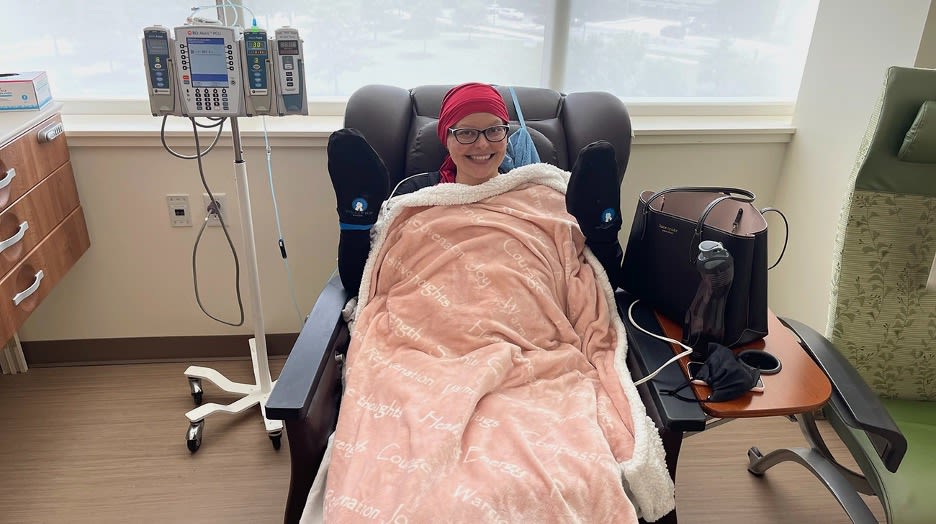
Nearly five years after being declared cancer-free, Chase Johnson, a 37-year-old resident of Cary, North Carolina, still lives with a profound anxiety that her breast cancer will return. Her journey began in 2021 when she was just 31 years old, a decade younger than the recommended age for regular mammograms and without any family history of the disease. It was her dog, Cato, who inadvertently discovered the lump by persistently poking her chest with his nose. Doctors diagnosed her with stage 2B triple-negative breast cancer, a rare and aggressive form of the disease. After undergoing a grueling regimen of chemotherapy, radiation, and surgery, she was declared cancer-free in 2022. However, her oncologist delivered a sobering warning: there was a 40% chance the cancer would return. This constant threat loomed over her life, fueling a deep-seated fear that motivated her to take an extraordinary step. Seeking to mitigate her risk, Johnson enrolled in a clinical trial at the Cleveland Clinic for a new breast cancer vaccine developed in partnership with Anixa Biosciences. The vaccine’s early results have been promising, generating an immune response in nearly three-quarters of the participants, including Johnson. For her, the vaccine has been transformative, significantly reducing her anxiety and providing a profound sense of protection and peace of mind that she had not felt since her treatment ended.
Paragraph 2: The Scientific Frontier of Cancer Vaccines
Johnson’s experience is part of a broader, steady progress in the field of cancer vaccines over the past two decades. While the vaccine she received is not an mRNA vaccine, researchers are particularly excited about the potential of this technology. mRNA vaccines work by using synthetic genetic instructions to teach a person’s immune system to recognize and destroy specific proteins found on cancer cells. This approach has gained significant momentum, highlighted by a recent announcement from pharmaceutical giants Moderna and Merck. They reported that a personalized mRNA cancer vaccine, when combined with an immunotherapy drug, succeeded in a late-stage trial for skin cancer. This news has fueled hopes that a wave of new, effective cancer vaccines could be on the horizon, offering a new frontier in oncology. The success of these trials represents a paradigm shift in cancer treatment, moving beyond traditional methods like chemotherapy and radiation towards harnessing the body’s own immune system to fight the disease. The potential to create personalized vaccines tailored to an individual’s specific tumor mutations is a particularly promising avenue, suggesting a future where cancer treatment is more precise, effective, and less toxic.
Paragraph 3: The Looming Threat of Misinformation
Despite the scientific promise, a significant obstacle looms: public willingness to accept these new vaccines. Many doctors and researchers are deeply concerned that widespread vaccine misinformation, amplified by political figures and the Trump administration, could blunt the impact of these medical breakthroughs. They specifically point to a dangerous false claim that originated with the mRNA COVID-19 vaccines: that mRNA vaccines can somehow super-charge tumors, creating a phenomenon falsely termed “turbo cancer.” This baseless theory has gained traction online and in certain political circles, threatening to undermine trust in a technology that could be pivotal in the fight against cancer. The concern is that the same hesitancy that led to lower uptake of COVID-19 vaccines will now be transferred to these new cancer vaccines, preventing them from reaching their full potential in saving lives. This skepticism is not just limited to the general public; it has also permeated state legislatures and federal health agencies, creating a challenging environment for the rollout of these innovative therapies.
Paragraph 4: The HPV Vaccine as a Cautionary Tale
The history of the human papillomavirus (HPV) vaccine serves as a stark cautionary tale for what might happen with cancer vaccines. HPV, a sexually transmitted infection, can cause several types of cancer, including cervical, vaginal, penile, anal, and throat cancers. The HPV vaccine, approved by the FDA starting in 2006, is safe and extremely effective at preventing these cancers. However, decades of misinformation, some of it spread by state and federal lawmakers, have suppressed vaccination rates. For four consecutive years, teenage vaccination rates have remained stagnant, with wide geographic variation. In some conservative-leaning states, the rates are alarmingly low, such as 31% in Mississippi and 46% in Oklahoma, compared to 85% in Rhode Island and 82% in Hawaii. Researchers have found that social media is rife with conspiracy theories and mistrust of authority regarding the vaccine. This history demonstrates how misinformation can persist and undermine a proven public health intervention, and experts like Dannell Boatman of the West Virginia University Cancer Institute expect a similar dynamic to unfold with new breast cancer vaccines. She hopes that ongoing research into “inoculation theory,” which forewarns people about misinformation and provides counter-evidence, will help combat these false claims.
Paragraph 5: Political and Legislative Resistance
The political climate has further complicated the vaccine landscape. Robert F. Kennedy Jr., the current Secretary of Health and Human Services, has a long history of filing complaints and lawsuits against Merck, the maker of the HPV vaccine, and has made false claims about its safety on social media. Under his leadership, the HHS has dismissed members of its vaccine advisory panel, replacing some with skeptics, and has attempted to alter the child vaccine schedule. These changes have been blocked in federal court. The administration has also proposed cutting funding for vaccine research. This has created a sense of crisis among public health experts like epidemiologist Michael Osterholm, who notes that parents are confused by hearing from government leaders that vaccines are dangerous. This confusion threatens the credibility of decades of public health work. At the state level, some conservative lawmakers are introducing legislation to limit access to vaccines, such as a law in Iowa prohibiting minors from consenting to HPV vaccination. Other states have proposed moratoriums on mRNA immunizations. Idaho state Rep. Brooke Green, a breast cancer survivor herself, sees these efforts as a direct threat to life-saving tools, noting that while she is thrilled by the new vaccine advancements, she fears their acceptance will be hindered by the increasing anti-vaccine sentiment among her colleagues and constituents.
Paragraph 6: A Future of Promise and Uncertainty
The future of cancer vaccines is a story of both immense promise and significant uncertainty. The scientific breakthroughs are real and offer hope to millions, as exemplified by Chase Johnson, who has celebrated five years in remission and feels a great deal of peace of mind after receiving the vaccine. However, the success of these therapies will depend not only on their efficacy but also on their acceptance by the public. The political and social battles over vaccine mandates and misinformation have created a deeply polarized environment. The question posed by Rep. Green—”Do you want breast cancer or do you not?”—highlights the stark choice that individuals may face. While the hope is that the direct threat of a cancer diagnosis will overcome hesitancy, the cautionary tale of the HPV vaccine suggests that misinformation can be a powerful and persistent force. The coming years will be a critical test of whether the public can separate fact from fiction and embrace these new, potentially life-saving technologies, or whether political ideology will once again hinder medical progress and put lives at risk.