


Ukraine Calls on Global Community to Shut Down Russian Cultural Centers, Citing Disinformation and Espionage
Ukrainian Foreign Minister Andrii Sybiha has formally urged governments worldwide to restrict or completely shut down Russian state-run cultural centers, escalating Kyiv’s campaign against Moscow’s influence operations beyond European borders. In a statement on September 19, Sybiha directly accused the network of functioning as a vehicle for disinformation, political destabilization, and espionage, singling out Rossotrudnichestvo, the Russian government agency that operates the so-called Russian Houses abroad. The minister argued that Moscow has long disguised intelligence-gathering and propaganda efforts under the respectable guise of cultural diplomacy, using humanitarian institutions to shape public opinion in foreign countries while advancing Kremlin strategic interests. “The cognitive domain of modern warfare must not be underestimated,” Sybiha warned, describing a global battle for public opinion waged through a tangled web of organizations, media platforms, and communication channels. His appeal marks one of the most direct diplomatic attempts by Ukraine to convince other states that seemingly benign cultural centers should be treated as active instruments of a hostile power. Ukraine has now contacted governments around the world, providing what Sybiha described as detailed arguments for restricting the centers’ activities or eliminating them altogether. The urgency of the request stems from Russia’s continued expansion of its cultural-influence network at the same time as European countries have begun taking action, with Sybiha revealing that Russian Houses remain in operation in at least seven European countries, while an even larger presence persists across Africa, Asia, and South America. The timing of the appeal is significant, coming on the heels of Germany’s decision to effectively neutralize the Russian House in Berlin, an action that has thrown the future of Russian soft-power institutions in Europe into deeper uncertainty. Sybiha concluded that Moscow should not be permitted to maintain centers that promote war propaganda and resentment on the continent, declaring that “our shared European home is not the place for ‘Russian houses’ promoting war propaganda.”
The Russian Houses have long been a key pillar of Moscow’s state-sponsored public diplomacy, established during the Soviet era and maintained through the post-Soviet period as centers for language instruction, cultural exhibitions, film screenings, and educational exchanges. However, Western intelligence and security services have repeatedly accused Rossotrudnichestvo of serving as a cover for covert operations, including attempts to recruit agents, manipulate civil society, and spread narratives designed to sow distrust in democratic institutions. Following Russia’s full-scale invasion of Ukraine in 2022, the European Union placed Rossotrudnichestvo under sanctions, freezing its assets and prohibiting transactions with the agency, yet the network has continued to function in many countries through loopholes and local agreements. Sybiha’s statements reflect a growing consensus among Western officials that Russia’s cultural outreach cannot be separated from its broader strategy of hybrid warfare, which relies on dividing allies, weakening public confidence in governments, and exploiting social fractures. The cognitive domain, as the minister emphasized, is not merely an abstract concept but a concrete battlefield where Moscow competes for the allegiance of populations around the world. Ukraine’s appeal is thus not only about closing particular venues but about redrawing the line between acceptable cultural exchange and state-sponsored influence operations that endanger national security. Sybiha also alluded to the fact that Russia has reshaped its network over time, pivoting toward regions where resistance to propaganda is weaker, including parts of Africa and Latin America, while doubling down in countries where political division provides openings for malign intervention. He did not specify exactly which seven European countries still host Russian Houses, but the call implies that even those that have closed some facilities may still host others under different names or administrative formats. Diplomats and analysts have noted that Russia has become increasingly skilled at rebranding its cultural operations, using foundations, private companies, and even religious institutions to evade sanctions and preserve influence.
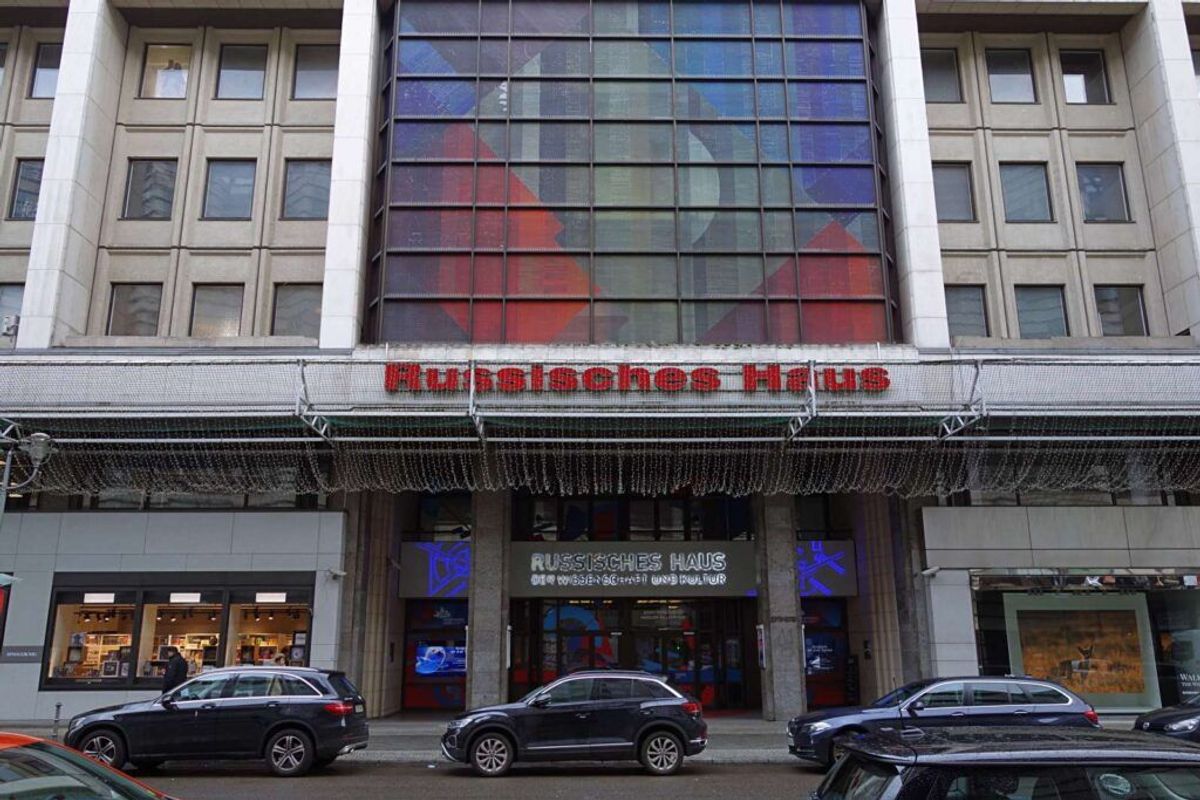
Sybiha’s urgent appeal arrives against the backdrop of Germany’s decisive crackdown on Russian diplomatic and cultural facilities in response to an alleged attempted explosive-drone attack at Leipzig/Halle Airport in August. German authorities, acting on intelligence findings, formally attributed the incident to Russia on September 1, prompting a coordinated set of retaliatory measures. Berlin ordered the closure of Russia’s remaining consulate-general in Bonn, terminated the bilateral agreement that underpinned the operation of the Russian House in Berlin, and ordered Russian personnel sent to Germany to leave the country, effectively paralyzing the institution’s activities. The Berlin Russian House had operated for years as a visible cultural venue in the heart of the German capital, hosting concerts, lectures, and film evenings, but German officials have since described it as a hub for disinformation and propaganda that had to be neutralized. The center is managed by Rossotrudnichestvo, already under EU sanctions, and its formal status as a cultural institute was scheduled to expire in mid-2027 under the original bilateral agreement. By moving to terminate that agreement early, Germany signaled that it no longer considers cultural exchange with Russia possible under the current political and security conditions. German authorities also dismissed local staff and prohibited any further activities tied to the Russian-state institution, dealing another serious blow to Moscow’s ability to engage with German civil society. At the same time, the government announced plans to push for additional sanctions against Russia, tighten entry restrictions for Russian citizens, and increase pressure on the so-called shadow fleet that Moscow reportedly uses to circumvent oil price caps and continue revenue generation for its war effort. The Leipzig incident, while initially confusing, was quickly identified as one of the most serious hybrid attacks on German soil in recent years, underscoring the reality that Russian sabotage operations are not restricted to the battlefield in Ukraine but are being carried out inside European countries as well.
Russian authorities immediately denied any responsibility for the attempted drone attack at Leipzig/Halle Airport, dismissing German accusations as baseless provocation and manufacturing a narrative designed to isolate Russia further. In keeping with the logic of diplomatic escalation, Russia retaliated by ordering the closure of the German Consulate-General in St. Petersburg and shutting down the cultural centers of the Goethe-Institut across Russia, a response that effectively terminates decades of institutional cultural cooperation between the two countries. The twin closures are highly symbolic, as both the Goethe-Institut and the Russian House in Berlin had represented the most visible layers of civil-society engagement between Germany and Russia. While the destruction of these cultural bridges was once unthinkable, it now appears to be an accepted cost of a confrontation that has moved far beyond military engagement in Ukraine. Russia has consistently portrayed its cultural centers as open forums for exchange, and it has accused Western countries of discriminating against Russian art, literature, and history as part of a purported cancel culture. However, the evidence assembled by European security services has increasingly pointed to a darker reality in which Russian cultural operatives were tasked with collecting intelligence on diaspora communities, monitoring exiled Russian opposition figures, spreading panic about energy supplies, and amplifying anti-Western narratives on social media. German intelligence officials have said that the Russian attempts to influence public opinion through cultural venues are part of a broader campaign that includes cyberattacks on political parties, attacks on undersea cables, and destabilization of energy infrastructure. The dispute has therefore become a test case for how far democratic governments are willing to go in restricting Russian state-linked activities, even those that are nominally cultural rather than military in nature. The response from Moscow demonstrates that Russia views the closure of its cultural centers as an existential threat to its soft power and is willing to sacrifice remaining channels of dialogue to preserve its narrative of victimhood.
The German measures have resonated beyond Berlin, galvanizing NATO and its allies into clearer recognition of the scale and scope of Russian hybrid operations. NATO Secretary General Mark Rutte directly described the Leipzig/Halle airport incident as a Russian hybrid attack and emphasized that the alliance fully supported Germany in its response, signaling that sabotage attempts and influence operations would now be treated with the same seriousness as conventional military aggression. This week, NATO has also repeated its assessment that Russia is conducting a systematic campaign of hybrid warfare against member states, using tools such as sabotage of critical infrastructure, cyber operations against government and corporate networks, disinformation through online platforms, and covert political influence designed to undermine democratic election processes. The campaign, according to NATO officials, is not limited to any single region but extends across the entire alliance, requiring not only countermeasures in the physical realm but also robust defense of the cognitive domain that Sybiha spoke of. The alliance has called for increased information-sharing and coordinated action against Kremlin-linked networks, including cultural centers that may serve as launching pads for hostile activities. Many European governments are now reviewing the legal frameworks under which Russian cultural institutions operate, seeking ways to revoke privileges, restrict diplomatic status, and deport personnel who are suspected of being intelligence officers. The events in Germany have accelerated this review process, with several countries reportedly preparing their own restrictions based on intelligence dossiers compiled by Ukraine and shared with Western partners. The broader goal is to disrupt the entire ecosystem of Russian influence operations, forcing Moscow to fight for influence in an environment where its activities are constantly exposed and countered. While some officials caution that fully cutting cultural ties could alienate Russian-speaking communities and ordinary citizens who genuinely seek cultural connection, the prevailing sentiment inside NATO is that such concerns are secondary to protecting democratic institutions from foreign interference.
Despite the wave of restrictions in Europe, Russia has shown no sign of abandoning its strategy of expanding its cultural influence network, particularly in regions where it perceives new opportunities for alignment and partnership. Rossotrudnichestvo announced earlier in September that it plans to open 11 additional Russian Houses abroad, eight of which will be located in African countries, as part of a major push to deepen Moscow’s footprint in the Global South. This expansion reflects a deliberate strategic pivot by the Kremlin, which has since the beginning of the Ukraine war increasingly looked to Africa, the Middle East, Asia, and Latin America for diplomatic support, economic cooperation, and alternative security relationships. Russian leaders have consistently framed their country as a counterweight to Western dominance, and the new Russian Houses are intended to reinforce that narrative by promoting Russian language, education, and culture as tools of geopolitical leverage. The expansion also allows Moscow to present itself as a global power despite the isolation imposed by Western sanctions, creating channels of influence that bypass traditional partners. Nations in Africa and other regions may be less likely to restrict the centers, especially when Russian security contractors and food exports offer immediate benefits that outweigh concerns about disinformation. However, Ukrainian diplomats have signaled that they will not allow this expansion to proceed unchallenged, and they are actively working with African governments to expose the risks posed by Russian influence operations, including attempts to recruit young people as information operatives or destabilize local political processes. Sybiha’s appeal to the international community is therefore part of a marathon diplomatic effort that will continue for years, aiming to make the cost of hosting Russian cultural centers higher than the benefits they appear to offer. The struggle for the cognitive domain is still in its early stages, but the convergence of Ukrainian intelligence-sharing, German enforcement, NATO’s public warnings, and Russia’s stubborn resistance has transformed the issue from a niche diplomatic concern into a central test of the international order. How governments answer Ukraine’s call will likely shape the global influence landscape for the next decade and determine whether Russia is able to maintain soft-power beachheads on every continent while fighting a brutal war of aggression in the middle of Europe. For now, Ukraine has placed the burden directly on each country: no longer can a Russian House be considered merely a harmless venue for ballet and literature when the same state uses such institutions as cover for operations designed to destabilize, deceive, and divide.