


Azerbaijan Confronts Surge in Disinformation with Focus on Official Sources Amidst Fabricated Statement Attributed to Presidential Aide
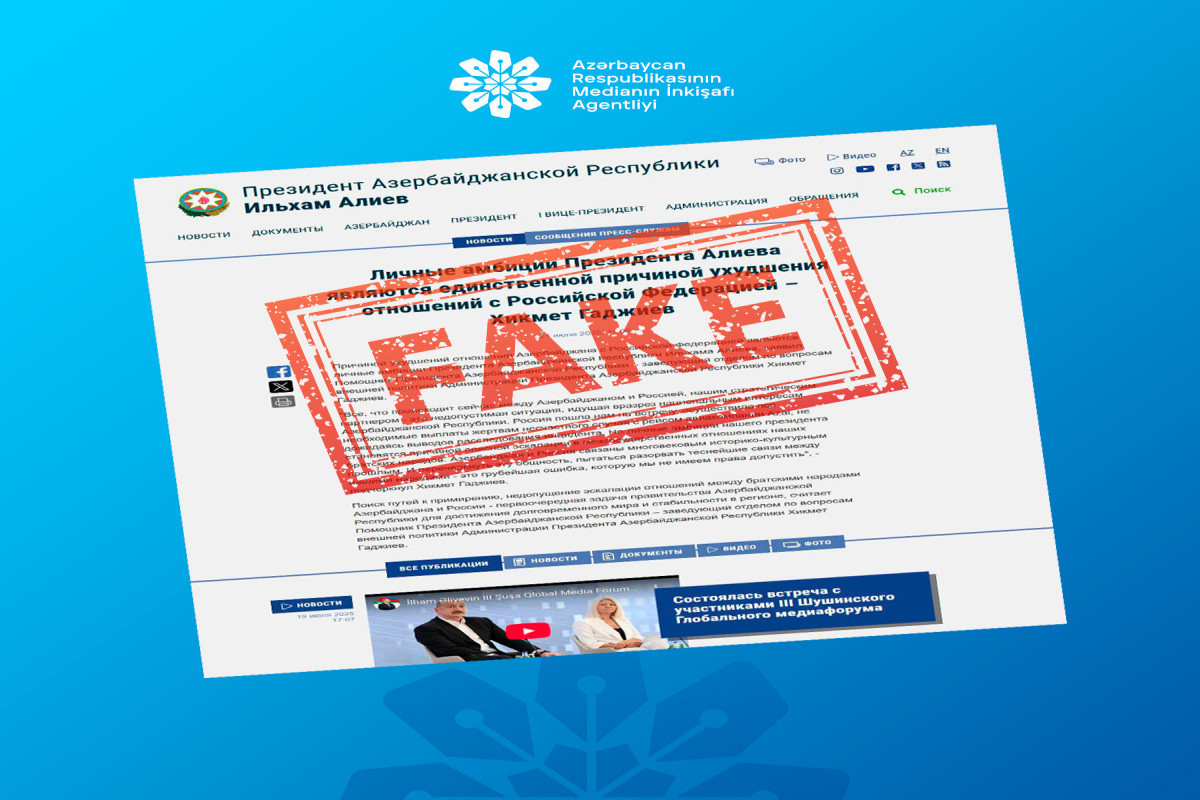
BAKU, AZERBAIJAN – A wave of disinformation targeting Azerbaijan has prompted a renewed call for vigilance and reliance on official sources, following the dissemination of a fabricated statement falsely attributed to Hikmat Hajiyev, Assistant to the President of the Republic of Azerbaijan. The fake statement, which purported to address Russian-Azerbaijani relations, was circulated across various social media platforms, raising concerns about the escalating use of manipulative tactics to distort public perception and sow discord. The Media Development Agency of Azerbaijan swiftly identified and denounced the fabricated statement, highlighting the deceptive nature of the content and its malicious intent to mislead the public.
The fabricated statement, designed to mimic the official website of the President of the Republic of Azerbaijan, contained a series of fabricated claims aimed at misrepresenting the official stance of the Azerbaijani government. This incident underscores the growing sophistication of disinformation campaigns, which increasingly leverage advanced techniques to create credible-looking forgeries and exploit the widespread reach of social media. The Azerbaijani authorities have emphasized the importance of critical thinking and media literacy in navigating the complex information landscape and identifying potentially misleading content.
The Media Development Agency has issued a strong call to the public, urging them to place their trust solely in information disseminated through official government channels. This includes official websites, press releases, and statements from authorized representatives. The agency underscored the crucial role of official sources in providing accurate and reliable information, particularly in the context of escalating disinformation campaigns designed to sow confusion and undermine public trust. This emphasis on official sources reflects a broader global trend, as governments and international organizations grapple with the challenges posed by the proliferation of fake news and online manipulation.
Beyond government channels, the Media Development Agency also emphasized the credibility of established news agencies and professional media entities within Azerbaijan. These organizations, with their established journalistic standards and commitment to fact-checking, play a vital role in disseminating accurate information and countering the spread of disinformation. The agency’s statement implicitly acknowledges the importance of a robust and independent media landscape in fostering informed public discourse and bolstering democratic values. It also highlights the need for media consumers to discriminate between credible news sources and those that may promote biased or unsubstantiated claims.
Addressing the broader societal impact of disinformation, the Azerbaijani authorities appealed to citizens, journalists, and public activists to remain vigilant and adopt a principled stance against such manipulative tactics. This call for collective responsibility underscores the shared burden in combating disinformation and protecting the integrity of the information ecosystem. The statement encouraged active participation in debunking false narratives and promoting media literacy, emphasizing the role of every individual in countering the spread of misleading information. This call for citizen engagement reflects a growing recognition of the power of collective action in combating online manipulation.
The incident involving the fabricated statement attributed to Assistant to the President Hikmat Hajiyev serves as a stark reminder of the evolving challenges posed by disinformation in the digital age. As sophisticated techniques for creating and disseminating fake news become increasingly accessible, governments and individuals alike must prioritize media literacy, critical thinking, and a commitment to verifying information from trusted sources. The Azerbaijani government’s proactive response, emphasizing the importance of official channels and credible media outlets, underscores the crucial need for ongoing efforts to combat disinformation and protect the integrity of public discourse. The incident also highlights the crucial role of international cooperation in addressing the transnational nature of disinformation campaigns and developing effective strategies for countering online manipulation. The ongoing battle against disinformation requires a multi-faceted approach, encompassing technological solutions, media literacy initiatives, and robust legal frameworks to hold purveyors of fake news accountable.