


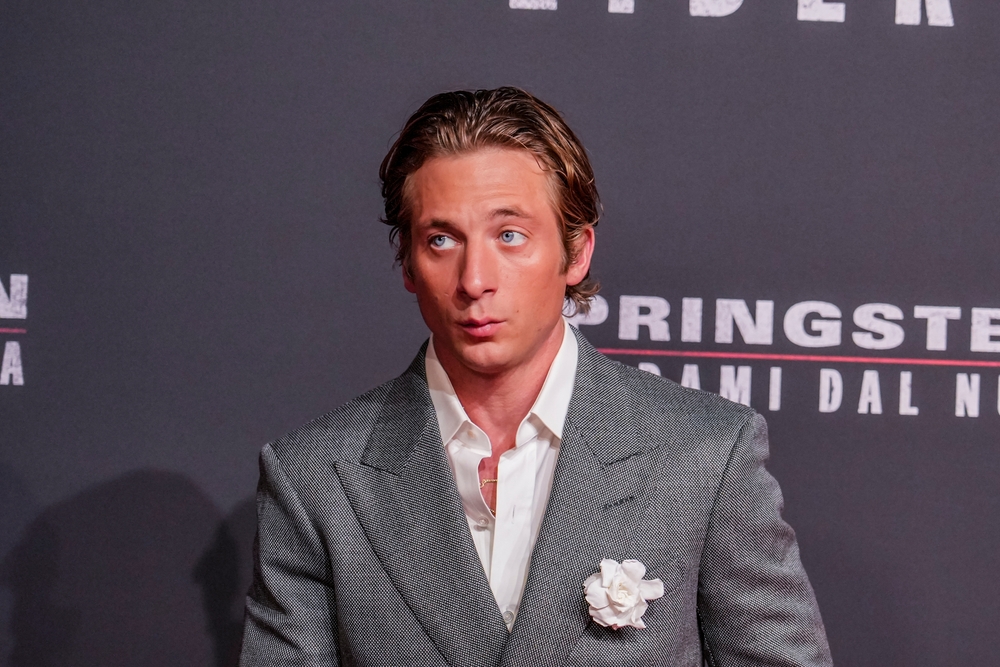
Jeremy Allen White Calls for Urgent Social Media Regulation, Warns of ‘Scary’ Future Without Safeguards at ‘The Social Reckoning’ London Screening
Jeremy Allen White has issued a stark warning about the unchecked power of major technology companies, insisting that social media platforms need far greater regulation before they evolve into something truly dangerous. Speaking at the London gala screening of his upcoming thriller The Social Reckoning, the 35-year-old actor said it is “scary” to imagine what platforms like Facebook could become without meaningful oversight. White, best known for his Emmy-winning performance in The Bear, plays journalist Jeff Horwitz in the film, which dramatises the real-life exposure of Facebook’s internal misconduct. The actor told the Press Association that the time for voluntary reform has passed, and that governments must step in with the same kind of third-party regulation that protects passengers on aeroplanes or patients taking pharmaceuticals. His comments come amid growing global scrutiny of social media’s role in spreading misinformation, polarising democracies and harming young people’s mental health — issues that lie at the very heart of Aaron Sorkin’s new film.
White, who was born in 1991 and remembers a world before smartphones and algorithmic feeds, expressed genuine fear about the trajectory of the industry. “There needs to be more safeguards with all of these companies,” he said. “I don’t mean to bully Facebook – all of these massive tech companies need more safeguards.” He drew a clear analogy with other heavily regulated sectors, arguing that social media has become too important to public life to be left to self-regulation. “For air travel, there’s third-party regulators. For pharmaceuticals, there’s third-party regulators. There should be a third-party regulator for these big companies,” he explained. The actor said he hopes The Social Reckoning will spark a necessary public conversation about accountability, adding: “I hope there’s conversation around things like that coming out of the film.” His remarks are particularly resonant given that the film dramatises the actual whistleblowing efforts of Frances Haugen, the former Facebook employee whose leaked internal documents revealed how the company knew about the harmful effects of its platforms yet continued to prioritise growth over user safety.
The Social Reckoning is written, directed and co-produced by Aaron Sorkin, the celebrated screenwriter behind The Social Network, which chronicled the founding of Facebook and the legal battles that followed. This new film shifts the focus from the platform’s origins to the moment when its secrets began to unravel. It is based on the 2021 Wall Street Journal investigation known as The Facebook Files, a landmark series of articles that exposed everything from Instagram’s toxic impact on teenage girls to the platform’s role in facilitating human trafficking and political violence. White plays Jeff Horwitz, the Wall Street Journal reporter who received a trove of leaked documents from Haugen, portrayed here by Mikey Madison. Together, their characters navigate a labyrinth of corporate denial, legal threats and internal resistance to bring the truth to light. The film also stars Jeremy Strong as Facebook founder Mark Zuckerberg, with additional performances from Wunmi Mosaku, Billy Magnussen and Betty Gilpin. In telling this story, Sorkin returns to a subject he first explored over a decade ago, but this time with a far more critical and urgent lens on the consequences of Facebook’s dominance.
White’s personal reflections added a deeply human dimension to the film’s broader themes. Asked whether social media can ever become a genuinely positive force, rather than a vector for hate and misinformation, the actor said he hopes it can — but he believes a cultural shift is needed. “I hope for young people there’s a backslide where it becomes fashionable to avoid all this stuff,” he said. He drew on his own childhood and adolescence, before the internet became an inseparable part of everyday existence. “I was born in 1991, so I remember a world without all this. I think for people my age, there’s a hyper awareness,” he reflected. White suggested that distance from social media has become a kind of quiet luxury, a way of reclaiming agency in a world that constantly demands attention. “There is something cool about having a certain amount of distance from social media. I hope that young people now can share that. It’s all moving so fast, and it is scary what it could become if there is no adjustment or regulation for it,” he said. His words echo the concerns of educators, psychologists and lawmakers who have warned about the appalling effects of infinite scrolling, comparative validation and algorithmically amplified outrage on a generation raised entirely within the digital age.
Aaron Sorkin, meanwhile, offered a more sobering perspective on the possibility of reversing the damage already done by misinformation. Speaking at the same event, the acclaimed director acknowledged that the genie cannot be put back into the bottle. “I don’t think we can put the toothpaste back in the tube,” he said bluntly. “But what we can do is pass laws.” Sorkin, whose career has been defined by legal and political dramas, stressed that legislative action is the only realistic remedy for a problem that has spiralled far beyond the control of any single company or user. His comments signal a significant evolution in his thinking about social media; in The Social Network, the creation of Facebook was portrayed with a certain ambivalence, even admiration for its founder’s brilliance. In The Social Reckoning, the tone appears far more critical, focusing on the human cost of a business model built on engagement at any cost. The London screening, held at Curzon Mayfair, drew significant attention, with White joined on the red carpet by Madison and Sorkin. Madison, who recently won acclaim for her role in Anora, wore a striking lime green gown, while Sorkin appeared in a grey suit. The trio posed for photographers before the screening, but the focus of the evening remained firmly on the serious issues explored in the film.
The Social Reckoning is scheduled for release in cinemas across Ireland on October 9, with further international rollout expected in the weeks that follow. The film arrives at a critical moment in the global debate over online safety, with the European Union already implementing the Digital Services Act and the United Kingdom introducing the Online Safety Act. Yet the United States, where Facebook and most major tech companies are headquartered, continues to struggle with meaningful federal legislation. White’s call for third-party regulators could not be more timely; recent congressional hearings have repeatedly exposed lawmakers’ limited understanding of how these platforms operate, while whistleblowers like Haugen have testified to the systemic failures behind the public-facing algorithms. By dramatising the real events of The Facebook Files, Sorkin has created a narrative that is part corporate thriller, part moral indictment, and part warning shot to an industry that has long operated with impunity. With a cast that includes Emmy-winners and rising stars, and a writer-director with a track record of tackling complex political subjects, The Social Reckoning is poised to reignite the conversation about who really controls the digital public square. Whether it inspires the regulatory changes White and Sorkin are calling for remains to be seen, but the film ensures that the question is impossible to ignore. For White, the message is simple: the future of social media is not inevitable, and the choices made now will determine whether these platforms become tools for connection or instruments of destruction. As he put it, the current path is “scary” — and without swift regulatory intervention, the consequences could be even worse than anything seen so far.