


INEC Raises Alarm Over Generative AI Threat to 2027 Elections, Opens Capacity-Building Workshop for Public Affairs Officers
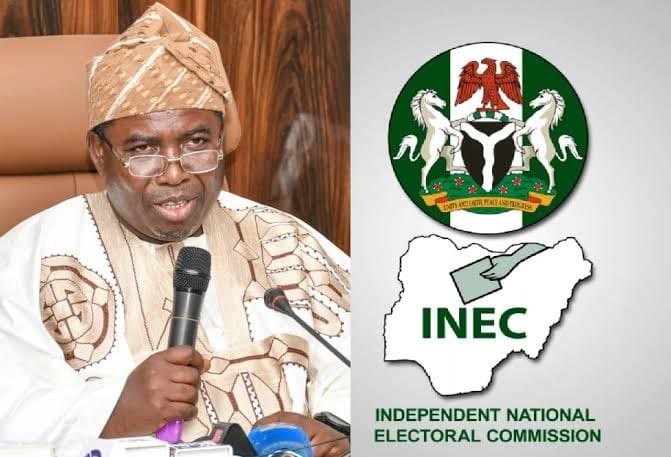
The Independent National Electoral Commission (INEC) has issued a stark warning that the misuse of generative artificial intelligence (AI) now poses a growing and serious threat to the credibility of Nigeria’s 2027 general elections. According to the commission, the proliferation of manipulated audio, video, and images, as well as the use of targeted messaging designed to expose different groups of voters to conflicting narratives, has transformed the threat from “no longer a distant, theoretical risk” into a pressing, real-world challenge. This warning was delivered by National Commissioner and Chairman of INEC’s Information and Voter Education Committee (IVEC), Mohammed Kudu Haruna, during his address in Abuja yesterday, where he formally declared open a capacity-building workshop for the commission’s Public Affairs Officers (PAOs) drawn from across the country. Haruna’s remarks underscore a growing recognition within Nigeria’s election management body that the integrity of the electoral process now depends heavily on the security and reliability of the information environment surrounding voters.
The commissioner elaborated that generative AI has dramatically lowered the cost of producing sophisticated fake content while simultaneously making it far more difficult for ordinary citizens and even experts to detect manipulations. He cautioned that the danger of this technology extends well beyond the simple production of fabricated materials. Generative AI, he explained, can be weaponised to target different segments of the electorate with contradictory and divisive messaging, in a coordinated effort to shape the information environment around elections in ways that undermine trust and fuel confusion. Haruna also cited a recent warning from the INEC Chairman, Prof. Joash Amupitan, who had earlier emphasised that electoral credibility no longer depends solely on traditional instruments such as ballot papers, the Bimodal Voter Accreditation System (BVAS), and result sheets. Instead, Amupitan reportedly argued, the credibility of elections is now equally tied to the quality and integrity of the information ecosystem in which voters form their opinions and make their choices. The chairman, according to Haruna, consequently called for electoral technology and communication to be treated as intrinsically interconnected aspects of the electoral process, rather than as separate or peripheral concerns.
The workshop, themed “Strengthening PAOs Capacity for Credible, Verified and Responsible Election Communication Towards 2027,” was organised by INEC’s Voter Education and Publicity (VEP) Department as a direct response to these emerging challenges. Haruna described the Public Affairs Officers as the frontline communicators of INEC at the state level, stressing that the credibility of the commission’s communication with the public depends largely on the efficiency, vigilance, and professionalism of these officers. As the 2027 elections approach, he noted, it has become crucial to ensure that PAOs are equipped with the necessary skills and protocols to handle the fast-evolving digital information landscape. The training programme is designed to provide participants with practical knowledge in verification of content, escalation procedures for dealing with misinformation and disinformation, and the development of clear and consistent messaging. Haruna commended the VEP Department for designing what he characterised as a highly practical and skills-based programme tailored to the specific challenges confronting PAOs in their various state postings. He emphasised that these officers are often the first point of contact for the media, political parties, civil society organisations, and the general public, meaning their ability to communicate accurately and responsibly is foundational to public confidence in INEC’s work.
Speaking at the event, the Director of Voter Education and Publicity, Victoria Eta-Messi, underscored the critical role PAOs play in shaping how Nigerians perceive INEC and the reliability of the information officially released by the commission. She explained that INEC operates under constant public scrutiny and is frequently confronted with deliberate attempts to misrepresent its activities, distort its decisions, and undermine public confidence in the electoral process. In this environment, she argued, the work of PAOs becomes even more essential, as they are tasked with countering false narratives and ensuring that accurate, verified information reaches voters across all states. Eta-Messi was also keen to stress that this workshop is not a one-off exercise, but rather the beginning of a sustained engagement designed to continuously prepare PAOs for the growing demands of their roles. She disclosed that further capacity-building programmes were already at an advanced stage of planning, with the support of development partners. Her remarks reinforced the message that INEC is taking a long-term, strategic approach to election communication, recognising that the fight against AI-driven misinformation cannot be won through a single training session, but requires consistent investment in human capital, systems, and processes.
Wilfred Ifogah, the Deputy Director for Information and Publicity, also addressed the participants, emphasising that the training was specifically structured to strengthen the practical communication skills that PAOs require in their daily work and during the increasingly intense period leading up to the 2027 elections. He noted that while theoretical knowledge is important, the real value of the workshop lies in its focus on real-world applications, such as how to respond quickly and effectively to viral misinformation, how to engage with journalists and fact-checkers, and how to maintain a coherent narrative across different states and platforms. Ifogah further revealed that the workshop would help clarify the escalation channels that exist among PAOs, heads of department, the VEP department, and Resident Electoral Commissioners. This clarity, he said, is vital for ensuring that when issues arise, they are reported swiftly and addressed at the appropriate level, preventing the spread of unverified information and enabling coordinated responses across all of INEC’s administrative structures. His comments highlighted the importance of internal communication and hierarchy in maintaining the overall integrity of the commission’s public-facing messaging, particularly as the electoral calendar draws closer.
The broader significance of this capacity-building initiative cannot be overstated, as it signals INEC’s proactive approach to adapting to the new realities of digital-age elections. The commission’s leadership appears determined to prepare its communication network for a complex information landscape in which malicious actors can deploy AI tools to create deepfakes, launch targeted disinformation campaigns, and manipulate public perception in ways that could fundamentally distort the electoral process. By investing in the training and empowerment of its Public Affairs Officers, INEC is acknowledging that the defence of electoral integrity must now be waged not only at polling units and collation centres but also across the digital spaces where voters increasingly obtain their information. The emphasis on verification, responsible communication, and clearly defined escalation procedures reflects a comprehensive strategy to build resilience against both external manipulation and internal breakdowns in messaging. As Nigeria moves closer to the 2027 general elections, the success of these efforts will likely play a decisive role in determining whether voters can trust the information they receive, whether candidates and parties can compete on a fair basis, and whether the final results of the elections are broadly accepted as credible and legitimate. Haruna’s warning, therefore, serves as both a challenge and a call to action for all stakeholders, including the media, civil society, and technology companies, to work together with INEC to safeguard the truth and the integrity of Nigeria’s democratic processes in an age of artificial intelligence.