


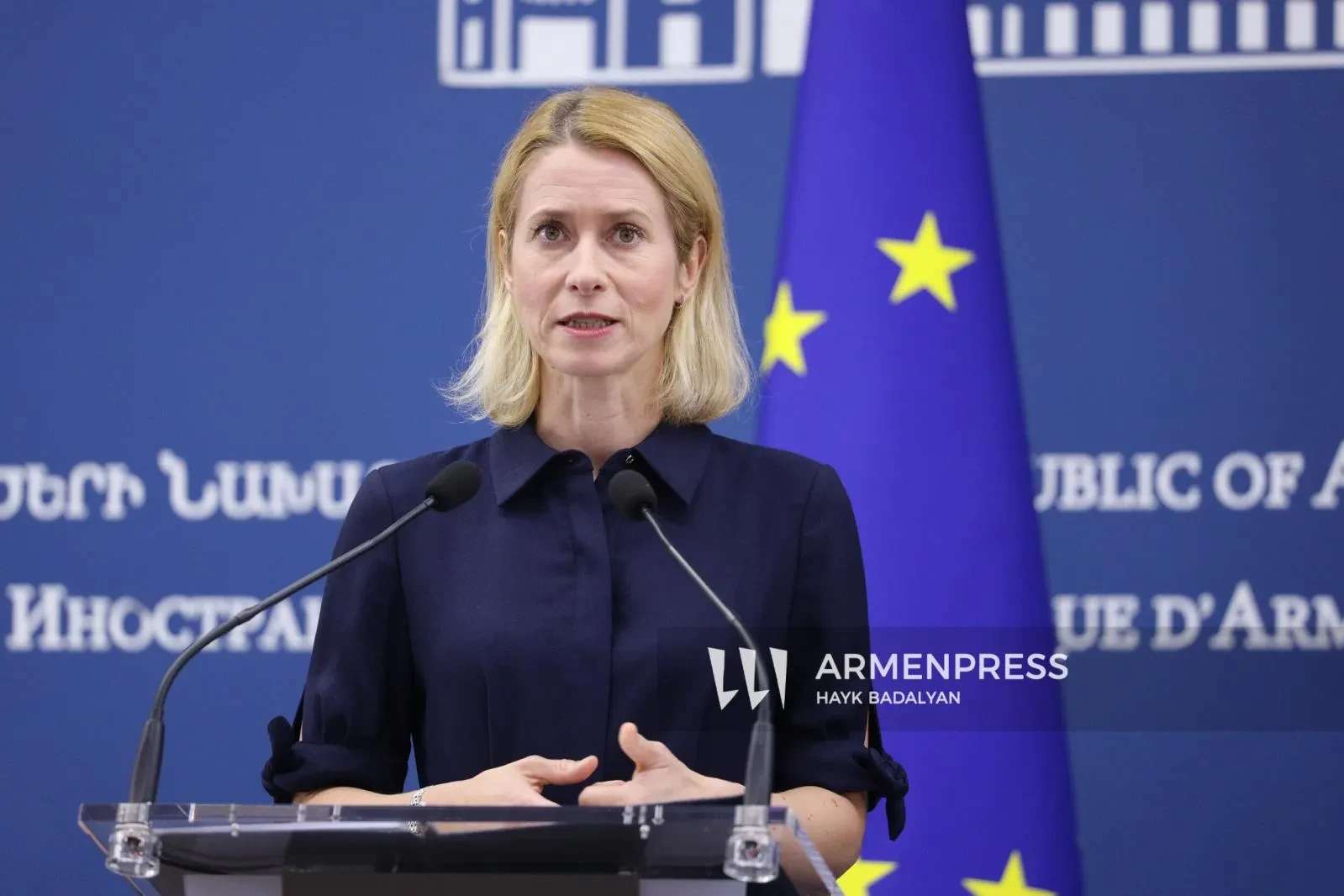
The European Union has officially launched a new mission in Armenia, signaling a significant escalation in Brussels’ efforts to bolster the country’s resilience against mounting external pressures. The announcement was made by Kaja Kallas, the EU High Representative for Foreign Affairs and Security Policy, following a high-level meeting of the EU Foreign Affairs Council. This initiative marks a strategic shift in the bloc’s engagement with the South Caucasus, prioritizing institutional stability and state security in a region increasingly caught between competing geopolitical spheres of influence.
During her briefing, Kallas underscored that the new mission is a direct response to the precarious position in which Armenia currently finds itself. She identified both Armenia and Moldova as nations currently grappling with significant “external coercion,” a pointed reference to the ongoing interference and political leverage exerted by the Russian Federation. By positioning this mission as a countermeasure to such pressures, the European Union is signaling that it is no longer willing to remain a peripheral observer as its partner nations face coordinated regional destabilization efforts.
The mission’s operational mandate is specifically designed to fortify Armenia’s domestic security architecture through technical assistance and strategic advisory roles. According to Kallas, EU experts will be deployed on the ground to work directly with Armenian authorities, focusing on three core areas: the mitigation of cyber-attacks, the containment of state-sponsored disinformation campaigns, and the disruption of illicit financial flows. These focus areas reflect the modern nature of “hybrid warfare,” where state actors often use non-military tactics to destabilize a government from within.
This initiative follows closely on the heels of another major development: the EU’s recent unveiling of a substantial economic support package for Yerevan. By combining immediate financial aid with deep-level security cooperation, the bloc is offering a multidimensional safety net intended to help Armenia diversify its political and economic reliance. The dual-track approach aim is to consolidate Armenia’s sovereignty, making the country less vulnerable to the energy and economic leverage that has historically been used to constrain its foreign policy choices.
The deployment of EU personnel into this politically sensitive environment is expected to have far-reaching implications for the regional balance of power. While the mission is framed as a technical support initiative, its presence serves as a tangible expression of EU alignment with the Armenian government. By embedding European expertise within local institutions, the EU hope to institutionalize a model of democratic and administrative resilience that can withstand the broader, often volatile, strategic shifts currently characterized by the decline of traditional regional security guarantees.
As the mission prepares to commence its work, the attention of European observers will inevitably turn to its efficacy in shielding Armenia from ongoing external interference. The challenge will be to translate the high-level policy mandates into practical, sustainable outcomes that strengthen the Armenian state without sparking unnecessary escalation with neighboring powers. For now, the launch of this mission stands as a testament to the EU’s evolving role as a proactive security actor, demonstrating a firm commitment to the protection of its partners’ democratic integrity in an era of heightened global confrontation.