


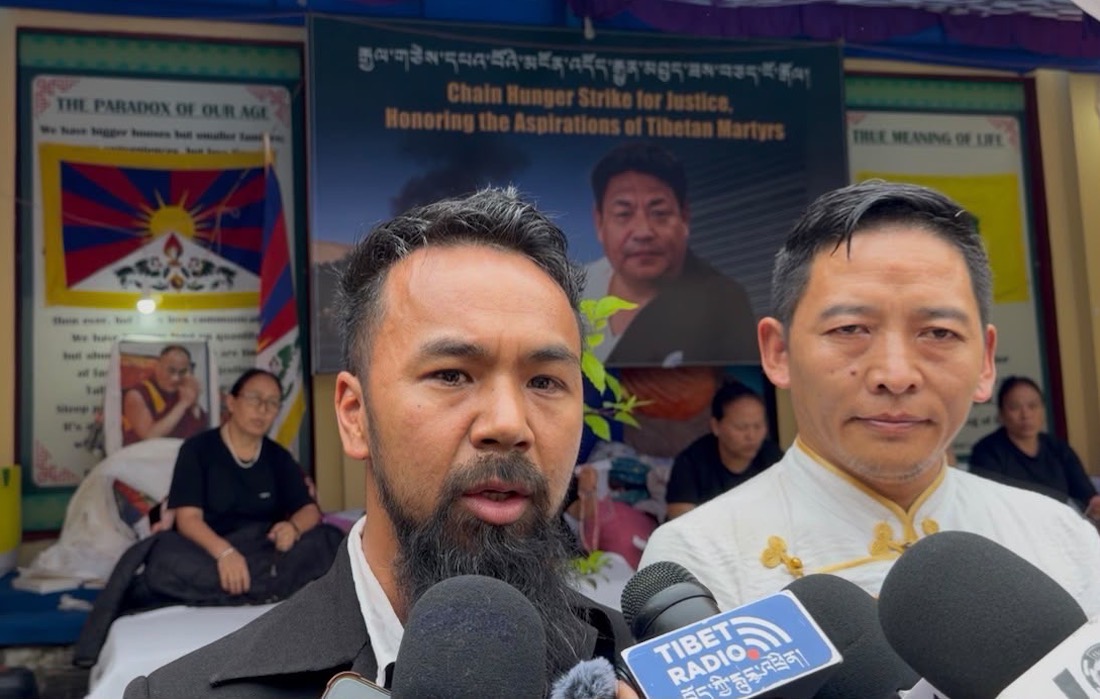
The Tibetan Youth Congress (TYC), the largest pro-independence organization in the Tibetan diaspora, has declared a significant escalation in its global advocacy efforts as its “Global Chain Hunger Strike” reached its ninth day on July 27. Initiated in response to the tragic self-immolation of activist Lobga Rangzen outside the United Nations headquarters in New York on July 2, the movement has transitioned from a localized protest into a synchronized international campaign. To sustain this momentum, the TYC announced the establishment of a dedicated office in New York, which will be spearheaded by former executive members Dhondup Lhadar and Lamsang to coordinate global outreach and strategic advocacy.
A primary objective of this new international initiative is to aggressively counter what the TYC characterizes as a sophisticated disinformation campaign orchestrated by the Chinese government. According to TYC General Secretary Tenzin Lobsang, Beijing has been circulating false narratives aimed at delegitimizing Lobga Rangzen’s sacrifice. These tactics reportedly include depicting the activist as a disgruntled, unemployed individual and attempting to frame his actions as relics of Tibet’s pre-1959 “feudal serfdom” system. The newly established New York office is tasked with acting as a truth-telling platform, ensuring that the political context of Rangzen’s protest is accurately documented and disseminated to counter the state-sponsored distortions.
Recognizing the gravity of this information war, the TYC has issued a passionate appeal for broad community participation. Tenzin Lobsang urged Tibetans across all professional and creative sectors—including scholars, journalists, filmmakers, and digital creators—to mobilize their expertise. By utilizing platforms ranging from formal research and artistic expression to social media advocacy, the organization hopes to amplify the Tibetan perspective and hold Chinese policy makers accountable. This call to action emphasizes that the fight for Tibetan identity and dignity is a collective responsibility that extends beyond political activism into the realms of culture and public discourse.
The scale of the movement has expanded rapidly since its inception in Dharamshala on July 19. According to TYC Vice President Tashi Targyal, the campaign has successfully ignited solidarity demonstrations and rolling hunger strikes across numerous regional chapters, including Dalhousie, Kalimpong, Odisha, and several other major Tibetan settlements. As of late July, sixty-four individuals had participated in the relay hunger strike, a number bolstered on Monday when members of the Tibetan Market Association in McLeod Ganj joined the protest in a public show of support. This widespread participation underscores a unified resolve among the exile community to keep the spirit of Rangzen’s protest alive.
The core of the TYC’s legislative and political mission remains anchored in five non-negotiable demands presented to the international community. These include a formal, substantive response from the United Nations regarding the death of Lobga Rangzen, the complete repeal of China’s restrictive “Ethnic Unity and Progress Law,” and formal international recognition of Tibet’s historical status. Furthermore, the organization is calling for active accountability regarding ongoing repression in Tibet, alongside an urgent demand for the unconditional release of all Tibetan political prisoners, prominently including the 11th Panchen Lama, whose whereabouts have remained a subject of international concern for decades.
In a concluding statement, the Tibetan Youth Congress reaffirmed its commitment to maintaining the “Worldwide Chain Protest” until the United Nations and other international bodies provide a definitive response. The organization has challenged governments, human rights institutions, and media organizations to look past Chinese state narratives and engage with the verifiable facts of Tibet’s political struggle. By linking the sacrifice of a single individual to broader geopolitical accountability, the TYC is attempting to reposition the Tibetan freedom movement as a central pillar of international conscience, signaling that their campaign will continue to grow until their substantive demands are met.