


Close Menu
DISADISA
  • Home
  • News
  • Social Media
  • Disinformation
  • Fake Information
  • Social Media Impact
Trending Now

Lincoln Families Respond to Meta’s New Restrictions on Adolescent Social Media Use.

August 27, 2026

Judge Expresses Concern Over Misinformation in RealPage Litigation.

August 27, 2026

Senator Padilla Probes Kalshi and Polymarket Regarding Election-Related Influencer Content.

August 27, 2026
Facebook X (Twitter) Instagram
Facebook X (Twitter) Instagram YouTube
DISADISA
Newsletter
  • Home
  • News
  • Social Media
  • Disinformation
  • Fake Information
  • Social Media Impact
DISADISA
Home»Disinformation»Germany Accused of Spreading Disinformation Through Publication of Altered Soviet Flag Resembling Nazi Swastika
Disinformation

Germany Accused of Spreading Disinformation Through Publication of Altered Soviet Flag Resembling Nazi Swastika

Press RoomBy Press RoomJuly 9, 2025No Comments
Facebook Twitter Pinterest LinkedIn Tumblr Email

Russian State Media Accuses Germany of Historical Revisionism Over 80-Year-Old Map

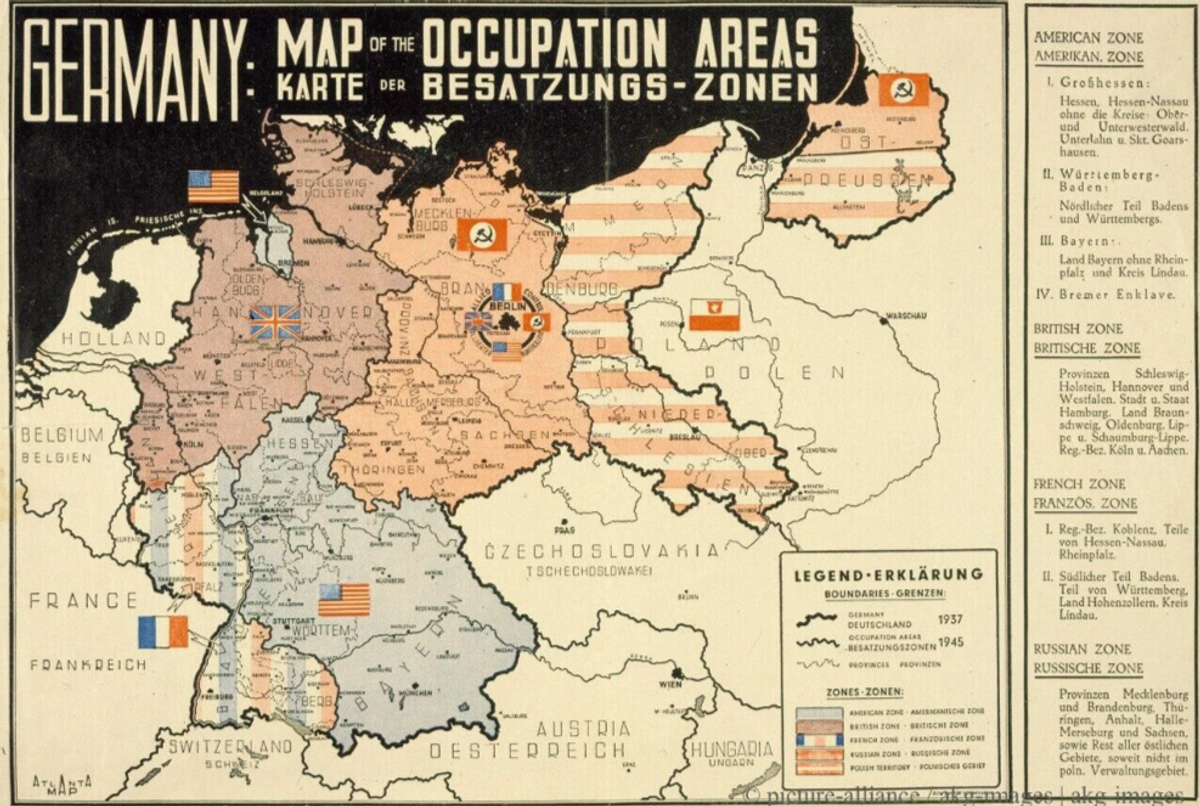
In a move escalating tensions and fueling the ongoing information war surrounding the conflict in Ukraine, Russian state-owned news agency Ria Novosti has accused the German embassy in Moscow of deliberately distorting historical facts about World War II. The agency claims the embassy posted a map of post-war Germany on its Telegram channel, depicting the Soviet flag with a black hammer and sickle on a white circle against a red background, instead of the official gold emblem on a red background. Ria Novosti framed this as a deliberate insult and an attempt to downplay the Soviet Union’s role in defeating Nazi Germany, echoing President Vladimir Putin’s frequent accusations of historical revisionism against Russia.

However, a closer examination reveals that the map in question is an original document from 1945, not a recent fabrication. The same map, with the identical flag depiction, is readily available from reputable historical map dealers like Boston Rare Maps, clearly demonstrating its authenticity and pre-dating the current political climate. This evidence effectively debunks Ria Novosti’s claim of a deliberate alteration by the German embassy.

The incident highlights the Kremlin’s increasing reliance on manipulated narratives and disinformation to bolster its position both domestically and internationally. By framing the historical map as a contemporary slight, Ria Novosti attempts to rally support at home by portraying Russia as a victim of Western disrespect and historical revisionism. This manufactured outrage also serves to deflect attention from Russia’s own actions in Ukraine, which have been widely condemned as a violation of international law and a brutal assault on a sovereign nation.

The accusation against the German embassy also underscores the heightened sensitivity surrounding historical narratives related to World War II, particularly the Soviet Union’s role. For the Kremlin, the victory over Nazi Germany remains a cornerstone of national identity and a source of immense pride. Any perceived attempt to diminish or reinterpret the Soviet Union’s contribution to this victory is met with fierce resistance and often portrayed as a hostile act. This sensitivity is exploited by state-controlled media to generate anti-Western sentiment and justify the ongoing conflict in Ukraine.

Adding to the dubious nature of the accusation is the lack of verifiable evidence supporting Ria Novosti’s claim. The news agency provided a link to the alleged Telegram post, which has since disappeared. It is unclear whether the link ever functioned or if the map was ever posted by the German embassy. This lack of transparency and the subsequent disappearance of the alleged evidence further undermines the credibility of Ria Novosti’s accusations. If the embassy did indeed post the map, it is far more plausible that it was done so within a historical context, rather than as a deliberate political message aimed at Russia.

The incident involving the 80-year-old map serves as a stark reminder of the challenges posed by disinformation and the importance of critical media literacy. In an increasingly complex information landscape, where manipulated narratives and outright falsehoods are readily disseminated, it is crucial to verify information from multiple reputable sources and to be wary of information originating from state-controlled media outlets with a vested interest in promoting specific narratives. This case highlights the cynical manipulation of historical facts for political purposes, a tactic increasingly employed in the ongoing information war surrounding the conflict in Ukraine.

Share. Facebook Twitter Pinterest LinkedIn WhatsApp Reddit Tumblr Email

Read More

Pre-Election Disinformation Campaign Directed at Chris Hipkins

August 26, 2026

Engineers as Essential Builders of Latin America’s Democratic Future

August 26, 2026

Poles Cite the Principal Reasons for Hostility Toward Ukrainians.

August 26, 2026
Add A Comment
Leave A Reply Cancel Reply

Our Picks

Judge Expresses Concern Over Misinformation in RealPage Litigation.

August 27, 2026

Senator Padilla Probes Kalshi and Polymarket Regarding Election-Related Influencer Content.

August 27, 2026

Here are a few rewritten versions of the headline in a formal tone:

  1. Florida Declines $17 Billion Settlement with Meta Regarding Child Safety on Social Media

  2. State of Florida Rejects $17 Billion Meta Settlement Over Minors’ Social Media Use

  3. Florida Authorities Turn Down $17 Billion Meta Agreement Citing Concerns for Youth Welfare

  4. Florida Refuses Proposed $17 Billion Meta Settlement Addressing Impact on Children

  5. Florida Rejects $17 Billion Meta Settlement in Children’s Online Safety Case

August 26, 2026

Here are a few options for a formal title, each with a slightly different nuance.

Option 1 (Most Direct and Standard)

Call for Papers: JMIR Metascience and Research Integrity Seeks Submissions on Misinformation in Scientific Publishing

Option 2 (More Formal and Announcement-Style)

Announcement: Call for Submissions on Misinformation in Publishing for the New JMIR Journal of Metascience and Research Integrity

Option 3 (Emphasizing the Journal’s Mission)

JMIR Metascience and Research Integrity Issues Call for Papers on Misinformation in Scholarly Publishing

Option 4 (Concise and Professional)

Call for Papers: Addressing Misinformation in Scientific Publishing in JMIR Metascience and Research Integrity

I recommend Option 1 for its clarity and directness, aligning with standard academic publishing conventions.

August 26, 2026
Stay In Touch
  • Facebook
  • Twitter
  • Pinterest
  • Instagram
  • YouTube
  • Vimeo

Don't Miss

News

Here are a few options with a formal tone:

Option 1 (direct and concise) The Osun 2026 Election: AI and the Weaponization of Doubt in Nigeria’s Information Landscape

Option 2 (more academic) Artificial Intelligence and Electoral Integrity: Examining the Weaponization of Doubt in Nigeria’s 2026 Osun State Election

Option 3 (journalistic and formal) The Role of Artificial Intelligence in the Weaponization of Doubt: Insights from Nigeria’s 2026 Osun Election

Option 4 (shorter, more precise) Artificial Intelligence and the Weaponization of Doubt in the Osun 2026 Election

By Press RoomAugust 26, 20260

Osun Election Exposed a New Era of Disinformation: Manufacturing Doubt, Not Just Lies The 2026…

Two-Day Conference at Sciences Po Examines Artificial Intelligence’s Influence on Democratic Institutions and Public Discourse


Alternatively:

Sciences Po Hosts Two-Day Symposium on the Implications of Artificial Intelligence for Democracy and the Public Sphere

August 26, 2026

Pre-Election Disinformation Campaign Directed at Chris Hipkins

August 26, 2026

Judge Raises Misinformation Concerns in RealPage Case

August 26, 2026
DISA
Facebook X (Twitter) Instagram Pinterest
  • Home
  • Privacy Policy
  • Terms of use
  • Contact
© 2026 DISA. All Rights Reserved.

Type above and press Enter to search. Press Esc to cancel.