


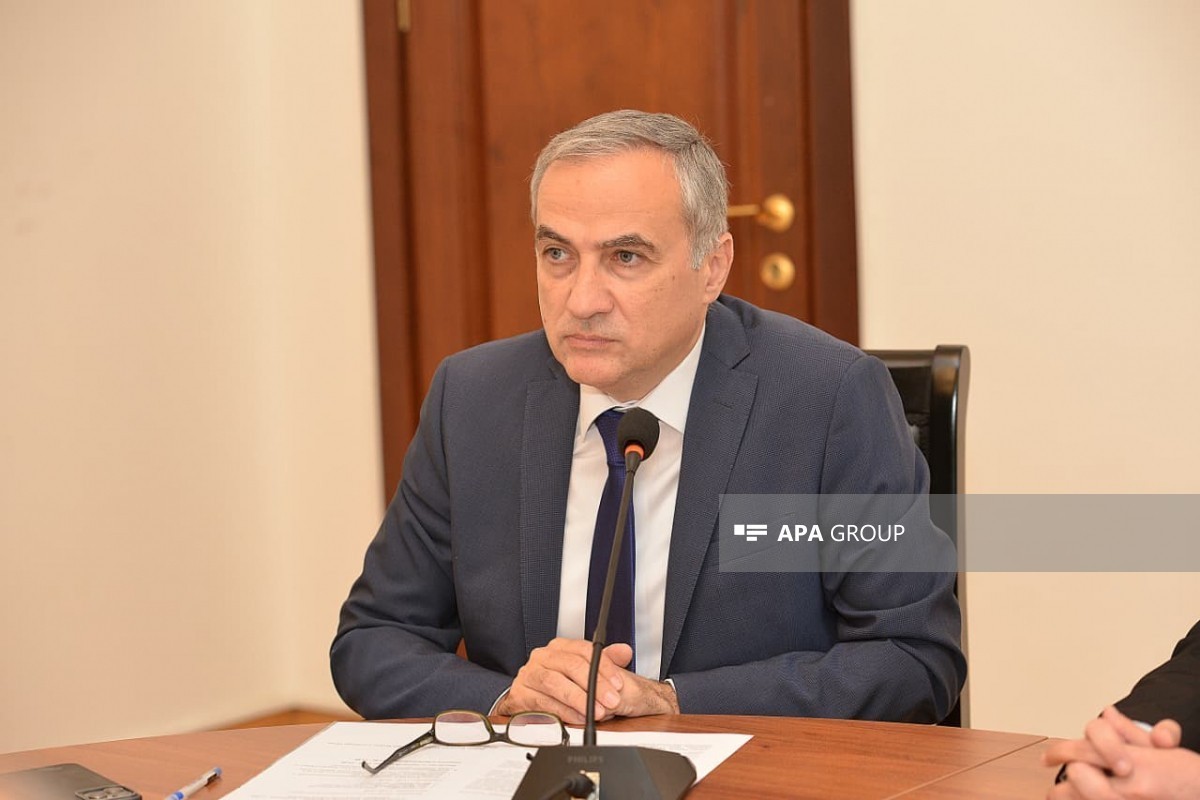
The Turkic World’s Strategic Alliance: Shafiyev Highlights Think Tank Cooperation, Disinformation Threats, and Azerbaijan’s Role as Türkiye’s Regional Guardian
By a Staff Correspondent- BAKU – The strategic partnership between Azerbaijan and Türkiye, rooted in centuries of shared history, language, and culture, is being reinforced through an increasingly vital channel: think tank diplomacy. Addressing a distinguished audience at the panel session titled “Turkic World Dialogues: Common Future, Common Vision” in Baku, Farid Shafiyev, the Chairman of the Center for Analysis of International Relations and Multiculturalism, emphasized that the activities of Azerbaijani and Turkish think tanks are of great importance and that cooperation in this area continues to flourish. The event brought together policymakers, analysts, and scholars from across the Turkic world to deliberate on the shared challenges and opportunities facing the broader community of Turkic-speaking nations. Shafiyev’s remarks underscored a forward-looking vision wherein intellectual collaboration between Baku and Ankara serves as the bedrock for a coordinated response to a volatile geopolitical environment, where information warfare has become as consequential as conventional military confrontation. This gathering was not merely an academic exercise; it served as a strategic forum for reinforcing a common agenda. As the Turkic world looks to deepen its institutional ties, exemplified by organizations like the Organization of Turkic States, Shafiyev stressed that the role of independent research institutions in shaping policy is indispensable. They provide the analytical framework necessary for regional cohesion, allowing member states to align their foreign policies, economic strategies, and security doctrines.
The primary focus of Shafiyev’s address, however, was the urgent need for a coordinated front against a growing tide of disinformation. He argued that in the contemporary information age, states derive power not only from their economic and military capacities but from their ability to control the narrative and verify truth within the international arena. Emphasizing the importance of jointly combating disinformation, Shafiyev noted that Türkiye, Azerbaijan, and the countries of Central Asia are actively seeking to strengthen their independence. This pursuit of resilience comes at a time when both established powers and regional actors routinely deploy false narratives as tools of statecraft to destabilize rivals. Shafiyev specifically highlighted the fact that these organized disinformation campaigns are being systematically waged against the unity of Azerbaijan and Türkiye. These carefully crafted attacks are designed to sow distrust between the two sovereign states, but Shafiyev firmly asserted that such campaigns have failed to disrupt the fraternal bonds that hold them together. The chairman pointed out that the information space is now a battlefield itself, with “fake news” and manipulated media coverage attempting to distort the realities of the Turkic world’s rapid ascent. He called for the capacity-building of fact-checking institutions, joint media projects, and collaborative educational initiatives—an approach that sees the truth as a shared strategic resource. Analysts in Baku suggest that the fight against disinformation regarding the Turkic states is not solely directed from outside, but also requires internal vigilance to counter narratives that seek to divide the broader Ummah and Turkic-speaking nations over sectarian or regional issues. His emphasis was clear: unity of information policies is as crucial as unity of political will.
Beyond the intellectual and informational spheres, Shafiyev emphasized that the tangible measures of this growing alliance are equally robust, particularly in matters of defense. He stated that Azerbaijan-Türkiye military cooperation serves as a sterling example for other states. The bilateral defense partnership, which has institutionalized through joint military exercises and a mutual defense agreement, demonstrates a model of strategic self-reliance for the wider region. This cooperation, forged amid the realities of modern conflicts, including the 44-day war in Karabakh, proved that one nation’s fight for territorial integrity is supported by the readiness of its ally to provide top-tier military, technical, and moral support. This military synergy is a deterrent against any revisionist designs in the Caucasus and beyond. Shafiyev’s remarks imply that the Turkish-Azerbaijani military model showcases how “two states, one nation” is not just a rhetorical slogan but a functional military doctrine. The models of drone warfare and tactical integration which emerged from this partnership have been studied by military academies globally. Furthermore, this high-level military cooperation extends a protective umbrella that enables the Central Asian republics to enhance their own sovereignty by diversifying their security partnerships. In his speech, Shafiyev implicitly drew a comparison to other alliances which are often dominated by great powers, asserting that the Baku-Ankara axis serves as an equitable and effective template because it is based on mutual respect and the alignment of national interests in a multipolar world, offering a pragmatic blueprint for other Turkic nations seeking to secure their borders and their futures without falling into dependency traps.
Turning his attention to the turbulent landscape of the Middle East, Shafiyev offered a candid assessment of the malicious narratives aimed at the Azerbaijani-Turkish brotherhood. He noted that organized disinformation campaigns on various issues are being conducted against Azerbaijan-Türkiye unity, specifically referencing the issue of Israel. In a region marked by shifting alliances and the ongoing challenges of the Gaza conflict, there is a concerted effort by certain actors to portray Azerbaijan as being in opposition to Türkiye’s stance on Middle Eastern geopolitics. Shafiyev took this opportunity to highlight a significant, albeit less-publicized, instance of diplomatic loyalty: Azerbaijan played a pivotal role in preventing an initiative regarding the so-called “Armenian genocide” in the Israeli parliament. This bold move underscores that while Baku maintains necessary relations with various actors for its strategic sovereignty—including defense ties with Israel—it refuses to allow its agenda to be used against the interests of its closest ally, Türkiye. Shafiyev’s remarks signal a nuanced foreign policy where Azerbaijan is capable of holding a balanced position in the Middle East while firmly drawing a “red line” when it comes to disrespecting Turkish national narratives. Furthermore, he stressed that Azerbaijan takes Türkiye’s interests into account across Middle East issues. This alignment is not merely calculated; it is a matter of long-term strategic principle. The chairman’s revelations shed light on the behind-the-scenes diplomacy which often escapes the headlines, revealing a nation that, despite its smaller size, leverages its diplomatic weight to counter hostile motions against the Turkish Republic in foreign parliaments—a critical act of defense for their shared historical memory.
In a powerful historical reflection, Shafiyev recalled an incident that took place 12 years ago at the European Union’s Eastern Partnership summit, which encapsulates the deep ties binding the two nations. He recalled how President of Azerbaijan Ilham Aliyev responded to accusations made by the then-Armenian president against Türkiye during that event. Shafiyev repeated President Aliyev’s now-famous declaration: “Türkiye is not here, but I am.” This statement, delivered at a high-level international forum, is emblematic of Azerbaijan’s unwavering commitment to defend Turkish honor and interests even in theaters where Ankara has no physical representation. The episode illustrates the exquisite sensitivity Azerbaijan holds regarding historical injustices and the ways in which the Turkic world has suffered from colonial and expansionist rhetoric—accusations that are often propagated by Armenia. By recalling this moment, Shafiyev demonstrated that Baku’s consideration of Ankara’s interests in the Middle East, a point he earlier emphasized, has a long-standing trajectory. It is a doctrine of “proxy advocacy” in international institutions, where Azerbaijan uses its sovereign voice to champion the causes of its ally. This anecdote serves to remind the international community that the Azerbaijani-Turkish partnership transcends transactional interests; it is a civilizational bond. It also underlines the fact that despite the time passed, the Armenian lobby’s efforts to isolate Türkiye within European institutions remain, yet fortitude in the face of such pressure, as demonstrated by President Aliyev, remains a cornerstone of the Turkic pole of the international system.
Shafiyev concluded his remarks by highlighting Azerbaijan’s role as an active and credible mediator on the international stage, emphasizing that these efforts are always conducted with the fraternal interests of Türkiye in mind. He touched upon the aircraft crisis between Türkiye and Russia in 2015—a moment marked by severe geopolitical friction when a Turkish F-16 shot down a Russian jet near the Syrian border, leading to a dramatic standoff. Shafiyev noted that Azerbaijan played a mediating role during that period to help resolve this pressing issue. Baku, maintaining balanced and respectful relations with Moscow while holding deep trade and cultural ties to Ankara, maneuvered the diplomatic corridors to de-escalate tensions. This mediation prevented a further deterioration that could have had catastrophic consequences for the region. Shafiyev asserted, “When we undertake any mediation mission in the Middle East, we take Türkiye’s interests into account. This has been the case and will continue to be so.” This explicit commitment to considering Turkish interests within all broader mediation actions encapsulates the synthesis of his entire speech: a triad of intellectual, military, and diplomatic convergence. As the world shifts from a unipolar to a multipolar order, such trusted partnerships are invaluable. The chairman of the Center for Analysis of International Relations and Multiculturalism ended his address on a resonant note for the Turkic world—acknowledging existing threats, but asserting the resilience of the unity. The continued expansion of think tank cooperation, the successful founding of the Organization of Turkic States, and the clear-eyed focus on independent sovereignty define a promising future where the Turkic world, led by the strategic weight of Türkiye and Azerbaijan, assumes its rightful place on the global stage as a bridge between East and West and a stabilizing force in international affairs. The Baku panel marked another step forward in merging the visions of the broader Turkic republics into actionable foreign policy, ensuring that their common future is viewed and built through the common vision of shared prosperity and mutual defense.