


Trump’s Truth Social Feed: A Hotbed of Conspiracy Theories
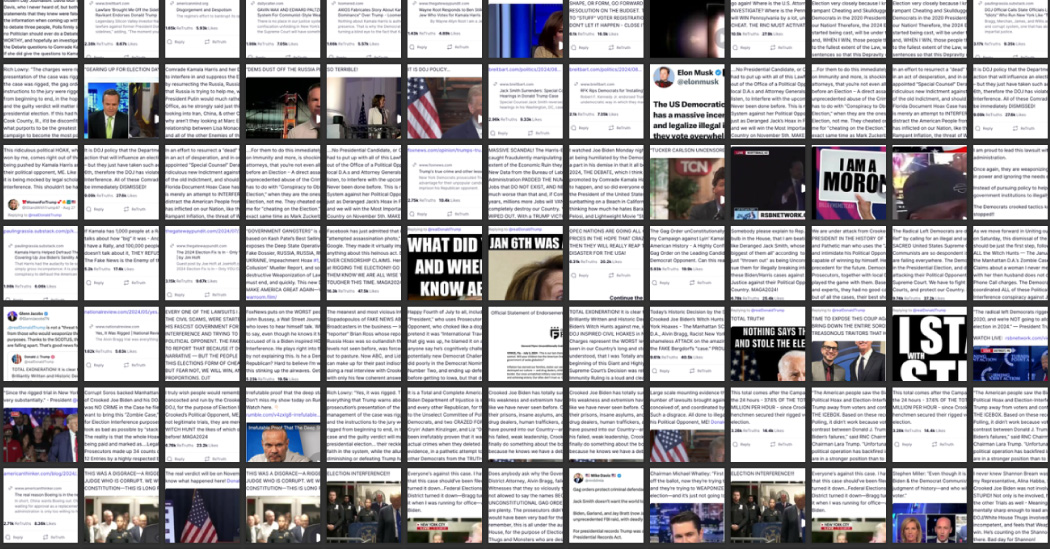
Former President Donald Trump’s affinity for conspiracy theories has long been documented, but a recent New York Times analysis of his Truth Social activity reveals a startling escalation in both frequency and scale. Over a six-month period in 2024, Trump posted or reposted over 5,600 times, averaging 30 posts a day. Hidden within this deluge of campaign rhetoric and political attacks lies a disturbing pattern: the consistent promotion of dark, paranoid narratives alleging secret plots against him and the American people. The Times identified at least 330 posts meeting specific criteria for conspiracy theories, outlining false schemes and pinpointing supposed perpetrators, ranging from the FBI orchestrating his assassination to government officials staging the January 6th Capitol riot. This constant barrage of conspiratorial content paints a picture of a candidate deeply entrenched in a world of misinformation and distrust, feeding his followers a diet of fear and suspicion.
A Deep Dive into Trump’s Conspiratorial Content
The conspiracy theories disseminated by Trump on Truth Social are not random; they coalesce around specific themes, all revolving around the narrative of Trump as a besieged hero battling sinister forces. Key targets include the 2020 election, which Trump persistently claims was rigged; the justice system, which he portrays as a tool of political persecution; and prominent figures like George Soros, often the subject of attacks with antisemitic undertones. The analysis also uncovered numerous posts casting doubt on the integrity of the upcoming 2024 election, preemptively sowing distrust in the democratic process. Beyond these core themes, Trump’s feed is a grab bag of false claims, ranging from accusations against the Biden administration for blowing up the Nord Stream pipeline to bizarre allegations about Kamala Harris using AI to inflate crowd sizes at rallies. This constant exposure to a distorted reality, experts warn, could lead Trump’s followers to reject any election outcome that doesn’t favor him.
Amplifying the Echo Chamber: Trump’s Network of Conspiracy Theorists
The Times’s analysis didn’t just focus on Trump’s own posts; it also examined the 170 accounts he amplified through reposts and quote-posts. The findings are alarming: approximately 85% of these accounts regularly promote conspiracy theories. This network includes both real-life confidants, such as Michael Flynn, and lesser-known figures, some with minuscule followings. The common denominator? A shared belief in conspiratorial narratives, many even more extreme than those espoused by Trump himself. This creates a powerful echo chamber where misinformation is not only spread but also amplified and validated, reinforcing the conspiratorial worldview of Trump and his followers. The anonymity offered by Truth Social makes identifying some account owners difficult, raising concerns about potential foreign interference through disinformation campaigns.
The QAnon Connection and the Erosion of Trust
Among the accounts amplified by Trump, a significant number exhibit links to QAnon, the far-right conspiracy theory that paints Trump as a messianic figure fighting a deep state cabal of satanic pedophiles. While Trump doesn’t explicitly endorse QAnon, his repeated sharing of content containing QAnon slogans and imagery subtly validates the movement and its dangerous ideology. This flirtation with extremism, combined with the constant attacks on democratic institutions and the justice system, erodes public trust and fuels a climate of paranoia and division. Experts worry that this rhetoric, designed to appeal to those who feel disenfranchised and eager to "blow up the system," poses a serious threat to the stability of American democracy.
Truth Social: A Haven for Unmoderated Content
Truth Social, which bills itself as a "free speech haven," has become a breeding ground for the kind of conspiratorial and hateful content that mainstream platforms often remove. The platform’s lax moderation policies allow misinformation and disinformation to flourish, providing a fertile ground for Trump’s conspiratorial narratives to take root and spread. Besides conspiracy theories, The Times found posts amplified by Trump featuring racist disinformation, crude sexual comments about Vice President Harris, and manipulated media targeting his political opponents. This unchecked flow of toxic content reinforces existing biases and fuels a dangerous cycle of misinformation, potentially influencing the political discourse and shaping the beliefs of millions of users.
Trump’s Post-Election Rhetoric: Threats and Undermining Democracy
As the 2024 election approaches, Trump’s rhetoric on Truth Social has become increasingly inflammatory. He continues to reiterate false claims of election fraud and has threatened retribution against anyone he deems involved in supposedly stealing the 2020 election, including lawyers, donors, and election officials. This escalating rhetoric, coupled with his constant promotion of conspiracy theories, creates a volatile atmosphere and raises concerns about the potential for violence and unrest in the post-election period. The fact that his calls for retribution are met with enthusiastic support from his followers on Truth Social further highlights the potential consequences of allowing such dangerous rhetoric to go unchecked. The platform, intended as a free speech haven, has inadvertently become a powerful amplifier of conspiracy theories and a potential incubator of political instability.