


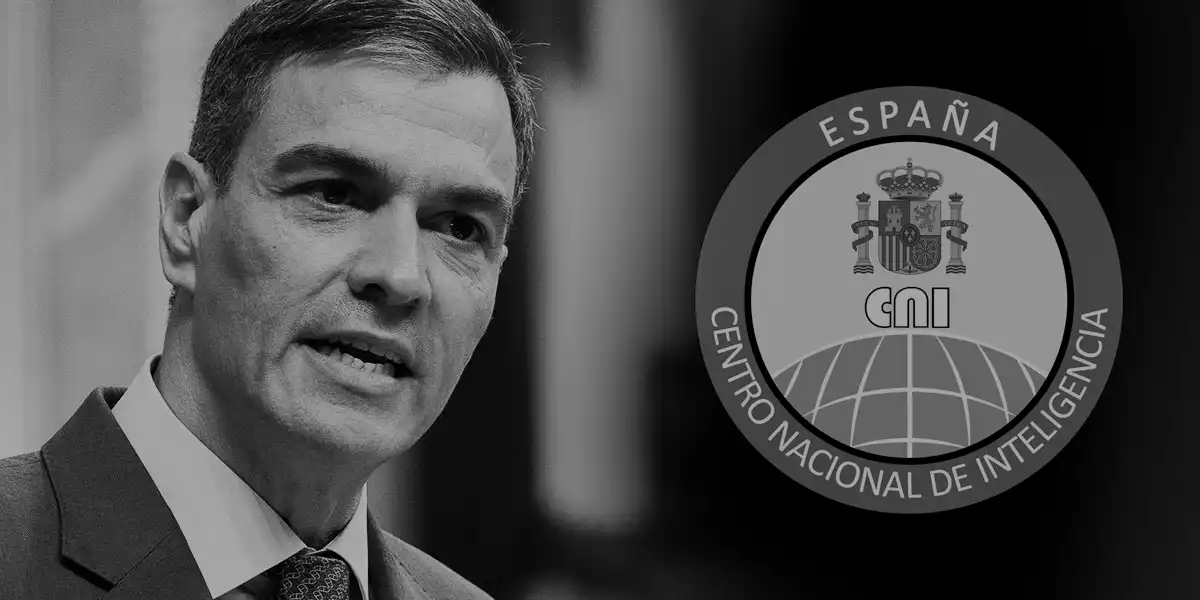
Spanish Government Accused of Smearing Intelligence Service to Protect Ministers Over Ceuta Mass Border Entry
In an unusually blunt editorial commentary, the Spanish government of Prime Minister Pedro Sánchez stands accused of orchestrating a disinformation campaign against the National Intelligence Center (CNI) in order to protect senior ministers from legal consequences over the mass migrant entry into Ceuta. The accusation, published in a Spanish newspaper, points to an “extraordinary situation” in which the nation’s own intelligence agency is being undermined by the very institution it is meant to serve. The article claims that Sánchez’s government is displaying “a high degree of desperation” after the Moroccan incursion into the Spanish enclave and the subsequent decision by the judiciary to review how the crisis was handled. Faced with the threat of legal accountability, the government has allegedly resorted to a strategy of declassifying confidential communications and planting anonymous media stories to construct a version of events that would shift blame onto the CNI.
The controversy centres on whether the government was properly warned before the large-scale crossing of migrants and border personnel from Morocco into Ceuta. According to the article, Defense Minister Margarita Robles had explicitly stated that the CNI had fulfilled its dutyassigned the Government Delegation in Ceuta on July 29, the day before the events, and that the agency had provided all necessary information. However, Prime Minister Sánchez and other members of his cabinet have repeatedly claimed that the government was taken by surprise and that the CNI failed to report what was coming. The newspaper argues that these two positions are incompatible serious contradiction emerged from the release of confidential intelligence reports by the Prime Minister’s Office, known as La Moncloa, on the official government website. Rather than supporting the government’s narrative, the declassified documents are said to demonstrate that warnings were indeed delivered before the border crisis.
The core of the reported scandal is a statement circulated to media outlets and attributed to the CNI, in which the intelligence agency allegedly admitted that it had “not foreseen the magnitude and nature” of what occurred on the 30th. The opinion article, however, asserts that this statement was not produced by the CNI at all. Instead, it was allegedly drafted and distributed by the Moncloa complex itself, the seat of the prime minister. The newspaper reports that while Efe, Spain’s state-controlled news agency, disseminated the text as though it originated from intelligence sources, the statement actually came from the government. This, according to the article, amounts to an attempt to use the credibility of an official security institution for political damage control. The defense ministry, despite being part of the government, reportedly agreed with the assessment that the CNI had provided warning, which further deepens the internal split and suggests that the prime minister’s office is isolated in its efforts to rewrite history.
The underlying motive, according to the editorial, is not merely political embarrassment but legal vulnerability. The invasion of Ceuta, in which thousands of people entered Spanish territory with what the government describes as Moroccan complicity, is now being examined by courts. Government members may face questions about why they did not act more decisively if intelligence warnings were available. To avoid legal and political repercussions, the article contends, the government has chosen to sacrifice the credibility of the CNI as a distraction. More troubling, the piece suggests a deeper problem: Sánchez is said to be entangled in a relationship with Morocco that has compromised his willingness to defend Spain’s territorial integrity. The article makes a direct reference to the alleged espionage affair in which Moroccan intelligence reportedly used Pegasus spyware to hack the mobile phones of the prime minister and other senior officials. That vulnerability, the author argues, may explain why the government is so determined to avoid confronting Morocco over the Ceuta incursion, and why it would instead blame its own national security apparatus.
The article points to the declassified documents as the clearest evidence against the government’s public story. Far from proving that the CNI remained silent, those documents are said to show that the intelligence services alerted the relevant authorities in advance about the risk of a mass border movement. The government’s attempt to release those same documents appears to have backfired, because they undermine the official claim of surprise. When the evidence did not match the government’s version, the operation shifted toward fabricating an admission of failure attributed to the CNI. The article stresses that no official communiqué from the intelligence services ever acknowledged such a failure; the supposed admission was written by the government itselfched from the Ministry of Defense, which reportedly accepted the text despite its false attribution. This sequence of events is described as an attack on a professional institution by a governing party that is putting its own survival ahead of the national interest.
For the authors of the text, this episode is far more serious than a simple political dispute. It is a sign that Spain’s own government is willing to undermine its intelligence services to protect itself from judicial scrutiny. The CNI, which normally operates outside of partisan debate, has become a casualty of a government narrative that seems designed to please Morocco rather than to defend Spanish territory and sovereignty. The editorial urges the judiciary to investigate the government’s handling of the Ceuta events, including the disinformation campaign surrounding the CNI. It expresses the hope that the courts will examine not only the decisions made during the border crisis but also the subsequent attempts to obscure those decisions. The article concludes with a stark warning: what is emerging is not just administrative negligence but evidence that Spain may be governed by a leadership more loyal to the interests of Morocco than to the security of Spain. If true, that would represent a profound institutional crisis, one that goes far beyond the borders of Ceuta and touches the very integrity of the state.
In summary, the situation described in the article is one of deep political tension, where a government’s instinct for self-preservation is said to have overridden its duty to protect national security institutions. The CNI, which had reportedly done its job by warning of the impending crisis, is now being falsely presented as negligent in order to create a convenient excuse for official inaction. The government’s attempt to use confidential documents as political cover appears to have backfired, leaving it even more exposed in the public domain and potentially before the judiciary. The underlying conflict between Spain and Morocco, and the very nature of the Ceuta border, remains unresolved. But for the moment, the most explosive issue is domestic: the accusation that the Spanish prime minister is sabotaging his own security apparatus to avoid accountability. The question now is whether the courts will take up the thread left by the newspaper’s revelations and determine whether there is indeed a pattern of deception, or whether the government’s actions will be remembered as one of the most serious institutional betrayals in recent Spanish history.