


Paragraph 1
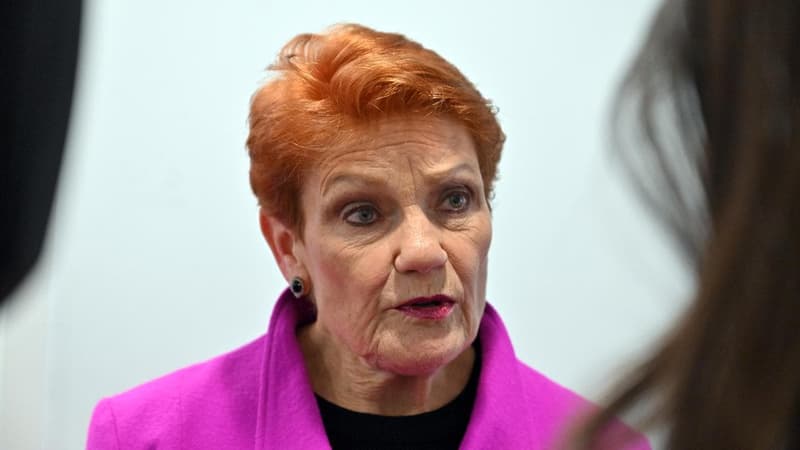
A sophisticated foreign-run disinformation operation has been caught fabricating political controversies involving Australia’s most prominent political figures, with the latest false claim alleging that Prime Minister Anthony Albanese and One Nation leader Pauline Hanson engaged in a heated live television debate. The claim, which has been widely shared across social media, originated from a Facebook account called “Mood Space,” which Meta’s page transparency data reveals is managed by users based in Vietnam. The post, published on August 19, asserts that the two politicians debated each other about regional development on television, and includes a series of inflammatory quotes falsely attributed to Senator Hanson, including an alleged instruction to Mr Albanese to “Shut your dirty mouth.” A composite image attached to the post features side-by-side shots of both leaders and directs users to a website in the comments section that expands on the fabricated narrative. However, AAP FactCheck has found no credible reports, broadcast transcripts, or official records indicating that any such televised debate ever took place. The entire episode appears to be a manufactured piece of political content designed to generate engagement and drive traffic to external websites, rather than a genuine news event.
The false debate post is part of a recurring pattern in which identical fabricated quotes are recycled and attributed to different politicians in different countries, revealing the automated and templated nature of the operation. The exact phrase “Shut your dirty mouth. Don’t you dare talk about my homeland” has previously been falsely attributed to US Democratic Senator Mark Kelly, with a July 14 Facebook post claiming he directed those words at US Vice-President JD Vance during a “heated on-air confrontation.” Similarly, an August 20 post claimed the same words were spoken by British MP Rupert Lowe during a supposed confrontation with London mayor Sadiq Khan. The fact that the same quote appears in multiple international contexts with different public figures demonstrates that these posts are not based on real reporting but are instead generated as part of a disinformation playbook that exploits politically charged language and recognisable names to maximise shares and clicks. By attaching Australian political figures to this global template, the Mood Space account is attempting to insert manufactured controversies into the Australian political discourse, relying on the assumption that many readers will not bother to verify the claims before sharing them.
Paragraph 2
The August 19 post about the alleged Albanese-Hanson debate is not an isolated incident but rather one of several false narratives propagated by the same Facebook page. In a post dated August 25, Mood Space falsely claimed that Australian television presenter Karl Stefanovic had “sparked fresh political controversy” during an interview on the Today Show with health minister Mark Butler. The post was accompanied by an image showing Stefanovic alongside Treasurer Jim Chalmers, despite the text of the post claiming the incident involved Mr Butler. This mismatch between the visual evidence and the written claim is a clear indicator of sloppy fabrication, as is the fact that Stefanovic is no longer a presenter on the Today Show. He parted ways with his former employer, Channel Nine, in June 2026, meaning he could not possibly have conducted an interview on that program at the time the post was published. The post encouraged users to click a link to a website that purportedly expands on the false claims, a common technique used by disinformation pages to drive traffic to ad-revenue-generating domains. By combining a recognisable television personality, a current government minister, and a dramatic but entirely invented controversy, the page seeks to exploit public trust in established media figures to lend credibility to its fabricated stories.
Another post by the same account targeted Senator Pauline Hanson directly, claiming she had used a “fiery speech” at a “high-profile gala” in Canberra to announce a personal donation of almost $500,000 for “rural healthcare, Australian veterans and farming communities experiencing financial difficulties.” AAP FactCheck found no credible reports of either the supposed speech or the alleged donation, and no mention of any such philanthropic announcement appears on Senator Hanson’s official social media feeds or those of the One Nation party. The invention of a large charitable donation is a particularly insidious form of disinformation because it plays on positive public sentiment and makes the subject of the false story appear heroic, thereby making the story more likely to be believed and shared by readers who have little reason to doubt the purported generosity of a public figure. The absence of any evidence for the donation, however, combined with the lack of any independent news coverage, makes it clear that the entire story is a fabrication. The page appears to have no interest in factual accuracy and instead creates content that is optimised for emotional reactions, whether positive or negative, because such reactions drive engagement metrics on social media platforms.
Paragraph 3
Perhaps the most elaborate false claim from Mood Space involves a purported “citizenship bill” supposedly introduced by One Nation MP Barnaby Joyce. A post claims that Mr Joyce proposed legislation that would restrict parliamentary positions to Australian-born citizens and ban dual citizens from becoming members of Parliament. The post quotes Mr Joyce as saying, “Only Australians born on Australian soil should be eligible for positions of power, and dual citizens should be barred from Parliament.” However, parliamentary records show that no such bill exists, and there is no record in Hansard, Parliament’s official transcript, of Mr Joyce ever saying those words. A search of legislative records reveals that Mr Joyce has introduced only one bill to Parliament in 2026, which proposed stripping citizenship from Australians convicted of terrorism offences. That bill makes no mention whatsoever of banning foreign-born citizens or dual citizens from becoming members of parliament. The fabricated quote and the invented bill are particularly ironic given Australia’s constitutional history, because dual citizens are already banned from sitting in federal parliament. Section 44 of the Australian Constitution expressly disqualifies any person who is a citizen of a foreign power from being chosen or sitting as a senator or a member of the House of Representatives.
The irony deepens when considering Mr Joyce’s own political history, as he personally fell foul of this very constitutional provision. In 2017, Mr Joyce was found to be a dual citizen of Australia and New Zealand and was consequently disqualified from Parliament, triggering a by-election in his New England electorate. He subsequently won that by-election and returned to Parliament, but the episode remains one of the most prominent examples of the dual citizenship rule in Australian political history. For a disinformation page to falsely attribute to Mr Joyce a proposal to ban dual citizens from Parliament is not only factually wrong but also ignores the well-documented reality that such a restriction already exists and that he himself was once affected by it. The fabrication appears designed to exploit public debates about citizenship, immigration, and national identity, topics that are highly emotive and likely to generate strong reactions from readers. By attaching these controversial themes to a well-known politician, the page increases the likelihood that the false content will be shared widely across social media networks, regardless of its accuracy.
Paragraph 4
The activities of the Mood Space account highlight the growing problem of foreign-owned disinformation networks targeting Australian politics. Meta’s page transparency data clearly shows that the account is managed by users in Vietnam, yet it consistently publishes content that purports to be breaking news about Australian political figures, including the Prime Minister, opposition leaders, and government ministers. This pattern is not unique to Mood Space, as AAP FactCheck has debunked dozens of other foreign-run accounts making false claims about Senator Hanson, Mr Albanese, and a range of other Australian politicians. These accounts often operate in a coordinated manner, using similar language, shared visual assets, and identical fabricated quotes, suggesting that they may be part of a larger operation designed to manipulate public opinion or simply to generate financial profit through website traffic and advertising revenue. Regardless of the underlying motive, the effect is the same: Australian social media users are being exposed to a steady stream of false and misleading content dressed up as legitimate journalism, and many readers are unable or unwilling to distinguish between real news and fabricated disinformation.
The methods used by these accounts are consistent with established techniques of disinformation distribution. They typically create Facebook pages with names that sound plausible, such as “Mood Space,” which do not immediately reveal their foreign origins. They then post content that mimics the style of legitimate news reporting, often using real photographs of politicians or television personalities paired with sensational headlines and fabricated quotes. The posts are designed to provoke strong emotional responses, whether outrage, admiration, or fear, because emotional content is more likely to be shared by users. Each post typically includes a link to a website that expands on the false claim, driving traffic to domains that may host further misinformation or generate advertising revenue for the page operators. In some cases, the images used are misleading, as with the Stefanovic post that showed the wrong politician, while in other cases the quotes have been recycled from entirely different countries. The goal is not accuracy but engagement, and the operators appear to have little concern for the real-world consequences of their content.
Paragraph 5
The spread of such disinformation poses a significant challenge to Australian democracy and public discourse. When voters are repeatedly exposed to false stories about their political leaders, it becomes increasingly difficult for them to make informed decisions based on facts and evidence. Fabricated quotes attributed to politicians can damage reputations, inflame partisan tensions, and undermine trust in democratic institutions. This is particularly concerning when the false content is generated by actors outside Australia who have no stake in the country’s well-being and may be motivated solely by financial gain or geopolitical objectives. The fact that a page managed from Vietnam can create entirely fictional debates between the Australian Prime Minister and the leader of One Nation, and have those claims shared thousands of times by Australian users, demonstrates the vulnerability of social media platforms to cross-border manipulation. It also underscores the importance of robust fact-checking organisations and media literacy education to help the public identify and reject misleading content before it spreads.
AAP FactCheck has been at the forefront of debunking such content, identifying and exposing dozens of foreign-run accounts that circulate political disinformation about Australian politics. In each case, the debunking process involves a thorough investigation of the claims, including searches of official parliamentary records, transcripts of interviews, social media feeds of the politicians involved, and credible news sources. The findings are then published in an accessible format that allows readers to understand why the claim is false and what evidence exists to disprove it. However, fact-checking alone is not sufficient to stop the spread of disinformation. Social media platforms must also take responsibility for detecting and removing accounts that systematically publish false content, and governments may need to consider regulatory measures to hold platforms accountable for the content they host. At the same time, media literacy programs in schools and communities can help equip citizens with the critical thinking skills needed to question the veracity of shocking or emotionally charged claims before sharing them with others.
Paragraph 6
As the 2026 political calendar unfolds with further debates, elections, and policy announcements, the risk of disinformation campaigns targeting Australian political figures is likely to increase. The operators behind accounts like Mood Space have demonstrated that they can quickly adapt their content to current events, creating false stories that incorporate the names of politicians who are in the news and issues that are already generating public interest. The fabricated debate between Mr Albanese and Senator Hanson, the false claim about a charitable donation, the invented citizenship bill attributed to Mr Joyce, and the misleading Stefanovic controversy are all examples of a broader strategy to pollute the information environment with clickbait designed to exploit the public’s appetite for political news. While individual posts may be debunked, the constant stream of new fabrications means that fact-checkers are often playing catch-up, and by the time a false claim is exposed, it may already have been seen and shared by tens of thousands of people.
The best defence against such disinformation is a combination of vigilance, verification, and scepticism. Readers should be wary of any political story that appears on an unfamiliar Facebook page, especially if it includes sensational quotes or dramatic allegations that do not appear in any mainstream news source. Checking the “About” section of a page to see where its administrators are based, looking for the blue verification badge of legitimate news organisations, and cross-referencing claims against official records are all simple steps that can help reduce the spread of false content. When a story seems too outrageous to be true, it often is, and taking a moment to search for independent confirmation is preferable to contributing to the viral spread of misinformation. AAP FactCheck remains committed to exposing these operations and providing the public with accurate, evidence-based information. As an accredited member of the International Fact-Checking Network, AAP FactCheck follows rigorous standards of transparency and methodology, and its debunks are available across multiple platforms, including Facebook, Instagram, Threads, X, BlueSky, TikTok, and YouTube. In an era of growing disinformation, independent fact-checking is not just a service but a critical public good, and the evidence in this case makes clear that foreign-run operations are actively targeting Australian democracy with fabricated political content. One thing is certain: there was no television debate between Pauline Hanson and Anthony Albanese, and the quotes attributed to the politicians in the widely shared post were completely fabricated.