


Unraveling the Complex Relationship Between Social Media Use and Well-being in Young Adults: A Comprehensive Study
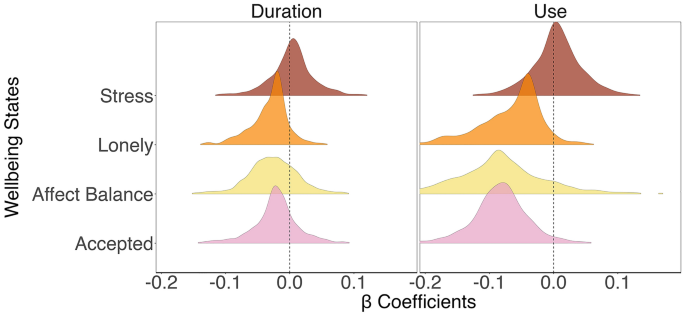
This in-depth investigation explores the intricate relationship between social media use and well-being among college students, utilizing a sophisticated experience sampling methodology to capture real-time experiences and analyze the nuances of this dynamic interplay. The study involved a large sample of students from the University of Texas at Austin, providing a rich dataset for understanding how social media impacts various facets of well-being in the context of young adults’ daily lives.
Methodology and Sample:
The research employed a rigorous data collection process involving two samples – exploratory (N=920) and confirmatory (N=764) – collected in Fall 2020 and Spring 2021, respectively. Participants completed daily experience sampling method (ESM) surveys via a smartphone app for up to four weeks, reporting on their activities, feelings, and social context at semi-random times throughout the day. Stringent data quality checks were implemented, including filtering out surveys completed too quickly or slowly, duplicate entries, and responses from participants who indicated dishonesty. Participants older than 24 were excluded to focus on young adults, resulting in final sample sizes of 821 for the exploratory and 681 for the confirmatory sample. The combined sample was predominantly female (69.1%), with a mean age of 18.7 years, representing diverse ethnic backgrounds.
Measuring Well-being and Social Media Use:
Well-being was assessed using seven adjectives: "happy," "sad," "valued and accepted by others," "lonely," "worried," "angry," and "stressed," measured on a Likert scale. Momentary affect balance, stress, feelings of acceptance, and loneliness were computed as indicators of affective and social well-being. Social media use was captured through a "select all that apply" question about activities performed in the past hour. Duration of use was recorded for those who indicated social media engagement. Contextual factors, including social and physical environments, were also meticulously documented through ESM surveys, providing a comprehensive picture of the circumstances surrounding social media use.
Investigating the Link: Three Key Research Questions:
The study addressed three core research questions: (1) What is the relationship between social media use and well-being in young adults’ daily lives? (2) What is the relationship between dispositional traits and social media sensitivity? (3) What is the relationship between the context of use and social media sensitivity? Each of these questions was explored through multilevel modeling, accommodating the nested nature of the data (repeated measures within individuals).
Statistical Analysis: A Multifaceted Approach:
Frequentist linear regression models were employed to analyze the within- and between-person associations between social media use and well-being. The models accounted for various factors, including time elapsed since the last response, number of activities performed, weekday/weekend status, study day, and sample group. For examining the influence of dispositional traits (e.g., personality) and context of use on social media sensitivity, more complex models were utilized. Dispositional moderators were examined using frequentist models considering between-person and cross-level interactions. Contextual moderators, due to model complexity, were analyzed within a Bayesian framework to ensure convergence. This robust statistical approach provided a rigorous investigation of the intricate relationships between social media use, well-being, individual differences, and contexts.
Unpacking Social Media Sensitivity and its Moderators:
A key concept in the study is "social media sensitivity," defined as the within-person association between social media use and well-being. This sensitivity was examined in relation to both dispositional traits, such as personality factors (Big Five personality traits, depressive symptoms, life satisfaction, loneliness, and affect balance), and contextual factors like social and physical environments. The research aimed to understand how individual differences and circumstances influence the impact of social media on well-being. This nuanced approach acknowledges the complex interplay of factors contributing to the overall relationship between social media and psychological well-being.
Advanced Statistical Modeling: Addressing Complex Relationships:
The study employed advanced statistical techniques to dissect the complex relationships under investigation. Multilevel modeling addressed the nested structure of the data, separating within-person fluctuations from between-person differences. Person-mean centering and sample-mean centering were utilized to disentangle these effects. Furthermore, the use of Bayesian estimation for models involving contextual moderators allowed for the investigation of multiple momentary contexts simultaneously, overcoming convergence issues encountered with frequentist approaches. These sophisticated analytical strategies ensured a robust and comprehensive analysis of the complex dynamics at play.
Implications and Future Directions:
This study contributes significantly to understanding the dynamic interplay between social media use and well-being in young adults. The findings highlight the importance of considering both individual differences and contexts when assessing the impact of social media. Future research could delve deeper into specific social media platforms, content types, and interaction styles to gain a more nuanced understanding of how these factors contribute to well-being outcomes. The study’s methodological rigor, including the use of ESM and advanced statistical modeling, sets a strong foundation for future investigations in this important area.