


The Ceuta Migration Crisis of 2026: A Digital Chain Reaction at a Historic Border
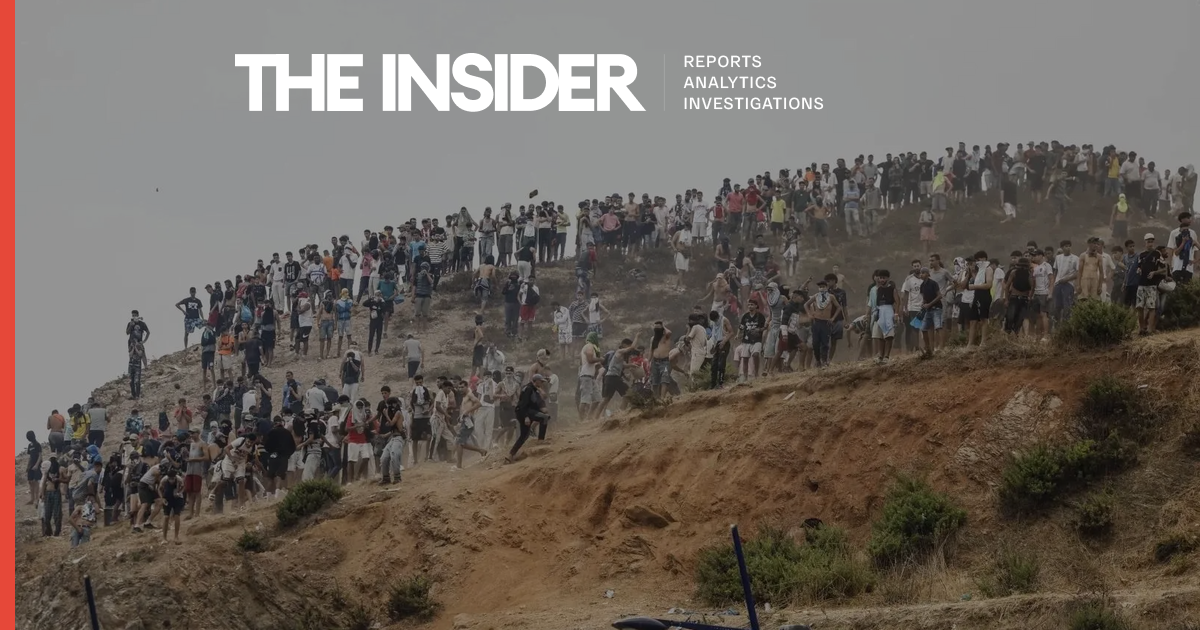
At first glance, the migration crisis that overwhelmed the Spanish city of Ceuta on the weekend of July 30–31, 2026, looks like a crisis of numbers. Thousands of people, many of them young men and women, crossed from Morocco into the Spanish enclave in a matter of hours, wading through shallow water or climbing over fences, until the city’s reception centers were saturated and the government in Madrid was forced to scramble. But the extraordinary scale of the migration flow should not obscure the main point. For the crisis to emerge, it was not necessary for tens of thousands of people to independently reach the same conclusion. Social media created a mechanism in which one person’s decision became evidence for another. The more people set out, the more plausible the appearance became that something had changed. And once thousands were on their way, the rumor began to confirm itself. This is not a marginal detail. It helps explain why the events could unfold so quickly, why the authorities on both sides of the border appeared to be caught off guard, and why the search for a single culprit, while politically convenient, may be analytically misleading. The migration flow was real, and the pressure on Ceuta’s reception system was immense, but the underlying dynamic was decentralized, digital, and contagious. In that sense, the crisis was not a straightforward operation orchestrated by a state, but rather a social phenomenon that operated through feedback loops of perception and action. The presence of thousands of people at the border made the decision to join them seem rational even to those who had no prior intention of migrating. Each new arrival was both a symptom and a cause of the crisis. State institutions accustomed to dealing with organized or at least predictable migration were suddenly confronted with a situation that had no command structure and no identifiable leader. Smugglers played a role, but so did group chats and forwarded videos. The result was a self-sustaining surge that could not be stopped simply by closing a gate or negotiating with a single actor. Ceuta’s residents, who have lived through previous surges, will remember the sight of young men running through the streets, wet and exhausted, uncertain of where they were and what would happen next. Local authorities described a situation that was not just a security emergency but a humanitarian one. Yet even as images of the packed border were broadcast around the world, the deeper story was happening on the phones of potential migrants, where the crisis was being rendered as an opportunity.
For Spaniards, suspicions that Morocco may have played a role in the Ceuta crisis did not arise out of nowhere. The two countries share a long and complicated history, and the very existence of Ceuta as a Spanish city is a reminder of a past that has never been fully settled. Ceuta’s special status dates back many centuries. In 1415, the city was conquered by the Portuguese. In 1580, it passed to the Spanish Crown and has remained Spanish ever since. Morocco, however, has never recognized Spain’s sovereignty over Ceuta and Melilla, another Spanish city and port on Africa’s Mediterranean coast. In this sense, the two cities are remnants of an imperial geography that survived decolonization. The question of sovereignty, therefore, rarely recedes into the background, particularly at a time when the history of European colonialism is once again receiving close scrutiny around the world. Mass migration has made the issue even more salient. Every time a group of migrants crosses the border fence or wades through the surf, the boundary between a domestic migration crisis and an international territorial dispute becomes harder to maintain. For many Spanish observers, the July 2026 events were not just about migration policy; they were about whether Morocco, deliberately or through inaction, was asserting a form of pressure that questioned Spain’s presence in North Africa. The memory of Ceuta’s long Spanish history and Morocco’s refusal to recognize it ensures that any border crisis will be interpreted in the shadow of that unresolved sovereignty question. The very phrase “remnants of an imperial geography” carries weight: these are not ordinary border towns, but the surviving fragments of a colonial order that the modern map has never fully erased. In such a context, a migration surge is never merely a migration surge. Moreover, the historical memory is not confined to official statements. Ceuta’s streets, fortifications, and monuments bear the traces of a frontier that has been fought over for centuries. Morocco’s claim is not a recent invention; it has been sustained by successive governments and by public opinion. This makes it impossible for the Spanish government to treat border control as a purely technical matter, because every breach of the border is also a challenge to the narrative that this little stretch of North Africa belongs to Spain.
The precedent most often cited in the aftermath of the July 2026 crisis is May 2021, when around 8,000 migrants entered Ceuta over several days amid a serious diplomatic crisis between Spain and Morocco. The immediate cause of that crisis was Spain’s decision to allow Brahim Ghali, leader of the Polisario Front of Western Sahara, to receive medical treatment in Spain. Morocco viewed the decision as a serious diplomatic insult because it does not recognize the Polisario Front’s authority over Western Sahara, which it considers part of Morocco. The subsequent loosening of border controls was widely seen in Spain as a form of pressure by Rabat. The episode established an important precedent in the Spanish political consciousness: if it chooses to do so, Morocco can use migration as a tool of pressure. The events of 2026 inevitably brought that memory back to the fore. The comparison was not accidental. In both cases, a border breach occurred at a moment of diplomatic friction with Morocco. In both cases, the Moroccan authorities denied any deliberate orchestration. And in both cases, the scale of the influx overwhelmed the Spanish reception system. For many Spaniards, the recurrence of the pattern was enough to establish a causal link, even in the absence of direct evidence. The 2021 crisis had created a template of interpretation: whenever large numbers of migrants appear at Ceuta’s border during a period of tension with Rabat, the Moroccan state is assumed to have at least allowed, if not encouraged, the movement. This template shaped the immediate reaction to July 2026 and made it difficult for Spanish officials to view the events as an accident or a spontaneous occurrence. It also raised the political stakes: a crisis that might otherwise have been framed as a failure of border management became a test of national sovereignty and a potential diplomatic confrontation with a neighbor that holds key levers over Spain’s external borders. Even the numbers tell a story: 8,000 in 2021 was considered a major crisis. In July 2026, the flow was much larger and more rapid, making the 2021 precedent seem like a rehearsal. The fact that the same city, the same pattern, and the same issue of Western Sahara were involved created a powerful narrative of recurrence, one that many in Madrid found impossible to ignore.
There were, in any case, grounds for suspicion. The July breach coincided with Morocco’s Throne Day celebrations, which reportedly limited the ability of the country’s security forces to respond to the events. Spanish officials also took into account the broader context of tensions over Western Sahara, Morocco’s rivalry with Algeria, and Madrid’s changing relationship with Rabat. Some Spanish analysts went further. Carlos Echeverría Jesús, director of the Observatory of Ceuta and Melilla, said in Le Monde that the crisis should be viewed against the backdrop of Morocco’s broader territorial ambitions. In his view, the 2021 crisis, the dispute over Ceuta and Melilla, and other instances of pressure from Morocco form a broader pattern of “hybrid warfare” intended to demonstrate Morocco’s ability to destabilize Spain’s security environment. This argument cannot simply be dismissed. However, there is currently no evidence that Morocco organized the influx of migrants in July 2026. Rabat does have considerable capacity to influence migration flows toward Ceuta. The authorities patrol the Moroccan side of the border and have an extensive security apparatus at their disposal. Moreover, Morocco has demonstrated in the past that migration pressure can become intertwined with diplomatic disputes. But there is still no convincing evidence that Rabat ordered tens of thousands of people to head for Ceuta in July. Moroccan authorities themselves attribute the border breach to disinformation, the actions of smugglers, and confusion over Spanish legal provisions. The absence of direct evidence does not prove that Morocco was uninvolved, but it does mean that the “hybrid warfare” thesis remains an interpretation rather than an established fact. It is one thing to say that Morocco benefits from the pressure or that it could have stopped it; it is another to say that it initiated it. The distinction is not academic, because a finding of deliberate orchestration would justify much stronger countermeasures and would represent a serious rupture in bilateral relations. The involvement of Algeria, which backs the Polisario Front and has its own disputes with Morocco, added another layer. Any move by Rabat to pressure Spain would also be a move in the broader regional rivalry. Spanish intelligence services were therefore careful not to jump to conclusions, even while politicians demanded answers.
A more prosaic explanation may therefore prove more convincing: a decentralized movement of people coincided with a temporary weakening of border controls, an overwhelmed migrant reception system, and the existence of a diplomatic fault line. Perhaps Morocco was unable to stop the flow of migrants or, once the scale of the breach became apparent, did not want to do so. Or the authorities may have decided that a certain level of pressure on Spain was acceptable and even took some satisfaction in watching Madrid struggle with the consequences. At this stage, however, it seems unlikely that Morocco actually provoked the crisis. The distinction between deliberately organizing an influx and failing to prevent one is crucial. The former would be an act of state coercion; the latter could be the result of incompetence, distraction, or a calculated decision to prioritize other commitments. The coincidence with Throne Day suggests that Moroccan security forces were not fully deployed to stop the crossing, but it does not necessarily mean that the absence was deliberate. Smugglers and social media influencers may have exploited the situation, spreading false information about a change in Spanish asylum policy. In an environment of already strained relations, any sign that the border was open could have triggered a movement that quickly surpassed the capacity of the authorities to control it. This explanation fits the facts just as well as the conspiracy theory, and it has the advantage of not requiring the Moroccan state to have masterminded a complex operation with no clear exit strategy. The social dynamics described above do the rest: once enough people were on the move, the crisis took on a life of its own. The distinction between “unable” and “unwilling” may never be fully resolved, but in either case the implication is less that Morocco engineered the situation and more that it failed to prevent it. Some observers have pointed out that a deliberately provoked crisis would have been a high-risk strategy for Morocco, because it would alienate Spain and the European Union at a time when Rabat needs diplomatic support and trade relations. A spontaneous or merely tolerated surge, by contrast, would allow Morocco to project strength without taking responsibility. That reading does not absolve Morocco of all responsibility, but it changes the nature of the accusation, shifting it from active coercion to neglect, opportunism, or simple disorganization.
This is particularly important because Ceuta lies at the intersection of two very different kinds of politics: migration policy and sovereignty. The first question is who is allowed to enter Spain. The second is who has the right to assert that Ceuta is part of Spain. On July 30–31, 2026, those two questions became inseparable for a time. The migrants who crossed the border were not simply exercising a right to claim asylum or seeking a better life; they were also, unintentionally, participants in a dispute over territory that predates the Spanish state itself. Their presence at the border was both a humanitarian challenge and a geopolitical event. The Spanish government had to respond both as an administrator of its borders and as the guardian of a sovereign enclave. The Moroccan government, for its part, had to decide whether to cooperate with Spain in restoring order or to allow the crisis to exert pressure on Madrid. The fact that no evidence of deliberate orchestration has emerged does not mean that the diplomatic dimension is irrelevant. On the contrary, the very fact that Morocco controls the land border, and that its cooperation is necessary to prevent such events, gives Rabat a structural power that does not depend on any single order. The crisis of July 2026 may not have been a Moroccan operation, but it was shaped by the asymmetry of power between the two countries. The humanitarian dimension also matters. The men and women who crossed the border were not merely tools of a geopolitical game. Many were fleeing poverty, insecurity, and despair. Their decision to move, amplified by social media, reflected a calculation that staying in place was no longer tenable. This does not mean that state interests were absent, but it does mean that the crisis cannot be reduced to a chess move. In the end, the most important lesson may be that boundaries, both physical and political, are maintained by a combination of state capacity, public trust, and international agreement. When all three are weakened, even a rumor can become a migration crisis. And when that rumor spreads at a place like Ceuta, where history, sovereignty, and migration are braided together, the result can be a crisis that no single actor intended and no single actor can control.