


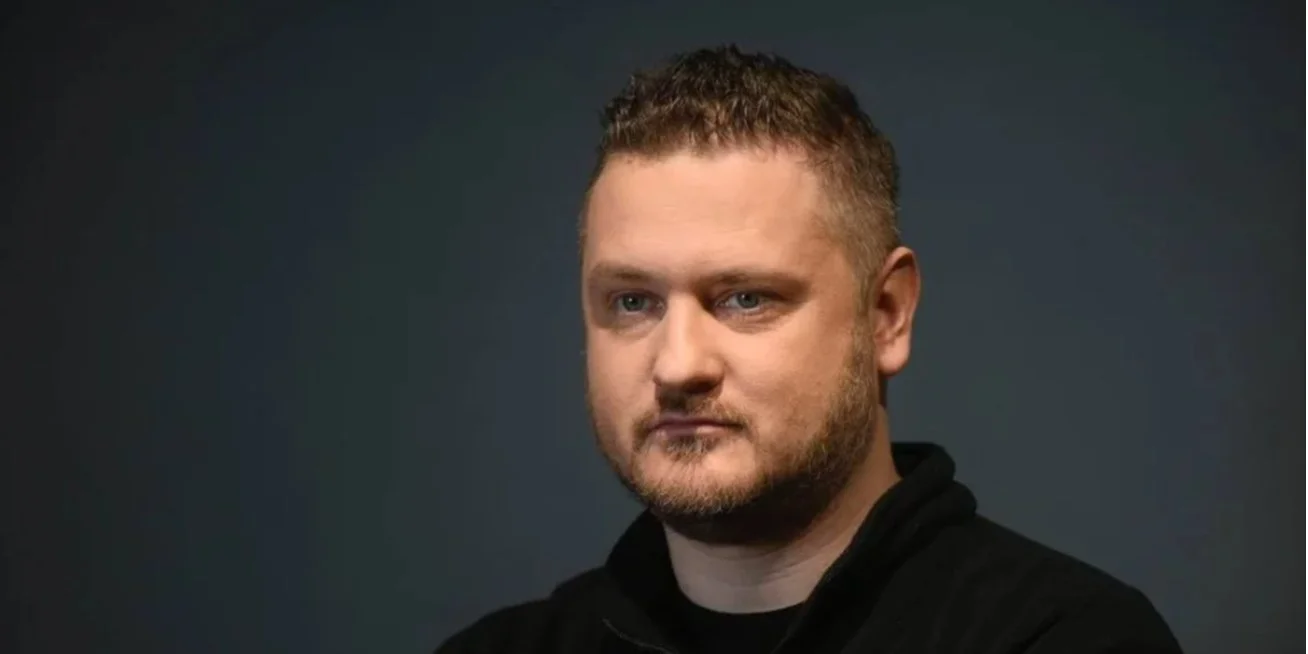
KYIV, Ukraine — With the summer heat still lingering, anxieties about the coming winter are already taking root in Ukraine, and official warnings against false information are multiplying. On Aug. 17, Andrii Kovalenko, head of the Center for Countering Disinformation under Ukraine’s National Security and Defense Council, took to Telegram to address a social media video that claimed Odesa, Kyiv, and Kharkiv would face “two-week lockdowns” during the winter — a measure that the video’s author said had not been imposed last winter. Kovalenko did not mince words. He advised people not to panic, reminded them to “learn what a lockdown actually is,” and stressed that the claims came from an individual with no connection to official winter-preparedness planning. “Everyone has the right to make assumptions, but assumptions aren’t facts,” he wrote. “Trust only the people actually involved in these processes. Less panic.” The statement was a direct response to a rumor that, while quickly debunked, threatened to undermine public confidence at a delicate moment in the war. As Ukraine braces for another season of Russian strikes on critical infrastructure, the government is increasingly focused on both physical resilience and the battle against disinformation that seeks to exploit fear and uncertainty.
Kovalenko’s first point was simple but important: lockdowns and blackouts are not the same thing. “We didn’t have lockdowns last winter. The last ones were during the COVID pandemic,” he said, apparently pointing to a verbal mix-up between the borrowed words “lockdown” and “blackout.” In the still-raw memories of many Ukrainians, last winter is associated with hours spent in cold, darkened homes, with charging stations, generators, and the hum of emergency power supply. But those were blackouts — emergency outages caused by Russian missile and drone attacks on energy infrastructure. A lockdown, in contrast, is a public-health measure that restricts movement and requires people to stay in place, often to control a disease outbreak. The two are fundamentally different. Yet in the blur of social media, where urgency outweighs accuracy, the distinction can become blurred. Kovalenko’s correction was not merely semantic. False talk of lockdowns can encourage hoarding, panic, and distrust, all while shifting attention away from the actual threat: Russia’s deliberate targeting of Ukraine’s power grid. By clarifying that no lockdowns occurred last winter and none have been announced for the upcoming one, the official sought to cut through the noise and bring the public back to reliable sources of information.
The rumor about “two-week lockdowns” fits into a broader pattern of information warfare that Ukraine has faced since Russia launched its full-scale invasion. Moscow has repeatedly sought to destabilize Ukrainian society not only through bombs and missiles, but also through a steady stream of fabricated narratives, manipulated videos, and alarmist predictions. The goal is often to make the Ukrainian public feel isolated, hopeless, or abandoned by their own government. Claims about impending social collapse, forced evacuations, or secret decisions taken by authorities are designed to erode trust and create confusion. The Center for Countering Disinformation, which Kovalenko leads, was established in 2021 precisely to monitor, analyze, and push back against such influence operations. Its work has become more critical than ever during the war. In this case, the official responded directly and quickly, refusing to let a baseless video define the conversation about winter preparations. He did not dismiss the possibility of a difficult season, nor did he promise that energy conditions would be easy. Instead, he insisted that the public focus on verifiable facts and official statements, not on the speculative commentary of anonymous voices online. That approach reflects a broader strategy: acknowledging real risks while refusing to be paralyzed by fear.
Behind the rhetoric, however, there is substantial and serious preparation underway. On Aug. 6, Ukrainian Prime Minister Denys Shmyhal announced that his government had initiated a Cabinet of Ministers decision aimed at making electricity distribution more efficient in the coming months. Under the proposed framework, lists of critical infrastructure facilities will now be compiled separately for winter and summer periods. That may sound like a technical administrative detail, but it is actually a significant shift in emergency planning. Energy needs are not uniform throughout the year. In the summer, air conditioning and industrial demand play a larger role, while in the winter, heating, lighting, and water pumping place enormous strain on the grid. At the same time, repair crews face harsher conditions in freezing weather, and damaged power plants are harder to restore when temperatures drop below zero. By separating the lists by season, Ukraine’s government can better prioritize hospitals, water supply stations, schools, and other essential institutions that must always remain powered. The decision also signals that Kyiv expects to face ongoing attacks on its energy infrastructure and is determined to improve distribution resilience before winter arrives. Energy officials have repeatedly stated that Ukraine is better prepared than it was a year ago, with stronger air defenses, more spare equipment, and better coordination with Western partners. But they also know that no plan can fully prevent the consequences of targeted Russian strikes.
The memory of last winter remains vivid for many Ukrainians. Russian forces launched waves of cruise missiles and drones at thermal power plants, hydroelectric facilities, and substations, causing nationwide rolling blackouts and forcing millions to cope without electricity, heat, or running water for extended periods. Engineers and repair workers often raced to restore power under enemy fire, and international partners delivered transformers, generators, and other equipment to help stabilize the system. The experience left deep lessons. Central and local authorities learned where the weaknesses were and how to respond more quickly. Households learned to stock water, batteries, and warm clothing. Businesses invested in alternative energy sources. Yet another winter of war is likely to test all of these preparations once again. Russian military planners have made no secret of their willingness to attack civilian infrastructure, and energy experts have warned that new strikes could be even more severe if air defense systems are overwhelmed or missile stockpiles prove large enough. Against this backdrop, the government is trying to balance honesty with reassurance. Officials have encouraged communities to prepare shelters with generators and heating points, while also making clear that the state will do everything possible to keep the most vital services running. In that context, the viral video about “lockdowns” represents more than a harmless rumor — it muddies the public’s understanding of what might actually happen and undermines the credibility of official warnings.
Kovalenko’s final words carried a note of defiance. “We’ve gotten through many winters, but this one could turn out to be a truly special one for the enemy, if they don’t stop their strikes,” he said. The remark was widely interpreted as a warning to Russia that yet another campaign of energy terrorism will not break Ukrainian society. Rather, it may only strengthen the resolve of the people and deepen the cost of the invasion for the Kremlin. For ordinary Ukrainians, the official message is deceptively simple: stay calm, stay informed, and rely on trustworthy authorities. As the war grinds on, the frontline is not only on the battlefield but also in the realm of information. Every false rumor, every manipulated video, and every attempt to sow panic is part of the same strategy — to make Ukraine collapse from within. By confronting such claims directly, officials like Kovalenko are trying to ensure that the Ukrainian public remains as resilient in the face of lies as it has proven to be in the face of missiles. The winter will be difficult, perhaps exceptionally difficult. But the response to the lockdown rumor suggests that Ukraine is learning to fight the information war with the same discipline it applies to defending its energy grid. In the end, the best answer to fear is not denial, but preparation — and an unwillingness to let anyone rewrite the truth of what Ukrainians have endured and what they are prepared to withstand.