


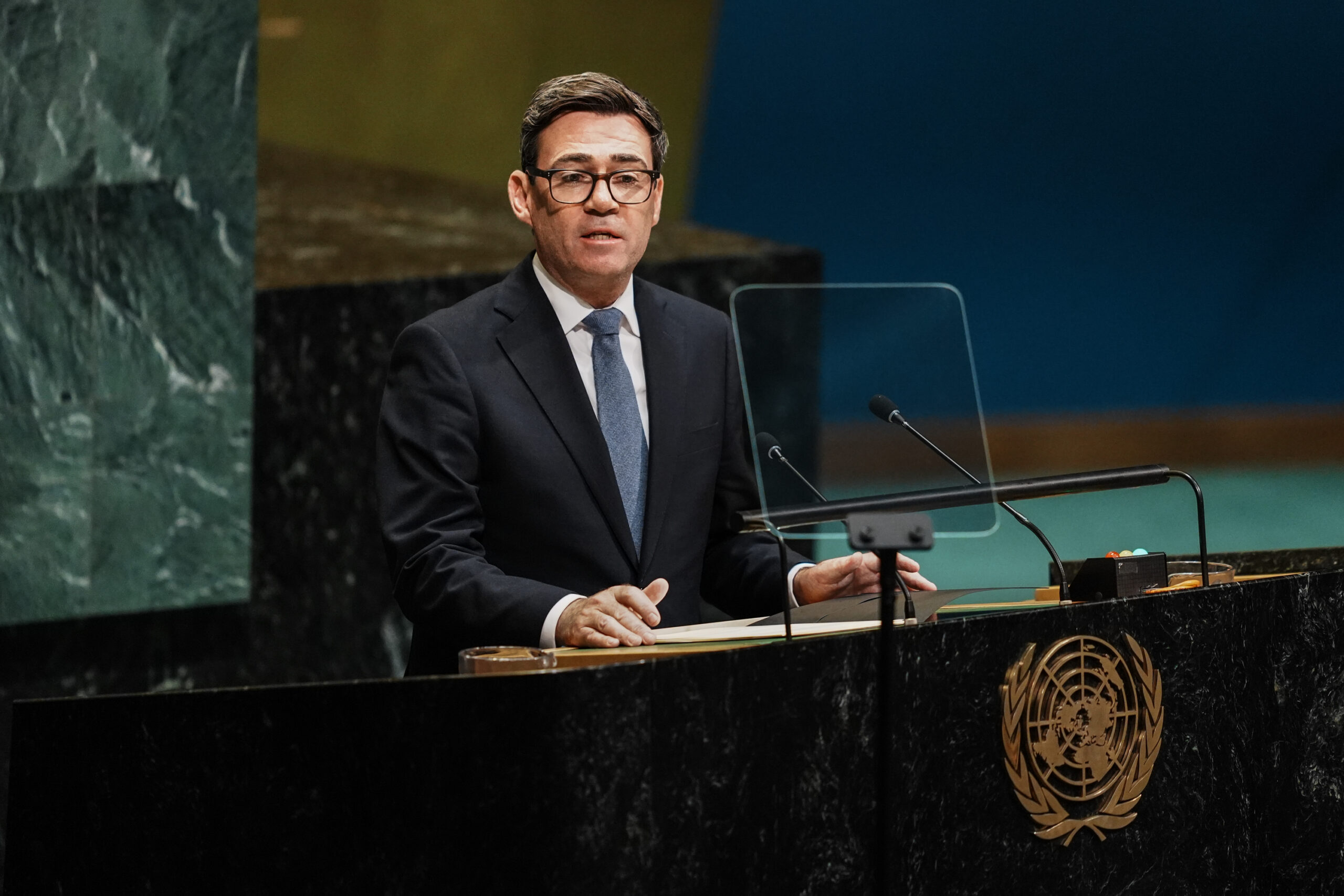
UK Prime Minister Condemns Russia’s ‘Insidious Campaign’ of Disinformation at UN
The Prime Minister, Keir Starmer, has condemned Russia for mounting an “insidious campaign” of misinformation and disinformation against the United Kingdom, and announced that he has ordered security chiefs to establish a new dedicated unit to defend British interests against foreign interference. Speaking at the UN General Assembly in New York on Tuesday, Starmer accused Moscow of subjecting the UK and its allies to an “industrial-scale assault” by hostile states, saying Russian agencies had deployed a vast arsenal of manipulative techniques designed to undermine public trust, destabilise democracy and distort political debate. He told delegates that the newly created National Centre for Information Defence would be tasked with combating online lies, manipulated media and deepfakes that threaten to damage British interests. The announcement marks a significant escalation in the UK’s response to what the Prime Minister described as a coordinated campaign of information warfare waged against the UK and its partners. Starmer said the UK had evidence that Russia sought to interfere in the 2019 general election, although he did not provide new detail in the speech. That accusation, originally made in 2020 by the then foreign secretary, Dominic Raab, centred on the amplification of an illicitly acquired NHS dossier on social media. The Prime Minister’s address framed information security as one of the defining challenges of the new decade, arguing that the threat will only intensify as artificial intelligence becomes more accessible, more sophisticated and more dangerous.
Elaborating on Russia’s tactics, Starmer said the Kremlin had used “every means at their disposal to spread lies and disinformation and prey on people’s fear.” He listed a litany of methods: bots and fake websites, falsified newspaper articles, and the forged branding of 28 British organisations, including universities and the BBC. Russian actors, he said, had also amplified far-right narratives, seeking to exploit social and political divisions in British society. The Prime Minister said the evidence showed that Russia had tried to interfere with the 2019 general election, when a fake NHS dossier was amplified by pro-Russian accounts in an attempt to stoke distrust in the UK’s health service and political institutions. He also accused Russia of seeking “to stoke tensions and unrest in the wake of horrific events,” saying the idea that anyone would use such tragedies to their advantage was “repulsive.” The Kremlin, he said, spends approximately £1.3 billion a year on manipulating information, a figure that underscores the scale and sophistication of the threat. The warning about deepfakes and artificial intelligence was particularly significant: if democratic states fail to act, the Prime Minister said, the problem will become far worse, as synthetic media becomes harder to detect and easier to weaponise. The new National Centre for Information Defence is intended to provide a coordinated response, bringing together government, intelligence agencies and technological expertise to expose falsehoods, protect institutions and build public resilience against foreign interference.
Starmer described the campaign as an “insidious campaign that reaches into people’s homes and twists what they feel about their own country and community – creating a narrative of decline, stoking division and sowing despair.” This was not merely a foreign policy issue, he argued; it was a direct attack on the bonds of trust that hold communities together. The Prime Minister acknowledged that some people are more vulnerable than others to disinformation. Those “struggling with the cost of living” and whose lives are not improving, as well as young people “not in employment, education or training,” are particularly exposed to manipulation by hostile actors. The speech suggested that disinformation thrives where economic insecurity and social alienation persist, and that the fight against it must therefore include a social as well as a technological response. Starmer said that the UK had “tiptoed around this for too long” and that over the past decade too much ground had been given to those who want to push “a negative, corrosive narrative about life in Britain, which bears no resemblance to reality.” He vowed: “Well, no more.” The Prime Minister said the country would face the new decade “in a different way – with our eyes wide open” and would be “much prouder in standing up for our values and the rule of law.” This part of the speech appeared to be aimed at domestic audiences too, pushing back against cynicism, defeatism and the idea that Britain’s best days are behind it.
The Prime Minister’s intervention came amid rising international concern about the role of disinformation in elections, democratic governance and public life. His announcement of the National Centre for Information Defence follows years of warnings from intelligence officials and civil servants about hostile state activity. The 2019 election interference allegation has been a persistent source of tension between London and Moscow. In 2020, Dominic Raab said Russia had sought to benefit from the leak of an NHS document, and the accusation has remained part of the UK government’s broader case against Russian aggression. Starmer’s latest speech goes further in explicitly naming the threat and in committing new resources to counter it. The creation of a dedicated centre is aimed at making the UK more resilient to “online lies and deepfakes damaging British interests” at a time when disinformation can spread around the world in seconds. It also signals that the UK intends to work more closely with allies on information defence, sharing intelligence, strategies and best practices. The Prime Minister’s words were notable for their bluntness. He did not frame Russian disinformation as a technical nuisance or an occasional problem. Instead, he described it as a fundamental challenge to the values of democracy, the rule of law and the very possibility of shared truth. By calling it an “industrial-scale assault,” he sought to convey the seriousness of the threat to international diplomacy and security.
Starmer’s remarks came after Donald Trump claimed that the British Prime Minister’s rhetoric towards Moscow had been “too tough” and that the British government “needs to be a little bit careful.” Trump’s comments, made around the time of the UN General Assembly, were dismissed by Downing Street. The Prime Minister’s official spokesperson said every UK prime minister had been consistent in the view that Russia’s threats were “egregious and unacceptable.” The spokesperson added: “The UK is united with our allies on the importance of defending ourselves, and Russia’s aggression will not deter us from supporting Ukraine.” This was a clear rebuke to Trump and a reaffirmation of the British government’s position. The exchange highlighted a growing fault line in Western politics over how to deal with Russia. While Starmer and other European leaders have taken a hard line, Trump has repeatedly questioned US support for Ukraine and made sympathetic statements towards Vladimir Putin. By accusing Starmer of excessive toughness, Trump appeared to align himself with the Kremlin’s narrative that the West is responsible for escalating the conflict. Downing Street’s response was designed to show that the UK’s resolve is not dependent on the whims of any individual leader, and that successive British governments have shared a unified approach to Russian aggression. It also sought to reassure European allies that the UK’s commitment to Ukraine remains unchanged, regardless of political noise in Washington.
The episode at the UN General Assembly underscored a broader battle: as Russia intensifies its information operations, Western governments are being forced to adapt to a new reality where the boundaries between war, politics and communication are increasingly blurred. The National Centre for Information Defence may become a template for other democracies seeking to protect themselves from foreign manipulation. Its mission is to counter the lies, manipulated media and deepfakes that have been used to undermine trust in institutions, elections and civil society. But the Prime Minister’s speech was also a call to collective action. He said the UK and its allies are united in defending themselves, and that Russia’s aggression will not deter Britain from supporting Ukraine. The promise to face the new decade “with our eyes wide open” represents a shift in tone. For years, Western governments were reluctant to publicly call out disinformation for fear of legitimising it or giving it oxygen. Now, leaders like Starmer are arguing that frankness, resilience and cooperation are necessary. The PM’s comments are likely to be welcomed by Ukraine, which has long warned that Russian disinformation is not only a European problem but a global one. With artificial intelligence lowering the cost of producing convincing fake content, the UK’s new centre will face a constant and evolving challenge. But the government’s message is clear: Britain will no longer tolerate hostile interference in its affairs, and it will defend its democracy, its institutions and its values with a new sense of confidence, pride and purpose.