


Burnham Slams ‘Repulsive and Insidious’ Russian Disinformation as PM Orders New Defence Unit
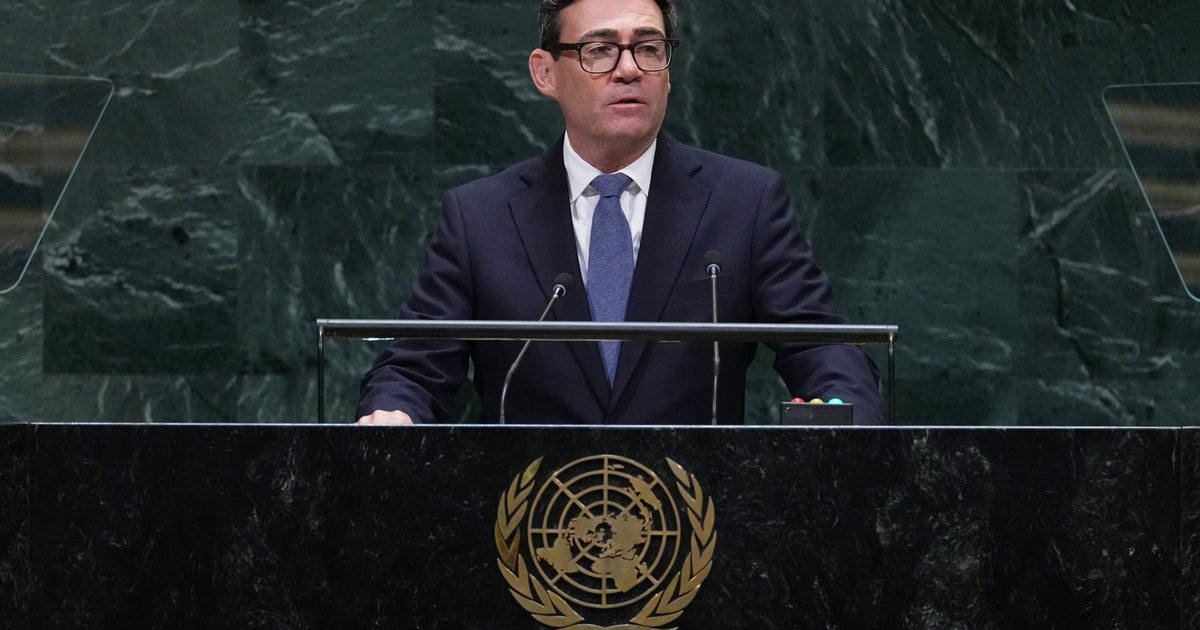
Greater Manchester mayor Andy Burnham has accused Vladimir Putin of waging a “repulsive and insidious” campaign to divide the United Kingdom through online misinformation, as the Prime Minister ordered security chiefs to set up a new unit to tackle the problem. The Prime Minister, speaking at the United Nations General Assembly in New York, said a National Centre for Information Defence would be established to tackle online lies, deepfakes and calculated disinformation campaigns that damage UK interests and undermine the fabric of democratic societies. Burnham, a senior Labour figure and former shadow home secretary, said the UK and its allies had been subjected to a coordinated, “industrial-scale assault” from hostile states, including Russia, which had deliberately sought to capitalise on public anxiety and exploit social divisions. He warned that the Kremlin’s tactics have made their way into every corner of digital life, from social media platforms to the comments sections of mainstream news websites, and that the danger is no longer limited to conventional propaganda. The attack, he argued, is designed to erode belief in democracy itself. In a series of strongly worded remarks, Burnham said: “Russian agencies have used every means at their disposal to spread lies and disinformation and prey on people’s fear. They’ve used bots and fake websites. Falsified newspaper articles. Forged the branding of 28 British organisations – including universities and the BBC. They’ve amplified far-right narratives. And we have evidence that they tried to interfere with the 2019 general election.” He added: “The idea that anyone would try to use such things to their advantage is just repulsive – but it is what they do.”
Far from being a random or opportunistic series of actions, Burnham described the Russian operation as a systematic attempt to turn British citizens against one another and to destabilise the social contract from within. He accused Moscow of running bot networks capable of spreading falsehoods at scale; of creating fake websites that imitate authentic news sources; of fabricating newspaper articles that are then circulated as genuine; and even of stealing the identities of 28 established British institutions, including universities and the BBC. By deploying these forged identities, the Kremlin is able to launder propaganda through trusted names, making disinformation all the more difficult for ordinary citizens to identify. Burnham also referred to the amplification of far-right narratives, a tactic that has been observed across Western democracies, where Russian-linked accounts and websites amplify extreme voices on both sides of an issue in order to inflame division. He pointed to evidence that Russia tried to interfere in the 2019 UK general election, when the country was already deeply polarised over Brexit. The precise nature of that attempted interference remains a matter of public record, but officials have said it involved a digital campaign designed to influence the outcome. In addition to electoral interference, Burnham accused the Kremlin of attempting to use tragic and traumatic moments as opportunities for exploitation. “We also know that they have tried to stoke tensions and unrest in the wake of horrific events,” he said. That accusation, while not linked to any single incident in his remarks, echoes repeated findings by researchers that Russian state-backed networks have sought to exploit mass shootings, terror attacks and racial protests in order to deepen anger and distrust. The wider goal, Burnham suggested, is to create a constant background hum of negativity and anxiety that makes people believe the country is collapsing, when in fact the majority of people continue to live peaceful and largely contented lives.
The Prime Minister told the UN General Assembly that Russia spends an estimated £1.3 billion a year on manipulating information, a figure that dwarfs many countries’ entire media budgets and demonstrates the seriousness with which Moscow treats the battle for public opinion. He framed the new National Centre for Information Defence as an urgent response to a threat that is already here and will only become more dangerous unless it is tackled urgently. “We’re talking about an insidious campaign that reaches into people’s homes and twists what they feel about their own country and community – creating a narrative of decline, stoking division and sowing despair,” he said. The centre, he explained, will be tasked not only with identifying and exposing disinformation but with defending against deepfakes – synthetic videos and audio recordings generated by artificial intelligence that can place words into the mouths of people who never said them. In recent years, technological improvements have made deepfakes increasingly realistic and cheap to produce, and security experts fear that a single convincing fake video of a political leader could cause chaos in the middle of an election campaign. “On top of that, we have seen cyber-attacks on our companies and institutions. And we know that AI will multiply the threat,” the PM warned. This combination of disinformation and cyber operations has become a hallmark of modern Russian strategy, blurring the line between war and peace. The PM’s decision to make the announcement at the UN General Assembly was symbolic, but it also reflected a growing recognition that the threat crosses borders and requires international cooperation. Disinformation campaigns cannot be defeated by any single government acting alone. They rely on global platforms, cross-border financial networks and coordinated action by multiple actors. The new centre is intended to work with allies and tech companies to identify malicious state actors and disrupt their operations before they reach a wide audience. It will also, according to the PM, help rebuild a measure of confidence in a public information space that has been degraded by years of manipulation.
Burnham said the impact of this information war is not evenly spread across the population. He singled out young people not in education, employment or training – known as NEETs – as being particularly exposed to Russia’s online misinformation. These are often individuals who spend large amounts of time online, who may feel abandoned by the state and who are more likely to encounter algorithmic echo chambers filled with grievances and conspiracy theories. “Young people not in education, employment or training are much more vulnerable,” he said. For Burnham, the response must therefore be about more than just fact-checking or takedowns. He argued that Britain has spent too long being defensive and apologetic, allowing a false and corrosive narrative about life in the country to take root in the public mind. “We have tiptoed around this for too long. Over the last decade we have given too much ground to those who want to run a negative, corrosive narrative about life in Britain, which bears no resemblance to reality. Well, no more,” he said. The Mayor’s language suggests that he sees the battle against disinformation as inseparable from a broader struggle for national pride and cohesion. He called for a new approach to the coming decade, one in which the country faces outward with “our eyes wide open”, refuses to be cowed by those who seek to weaken it from within, and takes a much prouder stance in defence of British values and the rule of law. That is a significant shift in tone from previous years, when politicians sometimes seemed reluctant to confront the problem for fear of giving it oxygen. Burnham’s message is that the period of hesitancy is over. The threats posed by Russian disinformation, he argued, are not simply about foreign policy or cyber-security; they are about the psychological climate of the nation and the confidence of its citizens. If the Kremlin can make people believe that the country is irredeemably divided and corrupt, then the project of Western democracy has effectively been defeated without the need for tanks or missiles. The Mayor’s comments are therefore a direct challenge to his fellow politicians and to the media to stop repeating negative narratives that play into the Kremlin’s hands, and instead to make a positive case for what Britain is and what it can become.
The Prime Minister’s announcement has been met with a mixture of agreement and caution among national security and democracy experts. There is broad support for the idea of a special unit devoted to fighting state-sponsored disinformation, especially one with the explicit remit to tackle deepfakes. But there are also warnings that the Government must be careful not to mistake online dissent or critical journalism for foreign interference. The new National Centre for Information Defence is expected to draw on experts from the security services, the Civil Service, the technology sector and academia. Its exact location, funding and powers have not yet been fully disclosed, but officials say it will operate alongside existing structures such as the Government’s rapid response unit, which already works to rebut disinformation against the UK. The centre will form part of a broader architecture intended to protect elections, public institutions and national infrastructure. It will also be responsible for developing a more sophisticated understanding of how artificial intelligence can be used to produce fake news, manipulate public opinion and target vulnerable groups. The mention of deepfakes is particularly important. In the past, a video purporting to show a leading politician saying something shocking could be dismissed as a cheap fake within hours. Today, generative AI has advanced to the point where realistic videos can be created almost instantly and are often indistinguishable from genuine footage. The consequences of such material being released at the wrong moment in an election campaign are almost too easy to imagine. Beyond technical measures, the success of the centre will depend on its ability to expose the Kremlin’s methods and to build resilience among ordinary members of the public. Several researchers have argued that the most effective response to disinformation is not to try to delete every lie, which is impossible, but to teach people how to spot it and to reduce the societal grievances on which it feeds. The UK’s decision to announce the centre at the UN was also a signal to allies that they must co-operate more closely in responding to what is now widely regarded as a shared existential threat to liberal democracy. No single nation can control the internet, but a coalition of willing governments and technology platforms may at least be able to raise the costs for those who would abuse it.
The creation of the National Centre for Information Defence is likely to be seen in years to come as a major milestone in Britain’s response to the information war, but it would be a mistake to assume that it will solve the problem overnight. The scale of the challenge is enormous. State-sponsored disinformation is woven into the fabric of the open internet, and the same tools that make life easier for ordinary people also make it easier for hostile powers to exploit ignorance, fear and prejudice. There are also difficult questions about how far any government should go in monitoring or removing online content. A line must be drawn somewhere between protecting the public from foreign manipulation and preserving the freedom of speech that is fundamental to the democracy being defended. Burnham does not pretend to have easy answers to those dilemmas, but he is insistent that the balance must shift decisively towards protecting the public sphere. “We have tiptoed around this for too long,” he said, repeating his central argument that the country has allowed a false, negative and ultimately dangerous narrative to go largely unchallenged. His call for the country to face the new decade with “our eyes wide open” is both a warning and a rallying cry. It is a warning that the threat is not hypothetical and will not disappear if it is ignored. It is a rallying cry for a more confident, united and truthful public culture, one capable of resisting the psychological operations waged against it. The Kremlin, he suggested, will keep adapting its methods, using new technology and exploiting every social or political fault line it can find. The West, and Britain in particular, must therefore be equally adaptive. The Prime Minister has now committed the UK to a more organised and transparent defence of its information space. Burnham’s intervention is a reminder that the institutions of the state cannot do the job alone. Every citizen, every journalist and every political leader has a role to play in refusing to spread fear, in questioning sources and in defending the values that disinformation campaigns are designed to destroy. Whether the new centre succeeds will depend, ultimately, not only on how many fake websites are closed down or how many bots are suspended, but on whether the country as a whole is ready to stand up for what is true.