


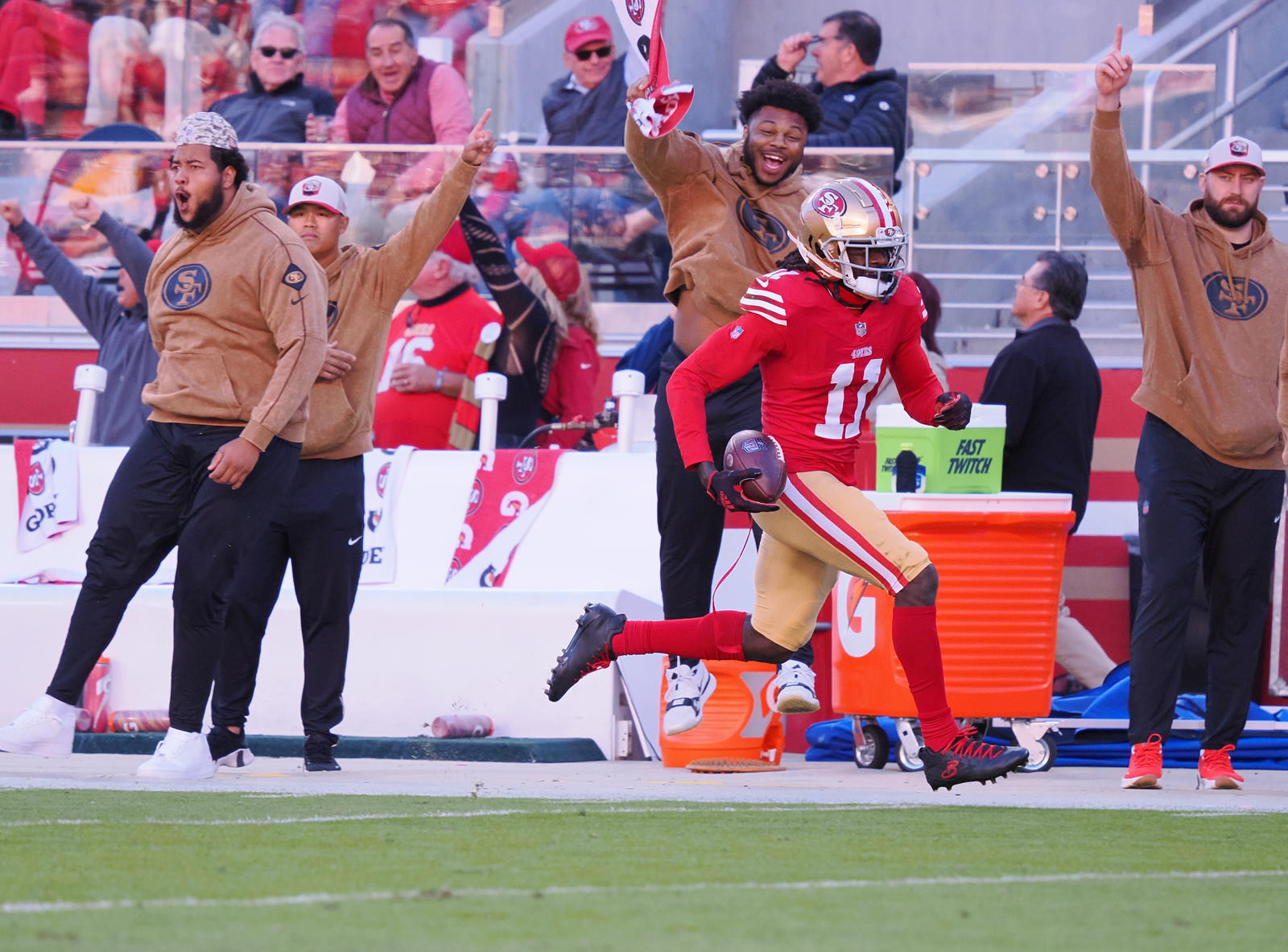
The offseason drama surrounding San Francisco 49ers wide receiver Brandon Aiyuk has evolved from a routine contract dispute into one of the most volatile storylines of the NFL summer. What began as standard negotiations has morphed into a series of public confrontations, with Aiyuk utilizing social media and direct commentary to apply maximum pressure on the 49ers’ front office. From openly questioning the organization’s commitment to him to demanding his own release, Aiyuk has effectively turned his contract stalemate into a public spectacle that has dominated the headlines during the league’s slowest news period.
The tactical nature of Aiyuk’s outbursts suggests a calculated effort to force the hand of general manager John Lynch and head coach Kyle Shanahan. By publicly declaring that he would sign with the Washington Commanders “tomorrow” if granted his release, Aiyuk has signaled that his patience with the San Francisco front office has completely eroded. This performative demand is likely intended to compress the timeline of negotiations, forcing the Niners to either put a lucrative long-term deal on the table or move on entirely before the start of training camp.
Aiyuk’s social media activity has further fueled speculation, as he has not shied away from associating himself with other franchises, most notably the Commanders. By sharing photos of himself in Washington-branded apparel, Aiyuk is sending a clear message that he is no longer invested in the status quo in the Bay Area. While some may view these actions as mere posturing, the visual optics create a tangible distraction that the 49ers must now manage, even as they publicly maintain that they remain committed to retaining one of their most productive offensive weapons.
The effectiveness of this pressure campaign, however, remains a subject of intense debate throughout the league. To date, there is no smoking gun indicating that Aiyuk’s outbursts have actually accelerated the internal decision-making process within the 49ers’ headquarters. The organization is well-versed in handling contract-year stars, and they have historically resisted the urge to be bullied into submission by public leverage plays. Yet, the sheer volume of discourse—which has drawn commentary from current and former players alike—has created a pressure cooker environment that makes a quiet resolution increasingly difficult to achieve.
Meanwhile, the ripples of this saga are undoubtedly being felt in the nation’s capital, where the Washington Commanders find themselves positioned as the primary suitor in the event of a trade. There is mounting evidence that Aiyuk’s overtures may be having a genuine impact on Washington’s internal thinking. Whether the Commanders are actively orchestrating a path to acquire him or simply monitoring the deteriorating relationship between the receiver and his current club, the gravity of Aiyuk’s interest is clearly being factored into their executive strategy.
Ultimately, the standoff represents a pivotal moment for both the player and the two franchises involved. As the season approaches, the 49ers must decide if the distraction of an unhappy star is worth the elite production he brings to the field, while Aiyuk must determine just how much bridge-burning he is willing to do to secure his payday. Whether this high-stakes game of chicken results in a massive extension in San Francisco or a blockbuster trade to Washington, the outcome will likely serve as a blueprint for how modern NFL superstars exercise agency in their pursuit of league-leading salaries.