


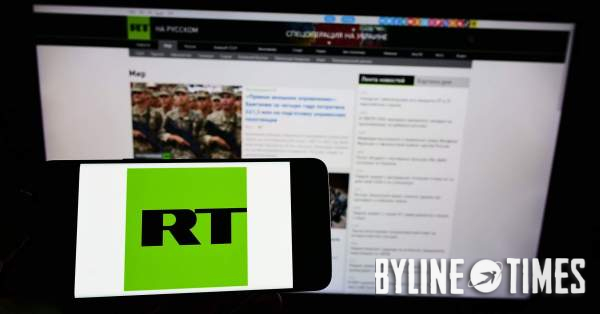
Russian Operatives Charged in US for Covert Propaganda Campaign
Two Russian nationals, Kostiantyn Kalashnikov and Elena Afanasyeva, employed by the Russian state-backed media outlet RT, have been indicted by the US Department of Justice on charges of conspiracy to commit money laundering and conspiracy to violate the Foreign Agents Registration Act (FARA). The indictment alleges that Kalashnikov and Afanasyeva funneled nearly $10 million to a US-based media company, Tenet Media, to disseminate pro-Russia propaganda and disinformation across social media platforms. The funds, masked as payments for electronics, were routed through shell companies in various countries, including Turkey, the UAE, and Mauritius, to obscure their origin.
Tenet Media and its Network of Influencers
Tenet Media, founded in 2022 by right-wing social media personalities Lauren Chen and Liam Donovan, boasts a significant online presence, particularly on YouTube, with over 315,000 followers. The company employed a network of influential right-wing commentators, including Tim Pool, Benny Johnson, Dave Rubin, and Lauren Southern, who collectively command millions of followers on platforms like X (formerly Twitter). These influencers produced video content for Tenet Media, which was then distributed across various social media channels. The indictment alleges that the vast majority of Tenet Media’s funding, nearly 90%, originated from RT via the elaborate money laundering scheme orchestrated by the Russian operatives.
Deception and Editorial Influence
The indictment reveals that Tenet Media’s founders were aware of Kalashnikov and Afanasyeva’s Russian affiliations but concealed this information from their content creators. They fabricated a fictitious Western European businessman, "Eduard Grigoriann," as the source of funding. Furthermore, Afanasyeva, using aliases, exerted significant editorial influence over Tenet Media’s content, directing the posting of specific narratives and even suggesting topics, some of which aligned with Russian propaganda objectives. This included pushing content blaming Ukraine for a terrorist attack despite ISIS claiming responsibility, and promoting Tucker Carlson’s visit to a Russian grocery store.
Kremlin’s Guerrilla Campaign and Tenet Media’s Narrative Alignment
A separate Justice Department indictment highlights a broader Kremlin-backed "guerrilla campaign" aimed at exploiting existing social and political divisions within the United States. This campaign focuses on amplifying anxieties surrounding inflation, crime, immigration, and US foreign policy, particularly aid to Ukraine. The content produced by Tenet Media’s influencers often echoed these narratives, with several commentators vehemently criticizing US support for Ukraine and downplaying Russia’s role in the conflict. Tim Pool, for example, baselessly accused Ukraine of blowing up the Nord Stream pipeline and suggested the US should apologize to Russia. Benny Johnson consistently advocated against aid to Ukraine while emphasizing domestic issues.
Shifting Tactics in Russian Disinformation Operations
The Tenet Media case underscores a shift in Russian disinformation tactics. Instead of relying solely on bot and troll accounts with limited reach, the Russian government is now leveraging established social media influencers with large followings, also known as "superspreader accounts," to disseminate their narratives and reach wider audiences. This strategy mirrors the observed pattern in the spread of COVID-19 vaccine disinformation, where a small number of accounts were responsible for the majority of anti-vaccine content. Similar trends have been documented in the dissemination of geopolitical content. The indictment, by highlighting RT’s involvement, suggests that this funding scheme may just be one component of a broader Russian influence operation within the United States.
Implications and Responses
The Justice Department’s actions against the Russian operatives and their alleged manipulation of US media underscore the ongoing threat of foreign interference in domestic affairs. The targeting of established influencers with substantial followings raises concerns about the vulnerability of online information ecosystems to covert propaganda campaigns. While most of the Tenet Media influencers claim to have been unaware of the Russian funding, the case highlights the need for greater due diligence and transparency in the online media landscape. The Department of Justice has vowed to continue its efforts to combat foreign attempts to manipulate American public opinion and sow discord. The investigation into RT’s activities and potential further covert projects is ongoing.