


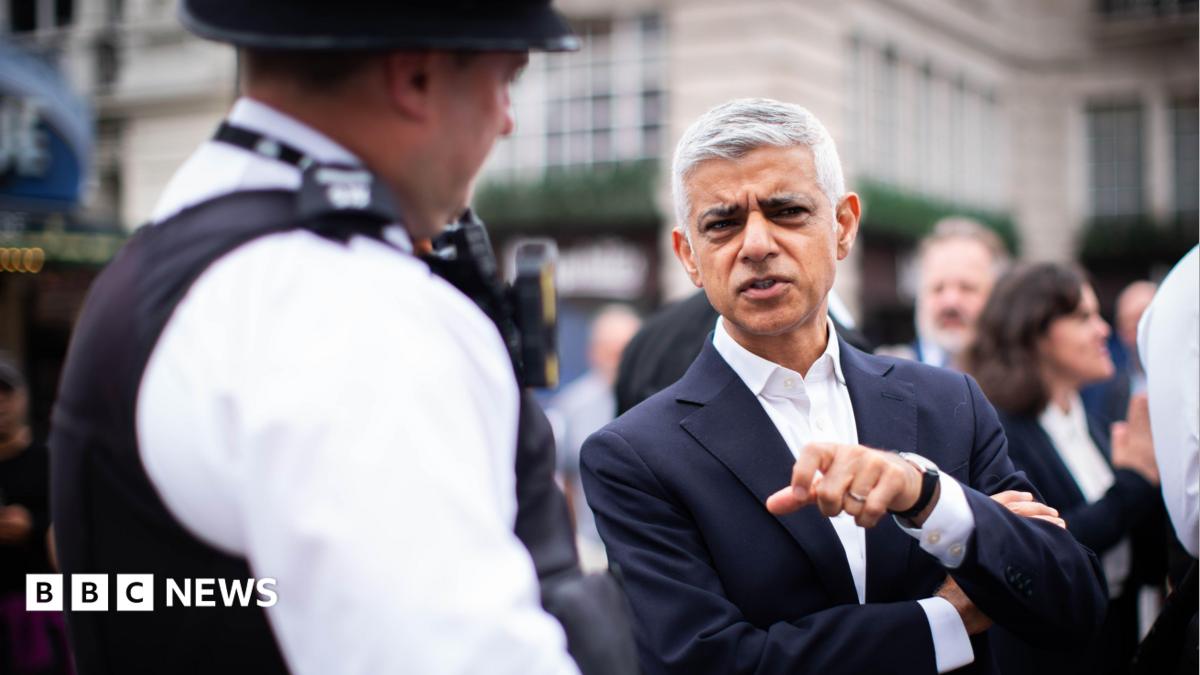
The Mayor of London, Sir Sadiq Khan, has said the capital is being subjected to a “relentless and unprecedented attack of lies and hatred” on social media, after new research from King’s College London laid bare the scale of online disinformation targeting the city. In remarks released by City Hall, Sir Sadiq described the research as “a sad indictment of the volume of misinformation and organised disinformation being peddled against our capital.” He argued that for too long, “foreign state actors, politicians, bots and others” had been “regularly talking down London,” taking advantage of what he called the “outrage economy” which “allows people to profit from the poison, algorithms and rage-baiting spread online.” The Mayor’s intervention is the latest stage in a long-running battle between City Hall and those who believe London’s reputation is being unfairly tarnished. The Greater London Authority (GLA) had previously raised concerns about the way the capital is portrayed online, and in March it published a report which found that social media users were being targeted by disinformation about London. That report described a significant increase in online activity suggesting that London is a dangerous city in decline, with such content rising by between 150% and 200% between March 2024 and March 2026. Even more striking was the growth in migration-related narratives referencing London, which increased by more than 350% over the same period. For the Mayor and his team, these figures point to something more sinister than ordinary grumbling. They point to a co-ordinated effort, involving state actors and automated accounts, to reshape global perceptions of one of the world’s most visited and economically important cities. The new research from King’s College London, he said, only confirmed the scale of the problem. The Mayor did not seek to play down the effect these narratives can have. He said that the constant repetition of false claims about safety, migration and decline risked becoming a self-fulfilling prophecy, deterring tourists, investors and talented workers from coming to London, and making Londoners themselves feel less secure than the official statistics suggest.
The GLA report published in March provided the statistical foundation for the Mayor’s latest comments. It found that social media users were being targeted by a stream of disinformation about the capital, much of it designed to portray London as a city in terminal decline. The report measured a rise of between 150% and 200% in the volume of such material between March 2024 and March 2026. This was not a small or marginal uptick but a dramatic acceleration in negative content, happening at a time when London was still recovering from the economic consequences of the pandemic and the wider cost-of-living crisis. More striking still was the growth in migration-related narratives referencing London, which rose by more than 350% over the same period. According to the report, this was not simply a matter of robust public debate about immigration policy. Rather, it involved false and misleading claims about migration being used as a weapon to stoke division and anxiety. The report also pointed to the role of social media platforms in amplifying such content. The “outrage economy” did not arise by accident; it was built on algorithms that reward extreme content and punish nuance. A claim that London is unsafe is far more likely to be shared and recommended than a measured account of falling crime rates. In that fertile environment, even a small number of coordinated accounts can generate a disproportionate amount of negative coverage. The publication of the report coincided with City Hall’s decision to act. In June, Sir Sadiq launched a £7m campaign to showcase London to the world and to tackle online disinformation. The campaign was designed to counter the negative narratives by projecting a positive image of the capital’s culture, diversity, economic dynamism and safety. It also sought to provide a reality check to the online dystopia that had become a familiar feature of social media timelines. Yet the campaign immediately drew criticism from the Mayor’s political opponents, who saw it as an expensive exercise in self-promotion rather than a serious answer to the problems the capital faces.
The most forceful criticism came from Susan Hall, the leader of the City Hall Tories, who said that the Mayor “should spend more time trying to fix things as opposed to saying, ‘La la la la la’, I’m not listening, everything’s fine.’” Her comments reflected a broader suspicion among Conservative politicians and some Londoners that City Hall was using the language of disinformation to dismiss legitimate concerns about crime, housing and migration. They argue that if residents feel unsafe, or believe that migration is putting pressure on public services, they are entitled to express those views without being accused of spreading foreign propaganda. The Mayor has rejected that characterisation. He has insisted that acknowledging the attack on the capital’s reputation is not the same as ignoring its problems. In his response to the King’s College research, he said that London had been subjected to a “relentless and unprecedented attack of lies and hatred” on social media. He went on to say that “foreign state actors, politicians, bots and others” had been “regularly talking down London,” taking advantage of the “outrage economy” and the “algorithms and rage-baiting” that dominate online life. The strength of the language was deliberate. The Mayor wants to frame the issue as no less than a fight for the truth about London. If negative narratives are allowed to spread unchallenged, he argues, they will eventually damage the real economy, deterring tourism and investment and undermining the city’s global standing. City Hall also believes that the problem is not simply “bad posts” but organised behaviour. The use of the word “organised” is important: it implies a degree of co-ordination, whether by hostile states, political operatives or profit-seeking content farms. In the Mayor’s view, the “poison” of disinformation is amplified by an outrage economy in which everyone from foreign actors to domestic politicians can profit from dividing the public. That, he said, is what London is up against.
The King’s College research, which the Mayor cited as proof of a worsening problem, was described by Sir Sadiq as a “sad indictment of the volume of misinformation and organised disinformation being peddled against our capital.” He said that for too long, foreign state actors, politicians, bots and others had been “regularly talking down London,” taking advantage of the “outrage economy” which allows people to “profit from the poison, algorithms and rage-baiting spread online.” The Mayor’s remarks are intended to do more than simply describe the problem. They are also an attempt to challenge the way social media companies design and run their platforms. Critics of the tech giants have long argued that recommendation algorithms are not neutral. They are built to maximise engagement, and the most effective way to maximise engagement is to feed users content that makes them angry, fearful or outraged. A claim that London is being destroyed by crime or uncontrolled migration is far more likely to generate comments, shares and likes than a carefully worded statement of official statistics. The result is a structural bias against the truth. The Mayor’s use of the phrase “rage-baiting” points directly to this phenomenon. Rage-baiting is a technique used by both human influencers and automated bots to provoke emotional reactions, usually by presenting a deliberately extreme version of events. It does not matter to the poster whether the claim is true or false; what matters is the reaction it generates. In this way, the “outrage economy” creates a perverse incentive to make London look worse than it is. City Hall has signalled that it wants the platforms to take greater responsibility for the content they amplify, and the Mayor’s decision to highlight the King’s College research is part of a wider effort to put the issue on the public agenda. Whether the platforms will respond remains to be seen. But the Mayor has made clear that he intends to name the problem and hold those responsible to account.
The Mayor sought to place his concern about online disinformation alongside a record on law and order that he said had produced measurable results. He pointed to investment in the Metropolitan Police and in the Violence Reduction Unit, the City Hall body established to address the underlying causes of violence. According to the Mayor, this investment has helped drive a 14% fall in neighbourhood crime. The statistic is central to his argument that the picture of London presented online is out of step with reality. If neighbourhood crime is falling, the Mayor argues, the constant portrayal of the capital as a dangerous city in decline is not just misleading; it is actively harmful. He accepted, however, that the progress was not sufficient. “But I’m clear that one crime is one too many,” he said, “and am determined to build on the progress we have achieved by being tough on crime.” He added that this approach would be backed by “record investment in front-line policing.” The Mayor’s remarks appeared designed to rebut the accusation that he is more concerned with public relations than public safety. By pairing the research on disinformation with a reiteration of his policing priorities, he sought to present himself as someone who is tackling both the reality of crime and the false narratives that exaggerate it. He was careful not to dismiss the experiences of victims. Instead, he tried to draw a distinction between the measured, statistical reality of neighbourhood crime and the darker, more alarming world of social media, where a single incident can be transformed into a trend, and a trend can be transformed into an existential story about the city. The “record investment” phrase was clearly aimed at reassuring voters that the Mayor is not complacent. It also served as a direct challenge to his critics on the right, who have repeatedly claimed that he is soft on crime. The Mayor’s message was: the facts are on my side, but I am not resting on them.
The broader implications of the row extend well beyond the Mayor’s immediate political battles. At stake is the reputation of one of the world’s most significant cities and the ability of democratic governments to respond to an information environment transformed by social media. The Mayor’s decision to highlight the King’s College research is an escalation in his campaign, but it also carries political risks. By attributing critical online content to bots, foreign actors and the “outrage economy,” he lays himself open to the accusation that he is seeking to delegitimise his opponents and dismiss genuine concerns. His critics will continue to argue that the most effective answer to negative narratives is not research or publicity, but tangible improvements in the daily lives of Londoners. The Mayor’s allies counter that both are necessary. They say that telling the truth about London’s strengths is not the same as ignoring its problems. They point to the fall in neighbourhood crime, the investment in front-line policing and the capital’s continued ability to attract visitors and investment as evidence that the “declinist” narrative is false. They also argue that the scale of the problem, as measured by the GLA report and the King’s College research, means that leaving the field to the disinformation machine would be a dereliction of duty. The debate over London’s online reputation is therefore part of a wider struggle about how contemporary democracies can respond to misinformation. The Mayor’s approach—commission research, launch campaigns, name the actors—is one model. Whether it works is yet to be determined. What is clear is that London has become a test case for the politics of perception in the digital age. If the Mayor is right, other cities will follow his example. If he is wrong, his political opponents will have won an argument that goes to the heart of public trust. For now, the battle over the capital’s image shows no signs of fading.