







President Zelenskyy Dismisses Head of Ukraine’s Disinformation Center, Andrii Kovalenko, in Surprise Leadership Change
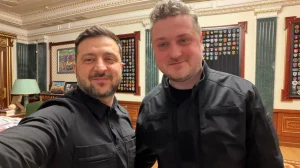
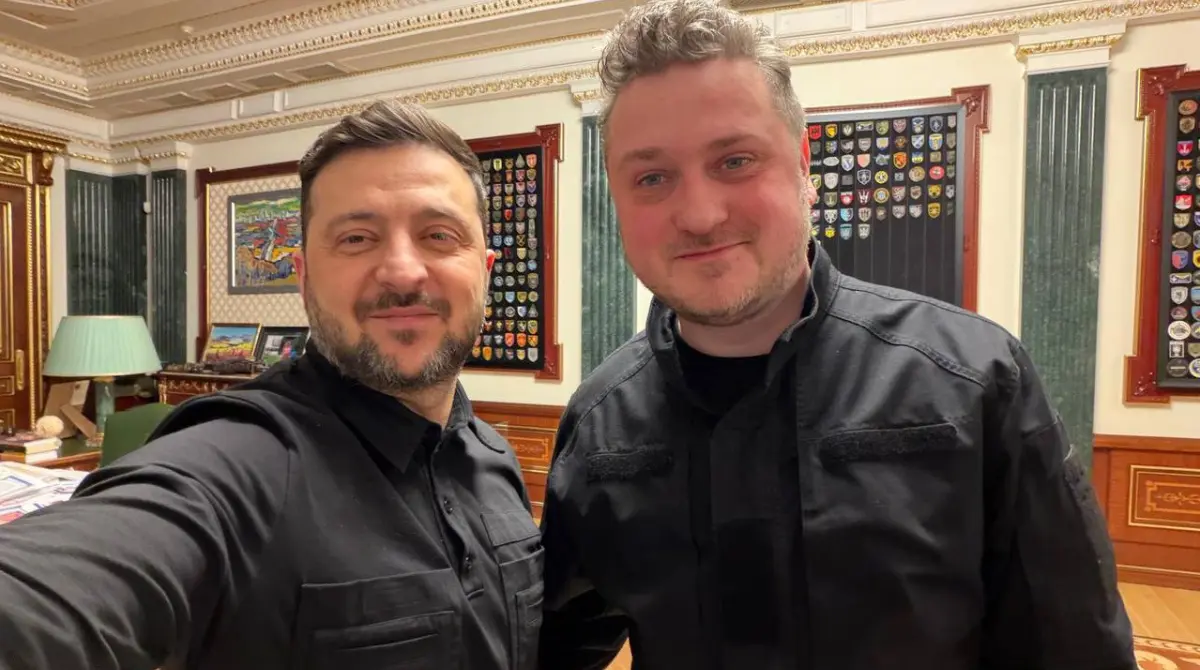
President Volodymyr Zelenskyy has dismissed Andrii Kovalenko from his position as head of the Center for Countering Disinformation, a key body operating under Ukraine’s National Security and Defense Council. The decision was formalized in Presidential Decree No. 971, dated September 28, according to Ukrainian News Agency. The decree itself was brief and gave no explicit reason for the removal, simply stating: “To dismiss Andrii Valeriyovych Kovalenko from the position of head of the Center for Countering Disinformation.” The announcement marks a major shift in the leadership of an institution that has become central to Ukraine’s fight against hostile information campaigns, particularly those waged by Russia during its ongoing war of aggression. Kovalenko responded quickly on his Telegram channel, thanking President Zelenskyy for accepting his resignation, which suggests that the decision was not a sudden or hostile one from his perspective. He also indicated that he would not be leaving the broader national security field, saying that he remains involved in national security processes and in the “cognitive confrontation” with Russia. Those words were widely interpreted as a signal that Kovalenko sees the fight against disinformation as a long-term strategic challenge that continues beyond any individual appointment. The timing of the decree and the lack of an official explanation have naturally generated speculation, but such personnel changes are not uncommon in Ukraine during wartime, where the government regularly adjusts its leadership structures to meet evolving threats on the battlefield and in the information space.
Kovalenko had only been appointed to the top role in January 2024, having previously served as the Center’s deputy head, where he was already an established figure in Ukraine’s security and communications community. Before entering the Center, he worked as an information technology expert and public relations consultant, giving him a rare combination of technical skills and media expertise that seemed well suited for the challenges of modern disinformation warfare. His professional background was built on the understanding that information operations are not only about detecting falsehoods but also about understanding the technological platforms through which they spread, from social media networks to encrypted messaging applications. During his time as deputy head and then as head of the Center, Kovalenko was involved in numerous efforts to expose Russian propaganda, document coordinated influence campaigns, and strengthen Ukrainian society’s resilience against information manipulation. His academic and professional credentials, though not widely known to the general public, were respected among specialists in national security and strategic communications. The decision to place him at the helm in January 2024 was seen as an effort to maintain continuity and institutional knowledge while also bringing a steady hand to a body that had become increasingly important in the context of Russia’s full-scale invasion. His relatively short tenure as head, however, underscores the intense pressure and high expectations placed on those who lead Ukraine’s information defense institutions. The fact that he has now left the position after less than a year suggests that even experienced officials can see their roles change rapidly as Ukraine continues to adapt to a war that is fought as much with words and images as with weapons and artillery.
The Center for Countering Disinformation was established in March 2021, when President Zelenskyy enacted a decision of the National Security and Defense Council to create a dedicated body to counter disinformation at the state level. The Center was born out of the recognition that Russia had long used false narratives, conspiracy theories, and coordinated information operations as instruments of hybrid warfare against Ukraine. Its creation was a direct response to the growing threat posed by disinformation to national security, democratic institutions, and social unity. The Center’s mandate includes monitoring the information space, identifying and analyzing false narratives, coordinating efforts across government agencies, and developing strategies to counter foreign propaganda. It also works on media literacy and public awareness, recognizing that the most effective way to counter disinformation is to make the public more resistant to manipulation in the first place. Since the beginning of the full-scale Russian invasion in February 2022, the Center’s work has taken on even greater urgency. Russian disinformation has targeted not only Ukrainian citizens but also international audiences, seeking to undermine Western support for Ukraine, sow confusion about the causes of the war, and weaken trust in Ukrainian leadership. The Center has been on the front lines of these battles, working to expose Russian falsehoods and provide accurate information to the public. Its position under the National Security and Defense Council gives it a high-level mandate to coordinate with other state institutions, including the military, the intelligence services, and the foreign ministry. The loss of its leader, even one who was only in the position for a short time, is therefore a significant development in Ukraine’s ongoing efforts to defend its information space.
Kovalenko’s tenure as head of the Center was marked by the enormous challenge of confronting Russian disinformation during a period of intense warfare. Under his leadership, the Center continued its critical work of exposing information operations, debunking false claims, and supporting the broader national security strategy. The decree announcing his dismissal did not provide any details about the reasons behind the decision, which is not unusual in Ukrainian presidential decrees but leaves considerable room for interpretation. Kovalenko’s own statement, however, suggests that the move was not an abrupt or forced departure in the traditional sense. By thanking Zelenskyy for accepting his resignation, he indicated that the decision was at least partly mutual and that he was not being publicly disgraced. His additional comment about remaining involved in national security processes and in the cognitive confrontation with Russia implies that he may not be leaving government service entirely. It is possible that he will be appointed to another position within the security sector, where his expertise in information technology, public relations, and counter-disinformation can still be utilized. Alternatively, the leadership change could be part of a broader reshuffling of personnel in Ukrainian state institutions, as the government seeks to bring new energy and perspectives into key roles. In times of war, leadership changes can be difficult for institutions, but they can also provide opportunities for renewal and the adoption of new strategies. The Center for Countering Disinformation will need to move forward with or without Kovalenko, and the choice of his successor will be watched closely by those who understand the importance of the information front.
The dismissal of Andrii Kovalenko has naturally attracted attention among observers of Ukrainian politics and security affairs, although official reactions have been limited. In a country at war, personnel changes in security institutions are always significant because they can signal shifts in policy, strategy, or internal political dynamics. The Center for Countering Disinformation is a relatively young institution, and its head does not have the same public profile as a minister or a senior military commander. Nevertheless, the role is crucial, because information operations can be just as damaging as missile strikes when they are designed to weaken morale, sow panic, undermine trust in leadership, or divide Ukraine from its international allies. Kovalenko’s departure raises important questions about the future direction of Ukraine’s counter-disinformation efforts. Will the next leader of the Center take a more aggressive or more cooperative approach? Will the institution work more closely with foreign partners, or will it focus more on domestic media literacy and public education? These are questions that cannot yet be answered, as no successor has been named and the government has not announced any immediate plans for the Center’s leadership. In the absence of official explanations, many observers have looked to Kovalenko’s own words for clues. His reference to the “cognitive confrontation” with Russia is particularly telling. It suggests a belief that the struggle against disinformation is not merely about removing false content or debunking lies, but about addressing the underlying ways in which information is produced, consumed, and understood. It is a reminder that Russia’s war against Ukraine is not only a military conflict but also a battle for hearts and minds, waged across multiple platforms, in multiple languages, and for the attention of global audiences.
As Ukraine continues to defend itself against Russian aggression, the importance of effective counter-disinformation institutions cannot be overstated. The Center for Countering Disinformation is tasked with protecting the country from a constant stream of falsehoods and manipulations designed to weaken national unity, undermine confidence in the government, and erode international support for Ukraine’s cause. The departure of Andrii Kovalenko, who led the Center for less than a year, highlights the high turnover and immense pressure that can affect even the most senior officials in wartime. It also underscores the difficulty of finding and retaining qualified leaders in a field where the threats are constantly evolving and where the margin for error is very small. Kovalenko’s pledge to remain involved in national security processes suggests that his knowledge and experience will not be lost entirely, and it is possible that he will reappear in another role in the near future. For now, however, the Center must move forward without its leader. The Ukrainian government has not announced a replacement, and it is unclear when one will be named. In the meantime, the Center’s staff will continue their work, relying on the institutional knowledge and operational capabilities that have been built up over the past several years. The change in leadership is a reminder that in times of war, no institution can afford to stand still. People may come and go, but the mission remains the same: to ensure that the truth reaches the public, that Russian disinformation is exposed for what it is, and that Ukraine continues to defend itself on every front. Andrii Kovalenko may no longer be the head of the Center for Countering Disinformation, but the fight against disinformation will continue. The next chapter in Ukraine’s information war is yet to be written, and the need for vigilance, expertise, and determination is as strong as ever.


